Title: Master in sail & steam
the notable career of one Maine shipmaster : a biography of Captain Frank Hewitt Peterson, 1876-1958
Author: Charles S. Morgan
Release date: October 4, 2026 [eBook #79717]
Language: English
Original publication: Bath, Maine: Maine Maritime Museum, 1981
Other information and formats: www.gutenberg.org/ebooks/79717
Credits: Steve Mattern and the Online Distributed Proofreading Team at https://www.pgdp.net
The Notable Career of One Maine Shipmaster
A Biography of
Captain Frank Hewitt Peterson
1876-1958
Prepared by
Charles S. Morgan
for presentation to the
1981 Annual Symposium
of the
Maine Maritime Museum
at
Bath, Maine
There are many to whom thanks are due for their help and encouragement in the preparation of this paper. Especially do I want to thank Captain Peterson’s eldest grandchild, Jan Bedau, for her generous offer to prepare the manuscript for publication. My thanks also to his son, John Peterson, for reading the initial draft, for providing helpful criticism and many points of information. I am indebted to Captain W. J. L. Parker, USCG (ret), who very kindly provided from his collection several photographs of the vessels illustrated herein. And finally, my grateful thanks to the Maine Maritime Museum at Bath for providing the opportunity to share this account with a wider audience than it would otherwise have had.
C. S. M.
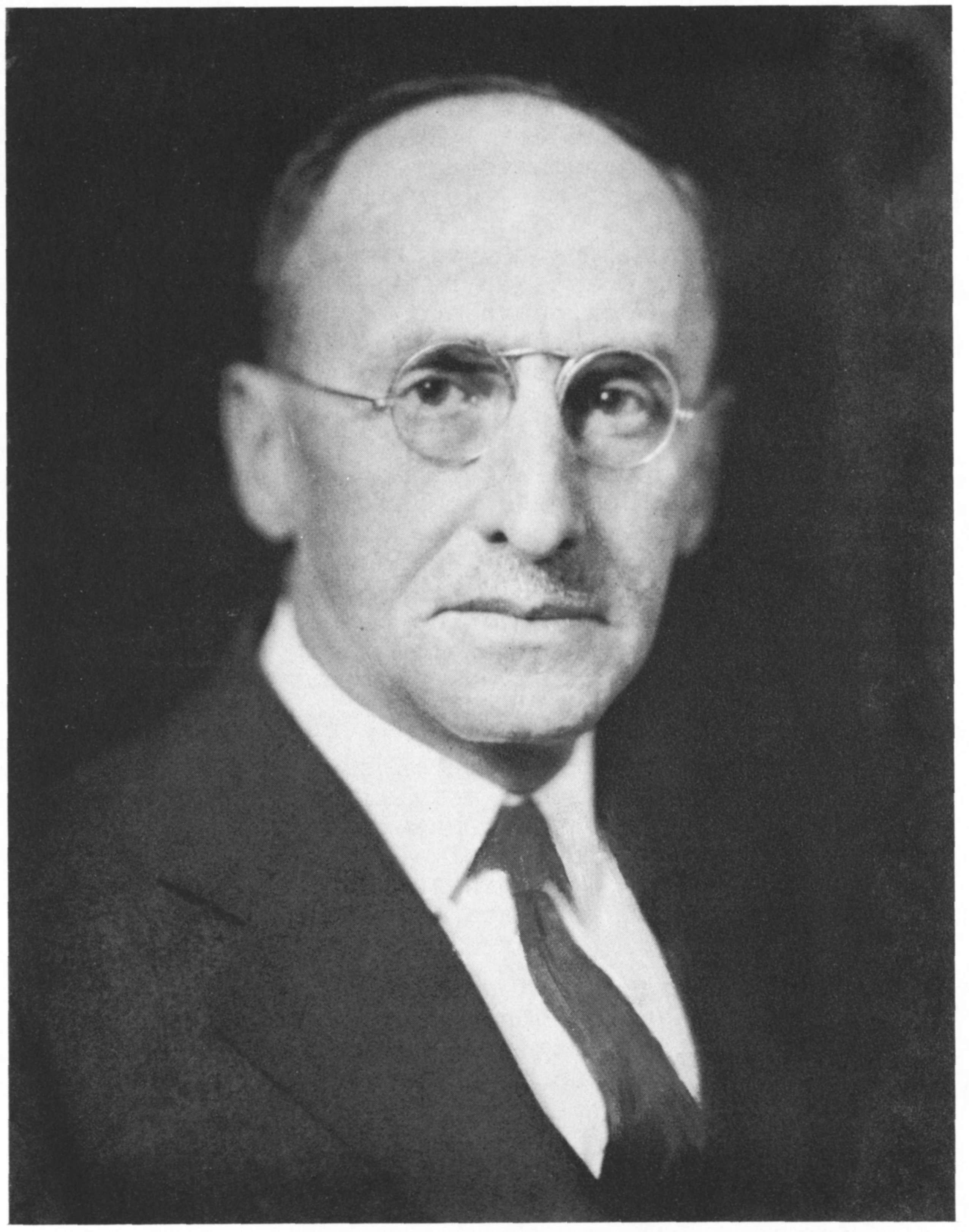
Preparation of this paper has been, quite literally, a labor of love; not because it has been done without compensation, for the compensation has been great indeed, but because of the warm affection I held for the man who is its subject. He contributed enormously to my life, to my happiness and, I like to think, to my character. He was in many ways like a second father and I could not have thought more of him if he had been my father. Thus I count myself doubly blessed in having had two male parents to respect, to try to emulate and to love. This circumstance may not be the best qualification for writing a biography. If I seem to focus as much on the vessels as on the man, it is because it was he who taught me to appreciate their individuality and to recognize their particular identities.
He entered my life after he had retired to a shore position and came home every evening. I was an attentive and responsive listener eager to learn all the lore he could pass on to me. My Grandfather Whitmore, who had sailed in Bath ships in his youth, had kindled my interest in the lore of the sea when I was an early teenager. I had read a lot about clippers and whalers and fishermen. But there was precious little to read then that told the story of the schooners which by that time were slipping rapidly into oblivion. Knowing very little about the coasting schooners, like many another fireside sailor, I thought very little of them in those days. Captain Peterson brought it all to life for me and started me on a course of avocation that has brought me countless hours of happiness and satisfaction. He offered me wise counsel when I needed it and did many things for which I am eternally grateful.
His sons were my friends and to most of his grandchildren I was happily “Uncle Charles” until, in time, they outgrew the affectionate title. It is really for them and their children that this biographical sketch has been prepared.
Charles S. Morgan
Concord, Massachusetts
March 1981
[Pgs 1-2]
The Notable Career of One Maine Shipmaster
This is the story of one Maine shipmaster who started his seafaring career before the turn of the century in a small coaster, progressed over a period of twenty-five years to command some of the largest multi-masted schooners, moved on into steam, and finally retired from the sea to become secretary of the oldest marine society in America. His name was Frank Hewitt Peterson. It is a story that he could have told you so much better than I. But he has been gone from these shores for more than twenty years, so my memory and notes, and his journals and scrapbook, will have to substitute for him.
In many respects his career was typical of those of captains of large schooners between 1890 and 1920, but it is a career distinguished by high achievement, professional excellence, modesty, personal integrity and universal respect. However typical his career may have been, it, like the man, was far from average.
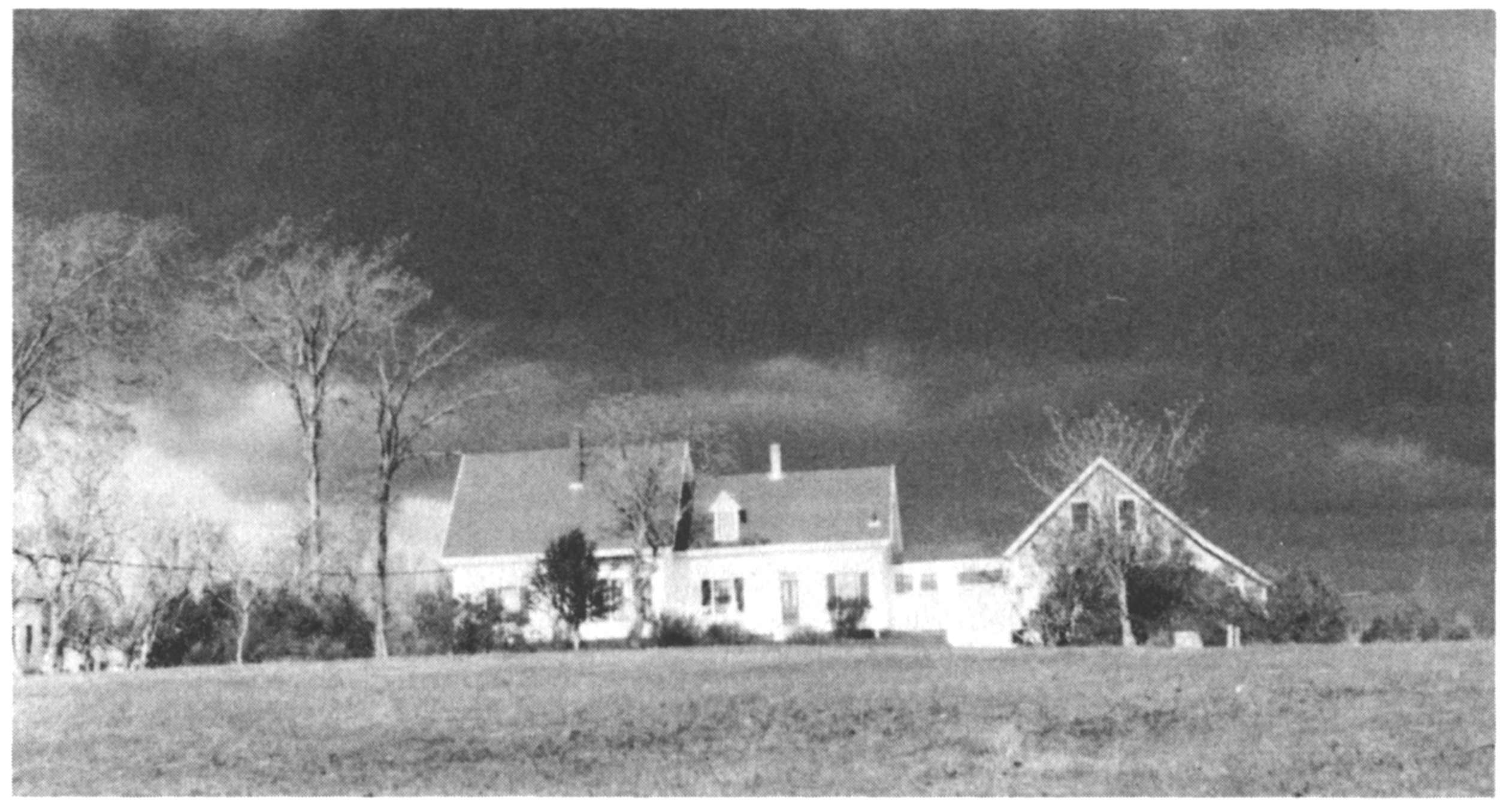
The subject of this paper was born December 16, 1876, in a comfortable saltwater farmhouse at Machiasport, Maine, the son of Captain James and Mary Hooper Peterson. They named the baby Frank Hewitt. The new arrival was a ninth generation descendant of George Soule who came over on the MAYFLOWER and whose daughter married John Peterson of Duxbury, Massachusetts. He was also descended from John Peterson of Bath, Maine, (1744-1825), one of the first shipbuilders in this town. In practically a half-century of seafaring, Capt. Frank Peterson experienced strandings, collision and shipwreck, fire and hurricane, gales, labor violence and war, good times and hard times. He sailed in fore-and-afters and square-riggers, in steamers and motorships, in dry cargo vessels and tankers, in passenger liners and in warships from destroyers to aircraft carriers; in most of them as Chief Mate or Master.
Of his early years I quote from something he once wrote:
Machiasport was a seafaring town. One did not have much choice of career; either go to sea or to work in the woods with some of the logging teams from Machias or Whitneyville. The lumber sawed in Whitneyville was brought to Machiasport for shipment.... There were always vessels loading lumber there or nearby, so there was always an opportunity to go to sea.
Young Frank’s first job, after two years at Washington Academy which served the town as a high school, was in a quarry. There he received fifteen cents an hour for a ten-hour day, and he paid fifty cents a day for board. As he recalled many years later, “It was hard work and I decided that it would be better to go to sea as my elder brother had already done.”[1]
So it was that in July, 1892, at the age of fifteen Frank Peterson shipped as a green sailor on the two-masted schooner REGINA, Capt. Frank Sanborn commanding. REGINA was a new vessel then. In her declining years she achieved certain fame as the Kennebunkport studio of author Booth Tarkington. But when she sailed that time for Boston, with lumber, she was just an ordinary coasting schooner. Still, it was enough to launch Frank Peterson on a seafaring career.
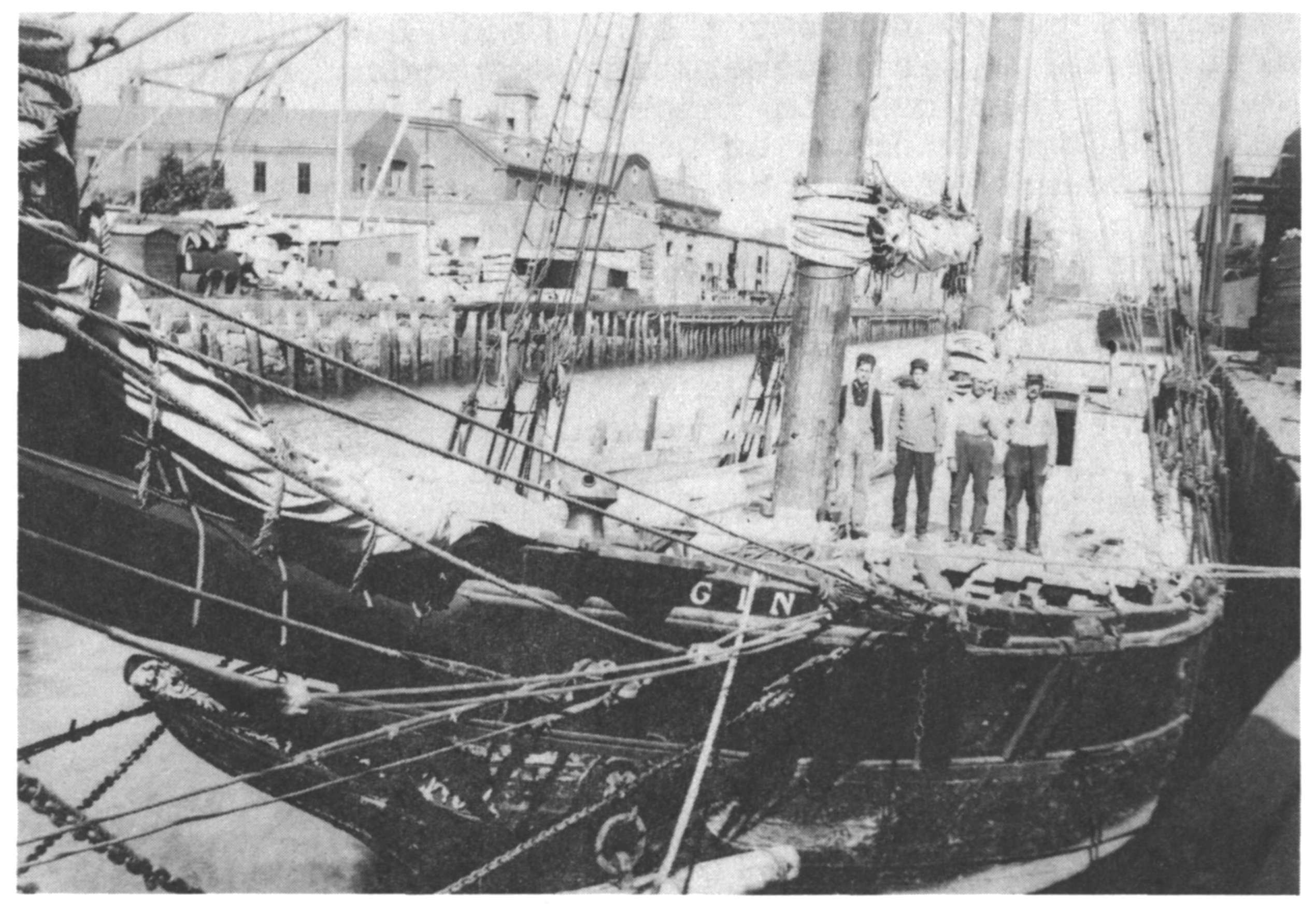
Arriving in Boston one evening, REGINA anchored until the tug appeared next morning to dock her. In those days it was customary for the crew to work cargo, and as they were towing up the harbor the captain asked, “Boys, do you want to work cargo all day or work ‘tide work’?” The boys elected to work “tide work” but as Pete (we shall call him “Pete” hereafter, with no disrespect) recalled, “We worked all that day and at high water that night the skipper called us out to go to work again.” The cook who also had to help discharge the cargo observed wryly, “Boston is a damned funny place. The tide here stays up all day and then comes up again at night.”
Over the next five or six years Pete voyaged up and down the eastern seaboard and occasionally to the West Indies in a dozen different small Machias schooners and brigs, first as ordinary seaman, then as able seaman, then Second Mate and eventually as Mate. Generally, these vessels laid up during the winter and did not start out again until March. Town Meeting Day, the first Monday in March, was also the day when the skippers shipped their crews.
Pete was introduced to square-riggers in March, 1894, when he signed on as AB on the 20-year-old brig ELLEN M. MITCHELL, Capt. Job Small commanding. She was loaded with lumber for Cuba. As Pete was signing on, Capt. Small remarked, “Well, Frank, we’re bound for Cardenas, the finest port in the Island of Cuba!”
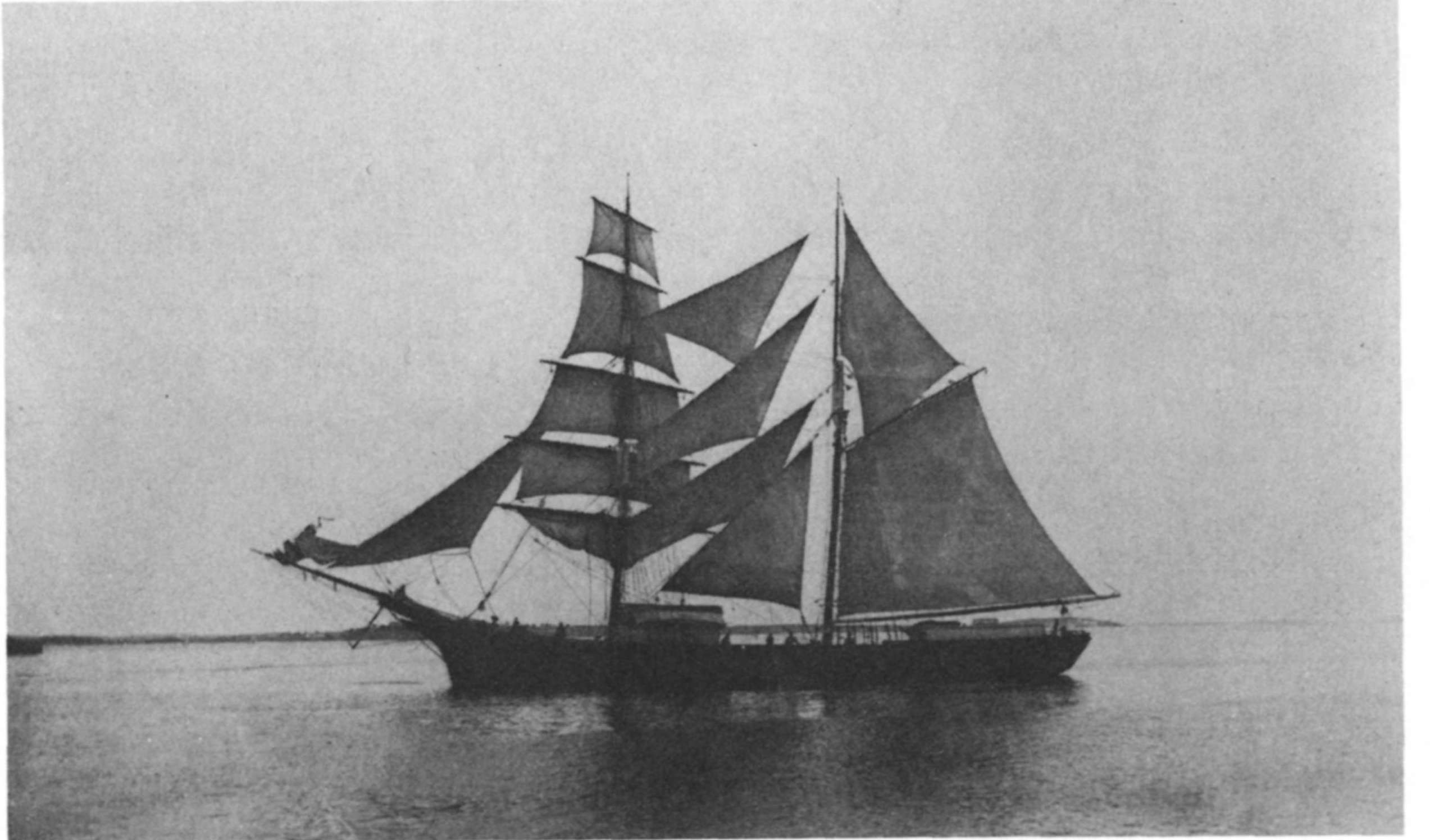
Capt. Small was then well along in years and in [Pg 5]poor health. For security, should anything happen to the skipper, the owner signed on as Mate a man who had commanded several small schooners. However, the Mate had never been in a square-rigged vessel and the first time he had occasion to brace the yards on the wind, he braced them all just as far as they would go. When the skipper came on deck, he took one glance aloft and exclaimed, “Go-o-o-d Je-e-esus, Mr. Phinney, you don’t know scarcely nawthin’, do ye?”
When they reached Cuba, Pete, as the youngest aboard, was made boat boy. A sail was rigged on the longboat and Pete sailed the captain ashore, remaining by the boat until his return from conducting the ship’s business. The skipper didn’t look a bit happy when he rejoined the boat and as they sailed back to the brig he remarked, “Frank this is the Goddamnedest gunk hole I ever was in.” Pete reminded him that he had told him earlier that it was “the finest port in the Island of Cuba,” but Capt. Small replied, “Never said no sech thing.... Nosir!”
That voyage nearly put an end to young Frank Peterson. From Cuba the MITCHELL went to Mobile where, up the Tombigbee River, she loaded lumber for New York. They no sooner got to sea again than the crew commenced to come down with malaria. The cook was the first to fall, and Pete went into the galley. Everyone was overjoyed when the cook was finally able to resume his duties. Finally Pete himself came down with the disease and had to take to his berth. Unfortunately, by that time all the medicine had been used up. By the time the brig reached New York, Pete was too weak to stand. They lowered him over the side into the quarantine doctor’s launch, and he was in the Marine Hospital on Staten Island for two months. The doctor told him, “Another few days on that brig and they’d have buried you at sea.”
After two months in hospital, during which he dropped from a muscular 206 pounds to 145 pounds, Pete went home; by rail to Rockland and to Machias on the steamer CITY OF ROCKLAND. When his strength returned he signed on as AB, and later as Mate, on a succession of small schooners. Then in September of 1896 he joined the 600-ton bark LAPLAND in New York as Second Mate. This Bucksport-built vessel was owned by John S. Emery & Company of Boston and commanded by Capt. G. W. Cates of Machias. She loaded general cargo for Demerara and went out there in thirty-two days.
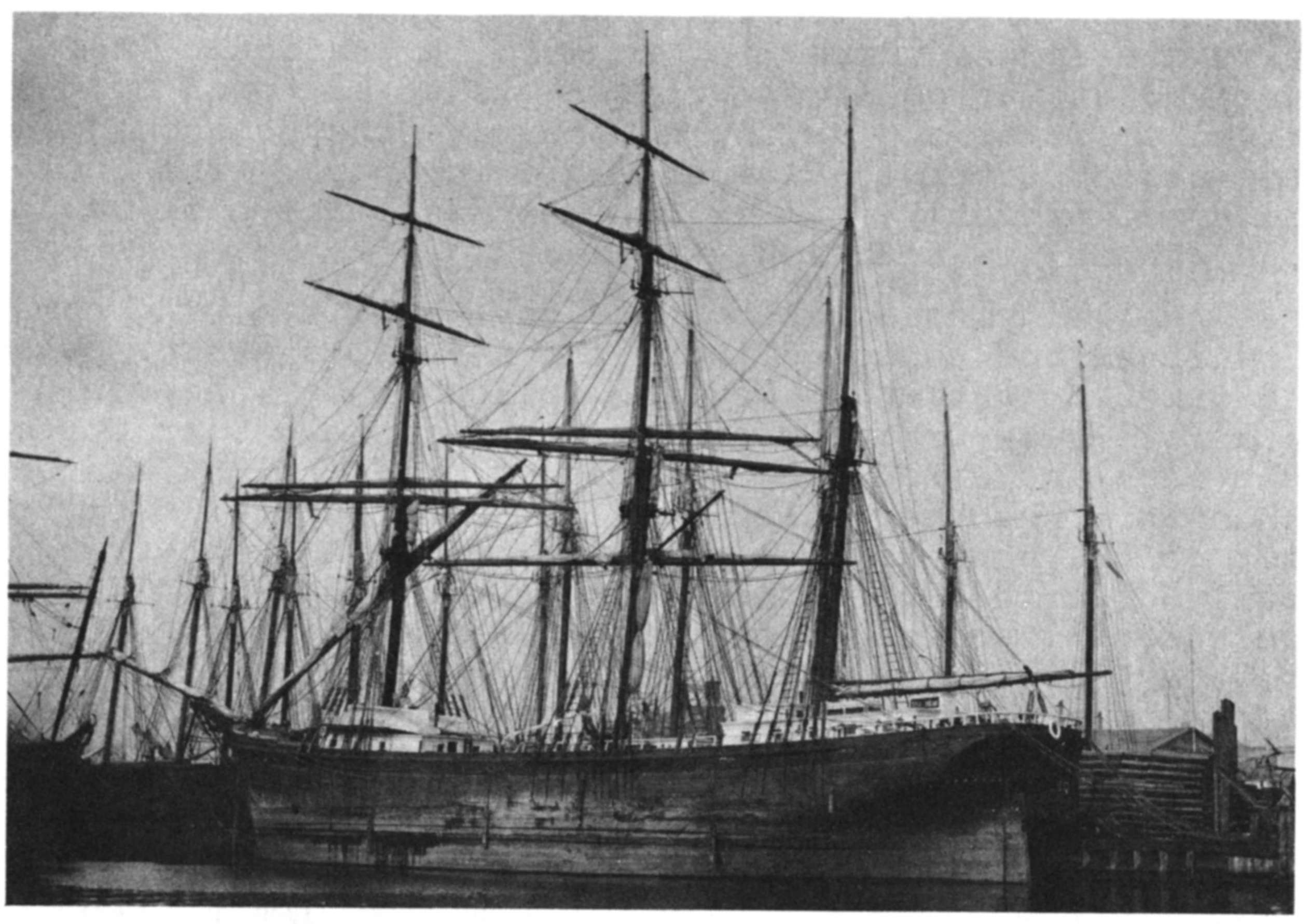
Bark LAPLAND of Boston, 649 tons. F.H.P. was Second Mate in 1895-96 and rejoined her as Mate in May 1898. He remained with her until her loss in a West Indian hurricane in September.
[Pgs 6-7]
Pete spent some thirteen months as Second Mate of the LAPLAND. This was a valuable learning period in Pete’s life, and the year spent in the little bark sharpened his professional skills and provided practical command experience.
The skipper was accompanied on the voyage by his wife. It happened that the LAPLAND sailed from Boston in company with the three-masted schooner LAURA, another Emery vessel also bound for Demerara. The bark made a slow passage and just before they arrived Mrs. Cates observed to her husband, “I’ll bet that the LAURA is here and discharged.” Capt. Cates replied, “She may be here but I’ll b-b-b-bet you a dress against a b-b-b-box of cigars that she isn’t discharged.” The first question they asked the pilot was, “Is the LAURA here?” His answer was, “No.” The LAPLAND had completed discharging her cargo and was in the stream taking on sand ballast when the LAURA finally arrived. As the schooner sailed in by, Mrs. Cates called and asked where they’d been. Capt. Lamson of the LAURA called back, “Where was old Moses for forty days?! In the wilderness!”
The following day, the LAPLAND sailed for Port o’ Spain, Trinidad, to load asphalt for Philadelphia. Pete described the operation thus:
The asphalt comes from the crater of an extinct volcano and they call it the “pitch lake”. Whatever pitch was taken out, the lake would be all filled in again by the next day and one would never know that any had been removed. It was sent down the mountain in tubs carried on an overhead wire which ran all the way down to the dock. There the tubs were dumped and returned on a parallel wire. I went up in one of the tubs to have a look. There were wisps of steam coming up through cracks in the pitch and it was very soft and hot in the center of the lake, but hard enough around the edges to be dug out with pickaxes.
During the voyage to Philadelphia, they took a gale between Bermuda and Hatteras and the vessel was hove to for several days, washing heavily. When the wind would shift so that the bark could not head the seas, they would have to wear around. The skipper’s wife was standing in the after companionway one day as they were wearing ship, and noticed that when the wind came aft the bark would become very steady, so she said to her husband, “Why don’t you run her?” He replied, “G-G-God damn’er, I’ll r-r-run ’er all right if the wind ever comes to the s-s-s-south’ard.”
After discharging the asphalt, they loaded West Virginia spruce lumber for Rosario, Argentina. They arrived at Buenos Aires without event and towed up the river to Rosario. Having no charter, they anchored in the stream after the lumber was discharged. The crew deserted promptly, all except the Mate, the cook, and one seaman, in addition to Pete.
While lying at anchor one day, a native brig came downriver and anchored under the LAPLAND’s stern. When he tried to get under way the following day, he could not fill away from his anchor so he ran a hawser up to the bark and asked them to hold it until he got his anchor up. When he filled away, he sang out for them to let go the hawser. The mate of the LAPLAND, however, called out that the hawser was jammed and he couldn’t release it, so they had to let their end go. The hawser was hauled aboard and coiled down on top of the after house. When Capt. Cates came aboard he noticed the hawser and asked where it came from. On being informed, he ordered the Mate to put it in the boat in the morning and take it ashore, as the brig belonged there. Next morning was a hot one, and they had to drag the hawser up to a warehouse. Pete remembered, “We were sorry then that we had not let go of it when the brig filled away.”
After swinging at anchor for two weeks, they finally chartered to load hay for Santos, Brazil. The hay was loaded at a small dock about five miles upriver above Rosario. Then they went again to an anchorage while trying to get a crew. Eventually the shipping master brought a crew and they proceeded. This was an interesting operation. The current in the river was strong and with a headwind, so instead of tacking ship as the bank approached, they would simply back the yards and go stern first to the other side and then repeat the performance.
Once at Santos, the crew again deserted and had to be replaced before the bark could go again to Trinidad for another cargo of asphalt for Philadelphia. When he learned at Philadelphia that the vessel was to load barrelled oil for Ireland, Pete asked to be paid off. Wanting to go home for a spell, he found the three-masted schooner HUMAROCK bound for Boston and in need of a Mate. Pete took the berth and on arrival paid off and went home.
He was soon off to sea again, this time as Mate of larger schooners, three-masters and the big Morse four-master CHARLES A. CAMPBELL of which he was Mate for about eight months. In April, 1898, Capt. Cates of the [Pg 9]LAPLAND saw Pete in New York while he was Mate of the three-master ABBIE G. COLE, and asked him to come back to the LAPLAND as First Mate. The captain said that after discharging coal at Boston, the bark was chartered on Medford rum and general cargo for Sierra Leone and Konakry, West Africa. Pete agreed to go and then began a never-to-be-forgotten experience.
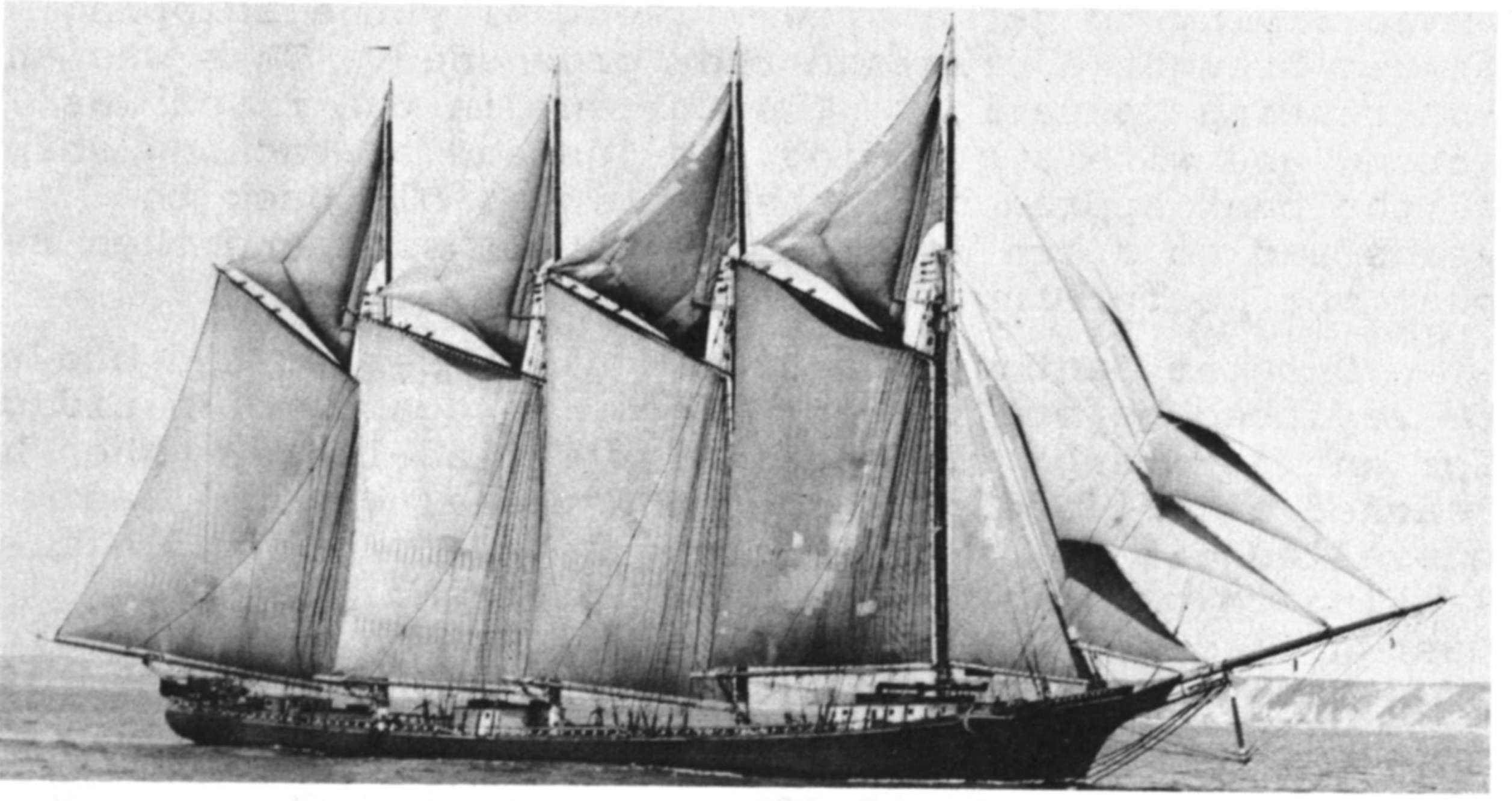
Schr. CHARLES A. CAMPBELL, 1503 tons. F.H.P. was Mate of this vessel for nearly a year in 1897.
He rejoined the LAPLAND at Lewis Wharf in Boston on May 28, 1898. On June 9, they sailed. After a passage of thirty-four days, they arrived at Sierra Leone during the rainy season. By the time they had discharged and sailed on August 8 for Barbados for orders, the sails, which were never furled during the whole time on the coast, as well as much of the running rigging, had started to rot. They had a long passage to Barbados.
My notes record many amusing incidents reported by Pete. Capt. Cates was a comical man without intending to be so. As you have already seen, he stuttered badly, especially when excited; and when he cursed, which was often, it could be very funny. Every morning he would read aloud from the Bible before coming on deck, and in a voice loud enough so that the man at the wheel could hear him. Then he’d come on deck and swear like a trooper at anything that didn’t suit him.
Capt. Cates stood on the top of the after house one day looking at the vessel’s wake. Finally, he hailed the helmsman, “Mind your helm there! S-S-Somebody’ll c-c-c-come along and th-th-think a s-s-sea s-s-serpent has been through here!”
On another occasion, Pete told me, “One Saturday afternoon we painted the fly-rail which extended all around the stern of the ship. On Sunday, the Second Mate (who was the captain’s young son, Leslie) suggested that we try to harpoon one of the sharks which had been following us for some time. He got out the iron and poised himself for a throw, while I held and prepared the line. Finally he heaved the iron into a good-sized shark, and I hastily took a couple of turns of the line around the first strong support I could find. It happened to be the rail. In his frantic efforts to free himself, the shark carried that line along the top of the freshly painted rail from one quarter to the other. We got the shark aboard after a while, but the newly painted rail was an awful mess. The captain heard the commotion as we hauled the shark aboard, and came on deck. He took one look at the rail and then commenced to swear in his own inimitable fashion, “J-J-J-Jesus C-C-C-Christ!!! Can’t a sh-sh-shark c-c-c-come around [Pg 10]without some G-G-G-God-d-damned f-f-fool wanting to h-h-harpoon him?”
Pete went on, “I remarked to the captain one day that, having received no mail in Africa, we should get some at Barbados as they’ll have had time enough to get it out here. He replied, ‘It’ll be s-s-s-so damned yellow with age that you can’t r-r-r-read it.’”
Not long after arriving in Barbados on September 10, the approach of a hurricane was reported. The subsequent events are well described in a letter from Capt. Cates to his wife:
Kingston, St. Vincent, Sept. 18, 1898
I am so thankful to be permitted to write you of our terrible experience in the hurricane of September 10.
God alone knows what I suffered in body and mind, knowing that if the wind continued we should be cast upon a rocky coast where it would be a miracle if any of us got safe to shore.
I arrived at Barbados Friday a.m. Saturday, weather looking bad, I let go the second anchor. I went ashore. The barometer falling slowly, I went to the weather bureau for information, but they could not tell me where the storm was or how far off. I went on board at 4 p.m., got everything secure, gave out all the chains. At 8 p.m., heavy squalls from N.E. to E. Had axes ready to cut spars, for I knew if vessel parted and went broadside, she would capsize. At 9 p.m. vessel started. The lightning and howling blast was something awful. I put my mouth to mate’s ear and told him to crawl forward (no man could stand) and cut lanyards. I took my hatchet and got to main backstay and drew it across lanyard—could not strike a blow, the wind was so fierce. The darkness and howling and shrieking of the hurricane were beyond description.
All spars went by the board when she fell off side to wind on her beam ends. Broken spars and flapping sails made a fearful noise. I sent Leslie below, as it was no use for him or any one else on deck. The vessel was then unmanageable. Both chains out, spars, sails and rigging laying along-side and under her bottom. All we could do was to hold on and let her drift. I knew that the other vessels were somewhere near and it made me more anxious. I knew the vessel would weather the gale if she didn’t go ashore.
[Pg 11]
It was 105 miles to the island of St. Vincent and I thought the hurricane must abate before I drifted that far. The night wore on. Such a night! God grant that I may not have to pass through another! Leslie was upmost in my thoughts, but he kept up a stout heart—only asked me once if there was any danger and that was when I went below and told him the vessel was totally dismasted.
Sunday morning dawned upon a scene such as few men ever looked upon. The heavens a mass of rolling clouds, the ocean lashed into white foam and vessel laying on her side. Spars, sails, and rigging were twisted and rolled up together. Three other vessels in sight in same condition.
At 7 a.m., wind suddenly fell calm. I knew then we were in the centre or vortex of the hurricane. We went to work and cut some of the wreckage away; then the wind suddenly struck south and I felt we were safe, for we would drift clear of the island, which I judged to be 40 miles due west from us. At 8 a.m. it blew for one hour, when it suddenly shifted to east, blowing with more violence than before. I went below and told the mate, Frank Peterson, cook, Geo. Morgan of Machiasport, and the boy, that if the wind held where it was for four or five hours there was no help for us. The vessel must go ashore. So take off your oil clothes said I, and put on light clothes and shoes and be ready. Keep up a stout heart and fight for life until the last. The coast was an iron bound one, and I did not know of any sand beach on the windward side of St. Vincent. We were nearer the dreaded coast than I thought, for I had been giving the vessel a drift of 5 miles per hour and she had been drifting 7, something unheard of.
While we were putting on shoes she struck bottom, the sea going clear over us. Four times she was lifted high on top of a comber, the last one landing her where she lay quiet. We shook hands and I told Leslie if he got safe ashore to carry the sad tidings home.
We then went on deck—had to crawl to rail, couldn’t stand on our feet. I looked but could see nothing. I looked down and there saw dry sand where the sea ran off. Then my spirits rose for I knew we were safe. I called the hands into the cabin and we got something to eat.
[Pg 12]
We then got a small line and I put it around the mate, and he jumped overboard and got safe ashore, after two attempts. I then bent a line to Leslie and sent him.
We all got ashore the same way. The hurricane was then at its height. We lay behind logs and bushes to keep from being blown away, and to keep the sand from cutting our faces. After a while it abated some. Then Leslie and myself started to find some town where we could telegraph or cable.
We came across some people in the bush with their children and they told us we could not cross the rivers. The bridges were all down and there was not a house standing. Then we started to go another way, but it was the same destruction everywhere. We went back and stopped on the beach all night, soaked to our skins, and rain falling in torrents.
Next day I tried again, but no use. Tuesday I got a horse and three captains of us started for Kingston, 12 miles.
Three vessels are ashore within two miles of each other. We had to swim rivers, climb mountains and fallen buildings. I can not express the awful destruction this hurricane has caused. Hardly a tree is standing, and in some instances where the tree stood the gale, the bark is peeled entirely off. Dead bodies of cattle, sheep, hogs, poultry and human beings are strewn everywhere. Not a town outside of Kingston is standing. Every village we passed is levelled to the ground.
Poor souls sitting around asking us for bread to eat, lost everything they had, clothing and all. They were burying the dead. Some in board coffins, some in trenches. They estimate the killed at 500, but of the damage done to property no estimate can be made.
Capt. G. W. Cates
Bark Lapland[2]
[Pg 13]
Pete’s account of the experience adds a few details. There were three other vessels in port when the hurricane struck, the barkentine GRACE LYNWOOD of New York, the ship LOANDA of Windsor, Nova Scotia, and a Danish barkentine that had just arrived in ballast. She capsized and drowned all hands, the other two blew out of Barbados with the LAPLAND.
The first time Pete tried to take a line ashore through the surf, the seas caught him and turned him end over end. They hauled him back aboard and after a rest he made the beach on the next try, fastening the line to a half-buried tree root. As the crew came ashore, Pete counted them until all but two had made it, one of them Capt. Cates. Finally the last two came through the surf. What had delayed them was that the Captain had not waited until the old sailor just ahead of him had reached the beach before starting along the line himself. Each man tied himself by a loop over the line and slid it shoreward as he came. The surf upended the old sailor, spun him around and kinked his line. He was stuck and Capt. Cates couldn’t get past him. Several seas broke over the pair before they got things unsnarled. In describing to Pete what happened, Capt. Cates said, “If I’d had a n-n-n-knife, I’d have s-s-s-set that old s-s-so and so adrift.”
The three captains and their crews, except officers and cooks, proceeded on foot the twelve miles to Kingston where they got a Royal Mail steamer to Barbados. The officers and cooks remained by their respective wrecks. They were there ten days before the skippers returned. In the meantime, on Capt. Cates’ instructions Pete had given to the distressed natives all the stores and contents of the slop chest. He said that they gladly took everything in the shape of clothing except mittens. He had also built a canvas shelter on a wood floor with stuff taken from the wreck which was almost rail-deep in the sand. After the skippers returned, the wrecks were sold for a pittance and they all sailed in one of the boats to Kingston and from there by steamer to Barbados.
Pete and the crews of the LAPLAND and LOANDA went to St. John, New Brunswick, on the Pickford & Black liner TAYMOUTH CASTLE. Pete remembered that Capt. Dodge of the LOANDA, despite a missing hand, played the violin well and that the Master of the steamer played the piano so that the evenings were filled with good music. From St. John, Pete had no trouble making his way home to Machiasport.
[Pgs 14-15]
That December Pete joined the four-masted schooner SUSIE M. PLUMMER as Mate. Capt. James E. Creighton was her master. At the time she was discharging ship timber at Percy & Small’s shipyard. Pete made several trips in the PLUMMER with coal to Cuba, and to Sabine, Texas; and one with “dressed flooring” from New Orleans to Boston.
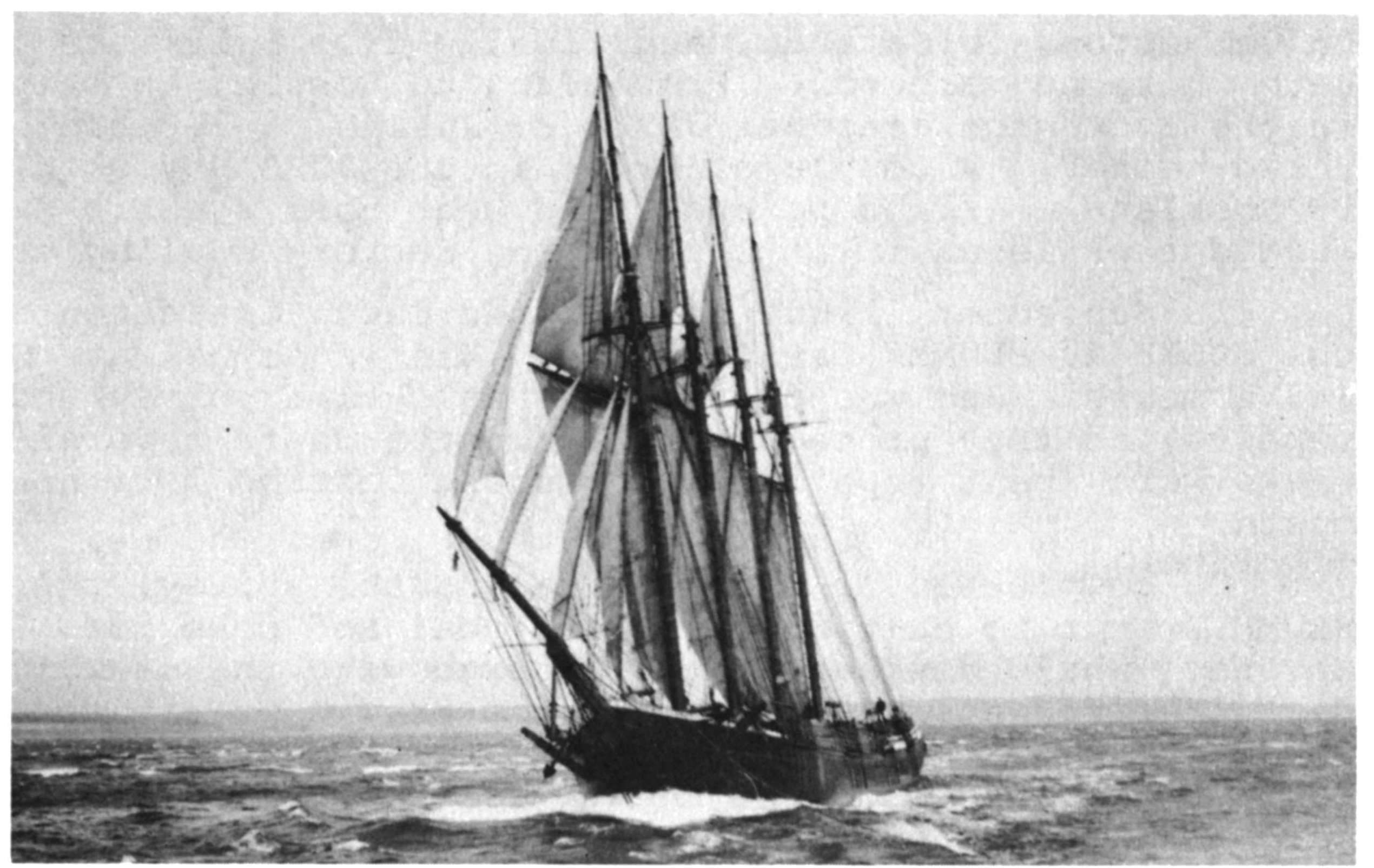
Schr. SUSIE M. PLUMMER, 920 tons. F.H.P. was Mate of this vessel in 1899 and again in 1901.
In the Gulf of Mexico while bound for Sabine, Texas, they had a close brush with a waterspout. They saw it approaching and realized that they were in danger of being struck. Pete mentioned to the skipper that he had heard that, if you fired a gun when a waterspout was close by, the concussion would burst it. So Capt. Creighton fetched his double-barrel shot gun and laid it on the coaming of the after house. Peter went forward to douse the jibs just before the waterspout passed close by. After it passed, he set them again and went aft. The skipper had not fired the shotgun and when asked why he said he had become so excited that he “plumb forgot about it” until it was too late.
It was while the PLUMMER was loading at New Orleans that a new federal law requiring licenses for officers in sailing vessels went into effect. On arrival at Boston, Pete sat for his examination for First Mate in sail. He told me that, having to his credit plenty of time in vessels over 700 tons, he didn’t have to do very much to get his license. But this was just the beginning. Subsequently, he took and passed the examination for Master of sailing vessels of unlimited tonnage and then acquired licenses as First Class Pilot in practically all of the coastal ports he had occasion to call at regularly: Boston, Portland, Philadelphia, Newport News among them. In later years, after he obtained the required time in steamships, he passed the examination for a Master’s license for steam and motor vessels of any tonnage, on any ocean, with so many First Class Pilot endorsements that they completely filled up the space provided on the certificate.
After taking his Mate’s examination, Pete went home for the summer and, as he had done on previous visits, to keep busy he went to work in the sardine cannery. That fall, to help out Capt. Cole who was having difficulty rounding up a crew, Pete went Mate in the three-master ABBIE G. COLE from Machias to St. John. After rigging her down so as to pass under the bridge, he went to Portland where in November 1899 he joined the three-master ADDIE CHARLESON of Portland. She was one of the J. S. Winslow & Company fleet and the first of many Winslow vessels that Pete was to sail in.
He made several coal trips in the CHARLESON as Mate; to Galveston, to Bermuda, and finally from Baltimore to Bath where he paid off. Proceeding to Boston, he shipped in the Thomaston schooner JAMES B. JORDAN, a 700-ton three-master. A couple of trips in the JORDAN took him to Rockland where he paid off and went home again. He worked a while again in the sardine factory sealing cans.
In September, 1900, he rejoined Capt. Creighton in the SUSIE M. PLUMMER at Portland. His wages as Mate were $45 a month. She was due for her half-time survey and repairs, so they proceeded to Thomaston where several weeks were spent repairing, including setting four new masts.
On completion of the repairs and the survey, the PLUMMER went to Baltimore to load coal and coke for Havana. While discharging this cargo with the crew, one day after finishing work one of the crew came aft and asked for a dose of salts. The Captain being ashore, Pete went to the medicine chest, got the salts jar, and gave the man two spoonsful with instructions to mix it with water and drink it. In a few minutes, while Pete was washing up in his room, another seaman came aft to report that the man who took the salts was in terrible agony. Pete found him rolling about the deck screaming with pain. Just then Capt. Creighton came aboard, and together they got the man to a drugstore and summoned a doctor who pumped out his stomach. In searching for an explanation, it was discovered that a supply of oxalic acid for polishing brass had been delivered in an unmarked container and Capt. Creighton, mistaking the crystals for Epsom Salts, had put them in the salts jar. The injured seaman recovered but didn’t speak above a whisper during the remainder of the voyage.
After a voyage to Havana with coal, and a trip from Pasagoula to New York with railroad ties, the schooner was sold to San Francisco parties. The new skipper, a Dane, arrived from the west. He wanted Pete to stay as Mate to make the round voyage to San Francisco by way of Cape Town, Australia, and Honolulu, but Pete decided not to. He recalled that when the PLUMMER was loaded, the Danish skipper had still not found a Mate so he came around to Pete’s boarding house to offer him $75 a month, $25 above the scale, if he’d go. Pete told me, “I didn’t like the cut of his jib and was afraid we both wouldn’t live to reach San Francisco.”
That winter Pete stayed in New York and worked as a rigger, sending down topgallant masts and bending sails. On March 4, 1901, he signed on as Mate of a fine four-master [Pg 17]JACOB S. WINSLOW, Capt. Simeon J. Smith commanding. Wages were $50 a month. After a coal trip from Philadelphia to Portland, they loaded lumber for Buenos Aires.
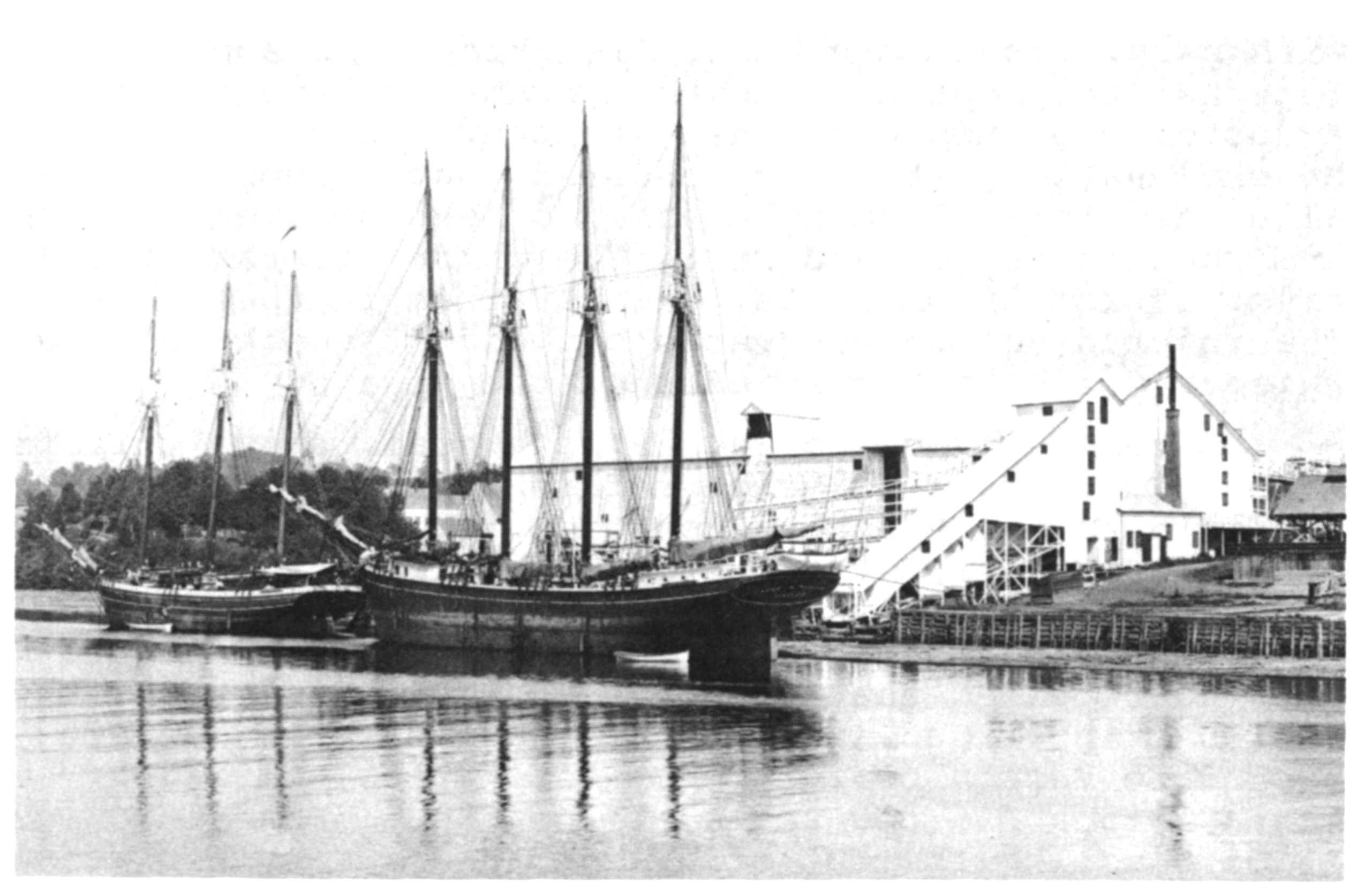
The first vessel commanded by F.H.P. was the fine schooner JACOB S. WINSLOW, 910 tons, of which he was Mate from 1901 to 1904. He relieved Capt. Simeon Smith on several trips in 1903. The WINSLOW is shown here loading ice on the Kennebec River at Randolph, Maine.
In a paper concerning the offshore schooner trade, presented to the 1973 Symposium of the Maine Maritime Museum, Capt. Lewis Parker described the lumber trade “to the River”:
Ahead lay a voyage of 7,500 or 8,000 miles by the circuitous route followed by sailing vessels. First they ran out into the Atlantic on a course of E × S or ESE about 2,000 miles until they picked up the northeast tradewinds. Then on a course of about SSE they carried the trades in glorious flying fish weather to about five degrees north of the Line, thence working their way through the doldrums on a course about SSW so as to cross the Equator between 27 and 30 degrees west longitude. On southwesterly they sailed through the southeast trades to the mouth of the River, the approach to which was heralded seventy-five miles at sea by the change in color of the water which became olive green with the mud of the pampas. With luck they might escape a dusting from a pampero, one of those sudden violent storms from the southwest for which the La Plata estuary was infamous, and within a day or two, with pilot aboard, our schooner would come to anchor in Montevideo Roads, for orders, or carry on another 123 miles past Punta Indio light vessel to the anchorage off Buenos Aires.[3]
Capt. Parker says further that the average passage was about sixty-two days. The WINSLOW did a bit better than average, arriving after a fifty-four day passage.
The JACOB S. WINSLOW no sooner arrived than the entire crew except one, including the Second Mate, jumped ship. The one who stayed, a young fellow from Eastport, made the return trip to New York as Second Mate. Their return cargo was bones from the slaughter houses, a stinking bug- and worm-infested mess. On the passage north they passed to windward of the Boston bark NUUANU loaded with sugar from Hawaii. The vessels passed close enough to exchange greetings and no doubt the horrid stench revealed the schooner’s cargo. Capt. Joscelyn of the NUUANU called out, “I can see a bug on the end of your jibboom!”
[Pg 18]
Pete was Mate of the WINSLOW for three years during which he made several trips to Demerara with ice laced with fresh fish, vegetables, and apples, and topped by a deckload of lumber. Then Capt. Smith decided to stay home a trip and asked Pete to take the schooner. On his return to Portland with coal from Philadelphia, Pete learned that there was in the market a cargo for Demerara but that Capt. Smith didn’t want to go because of a smallpox epidemic that was raging there. Eleazar Clark of the J. S. Winslow Co. asked Pete if he was afraid to go and when he said, “No”, they chartered the schooner.
The voyage out was frustrating to a young man eager to make a good showing. Calms, and a SW wind where no SW wind should have been, gave the WINSLOW the longest passage to Demerara she ever made. There were 4,000 cases of smallpox and several hundred deaths during the week the WINSLOW was there discharging. But everybody on board was vaccinated and nobody contracted the disease. With a clean bill of health, they went to Trinidad for pitch. The trip back to New York was another disappointment. It was long and marred by a heavy gale off the Virginia Capes which smashed the fore gaff, tore up the reefed foresail, and blew out the jib. They arrived with the food supply nearly exhausted.
In January, 1904, Capt. Smith resumed command and Pete stayed on as Mate. They loaded for Havana and shipped a black crew. Shortly after the crew came on board at Pier 11, East River, a mob of union sailors came onto the pier determined to take the crew out. Pete got the crew into the fo’c’sle and locked them in. Going aft to get his revolver, he met the Captain in the companionway and warned him not to go out there without a gun. The skipper had already armed himself and he went forward to guard the fo’c’sle where he was approached by a leader of the mob who was wielding a club. As he came closer, the man challenged the Captain, “You son of a bitch, you don’t dare to shoot.” He kept on coming until he was only a few feet away when the Captain fired. The man dropped, shot through the mouth. His friends got him onto the pier and someone called the police.
Capt. Smith readily acknowledged the shot but refused the invitation to come onto the pier so that the police could arrest him until he had some protection for his crew. One of the officers asked if the Mate had a gun and he replied, “Yes.” The police officer then turned to Pete and told him to shoot the first man to set foot on the rail, and not to be afraid to shoot. Capt. Smith’s parting instructions to Pete were to take [Pg 19]the schooner, when the towboat arrived, to an anchorage off Staten Island and then come and find him. He said that if he could not get bail, Pete should ship a Mate and go as Master.
At the Tombs Court, when the Judge asked if there was anyone present who would post bail for Capt. Smith, Mr. William H. Swan came forward and said that he would do so. Mr. Swan, whose firm continues to this day, was a well known and highly respected ship chandler. He supplied the needs of many of the schooners and enjoyed the friendship and respect of hundreds of shipmasters in the coastal fleet. The WINSLOW sailed next morning for Havana.
From Havana the WINSLOW sailed light to Brunswick, Georgia, where she loaded railroad ties for Philadelphia. On arrival at Portland with coal from Philadelphia, the vessel’s agent came aboard and told Pete that he wanted him to go immediately to Norfolk to take command of the MAJOR PICKANDS, as her Captain had left her. Pete had planned to make a visit home to Machiasport before making another trip but Capt. Smith warned him that if he turned down the offer it would be useless for him to continue in the Winslow Co. employ, as they would never again give him a command. So off to Norfolk he went on the Merchants & Miners Line steamer.
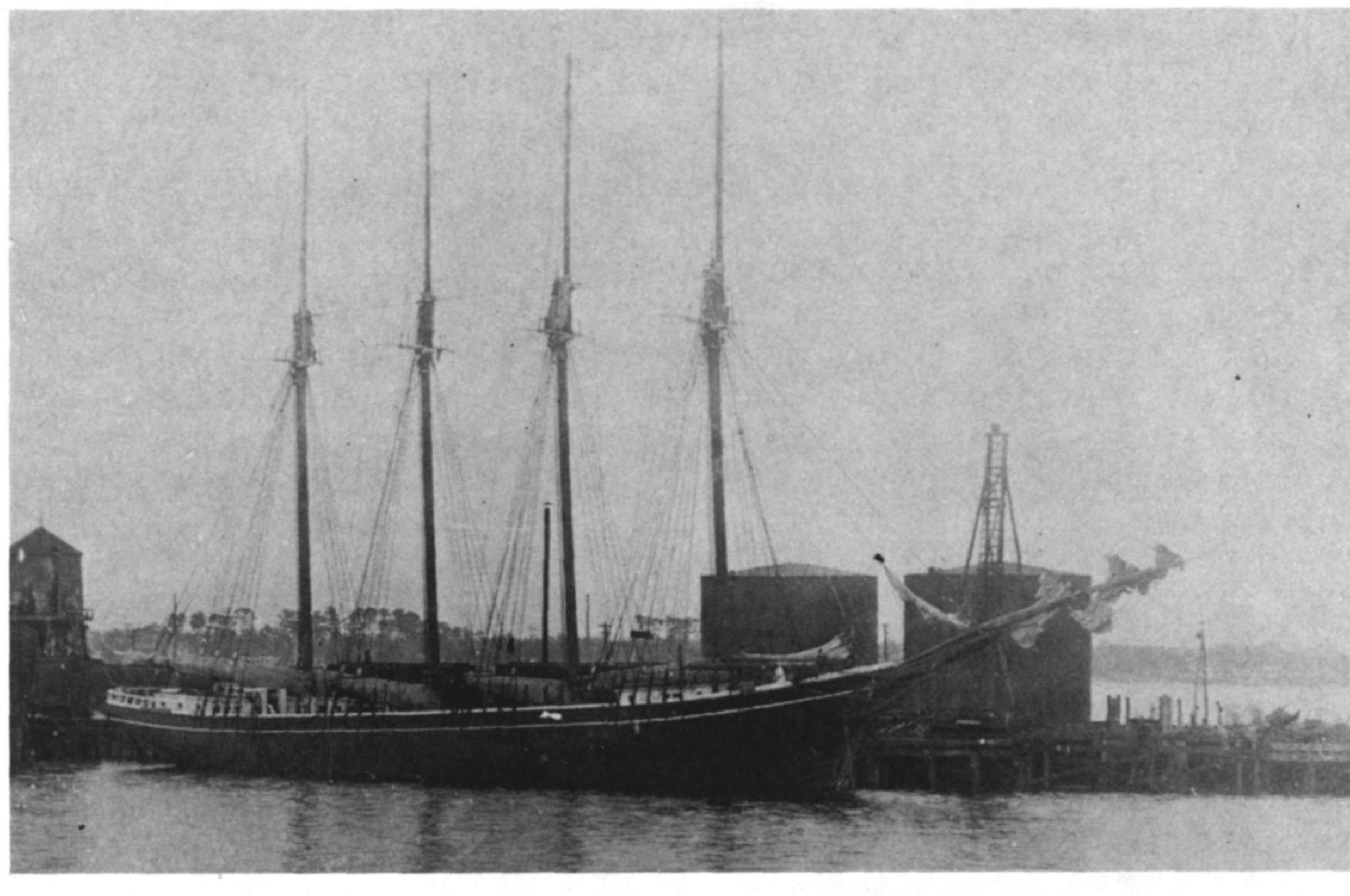
Schr. MAJOR PICKANDS, 984 tons, F.H.P.’s first regular command. He was Master of this vessel for about three months in 1904.
On his second coal trip, while bound for Boston, disaster struck. Before reaching Block Island, heavy fog was encountered. Confident of his position, Pete kept on running for the Vineyard Sound lightship. The deepsea lead seemed to confirm his dead reckoning, but just as they were taking the lead forward for a second sounding, the schooner struck bottom. There was a considerable swell running and the vessel pounded on the rocks. Pete guessed that he must be too close to the Sow and Pigs, but before long the fog lifted and he saw that he was on No Man’s Land.
The Navy was having target practice off Martha’s Vineyard that day, and their tug PEORIA saw the PICKANDS distress signal and came over to help. She pulled the schooner off without much difficulty, and started to tow her to Vineyard Haven. However, it soon became apparent that the schooner was leaking too badly and was in danger of sinking. Pete signalled the tug, and they beached the PICKANDS at Gay Head. The entire crew spent that night on the tug, and next morning only the schooner’s forecastle deck was showing above water. During the forenoon, one of the Boston T Wharf tugs arrived with a wrecking master to look the situation over. They built [Pgs 20-21]cofferdams around the hatches, pulled out all the chain from the lockers and set up a centrifugal pump on the forecastle deck with the suction at the bottom of the chain locker. In a short time, the schooner floated and was towed to Vineyard Haven and anchored. There a diver found two holes in the bottom, one of them fifteen feet by six feet right to the frames and the other six feet square. The mizzen sail was then unbent and pulled under the vessel over the holes and the diver nailed battens over it. The tug first took them to Boston where the coal was discharged and then on to Portland for repairs.
Capt. Thomas Laithwaite, who owned the Master’s interest in the PICKANDS had sold his shares to Capt. Orville Pinkham, and it looked as if Pete was out of a job. However, Capt. Pinkham had not yet sold his shares in the three-master D. HOWARD SPEAR and said that if Pete would take her and fulfill her charter, he could buy the Master’s shares on his return. That looked good to Pete so he took the SPEAR to Florida with coal and back to New Bedford with lumber. On his arrival he received a letter from J. S. Winslow & Company saying that they had sold the Master’s interest in the SPEAR to Capt. Harold Foss and that when Capt. Foss relieved him, he should come to Portland as they had “something better” for him.
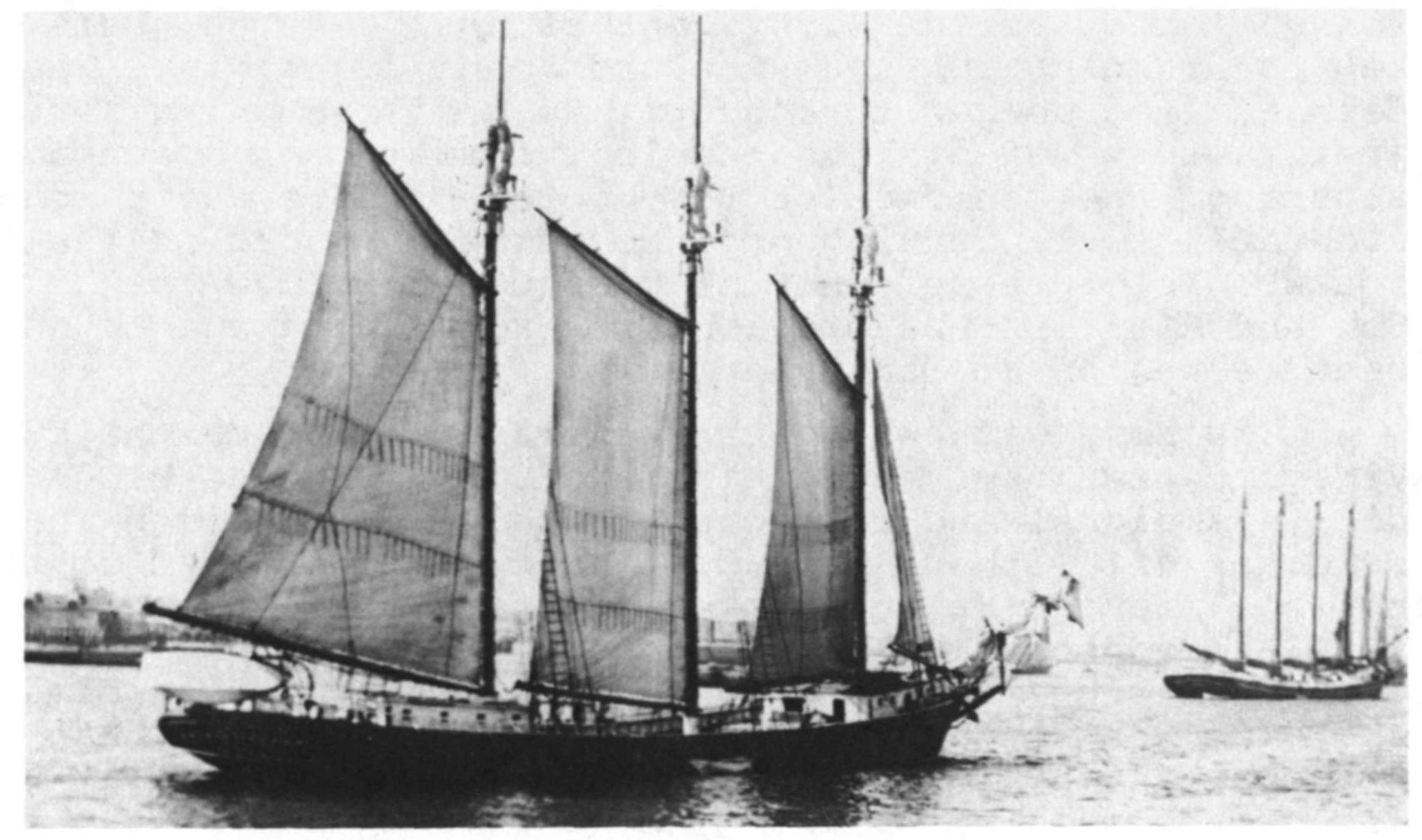
Schr. D. HOWARD SPEAR, 547 tons, commanded by F.H.P. for four months in 1904.
The “something better” proved to be the Bath-built 1000-ton four-master ALICIA B. CROSBY, fifteen years old but a fine sound vessel. The CROSBY was to be home to Pete for more than seven years. He took her in January, 1905, and left her in May, 1912.
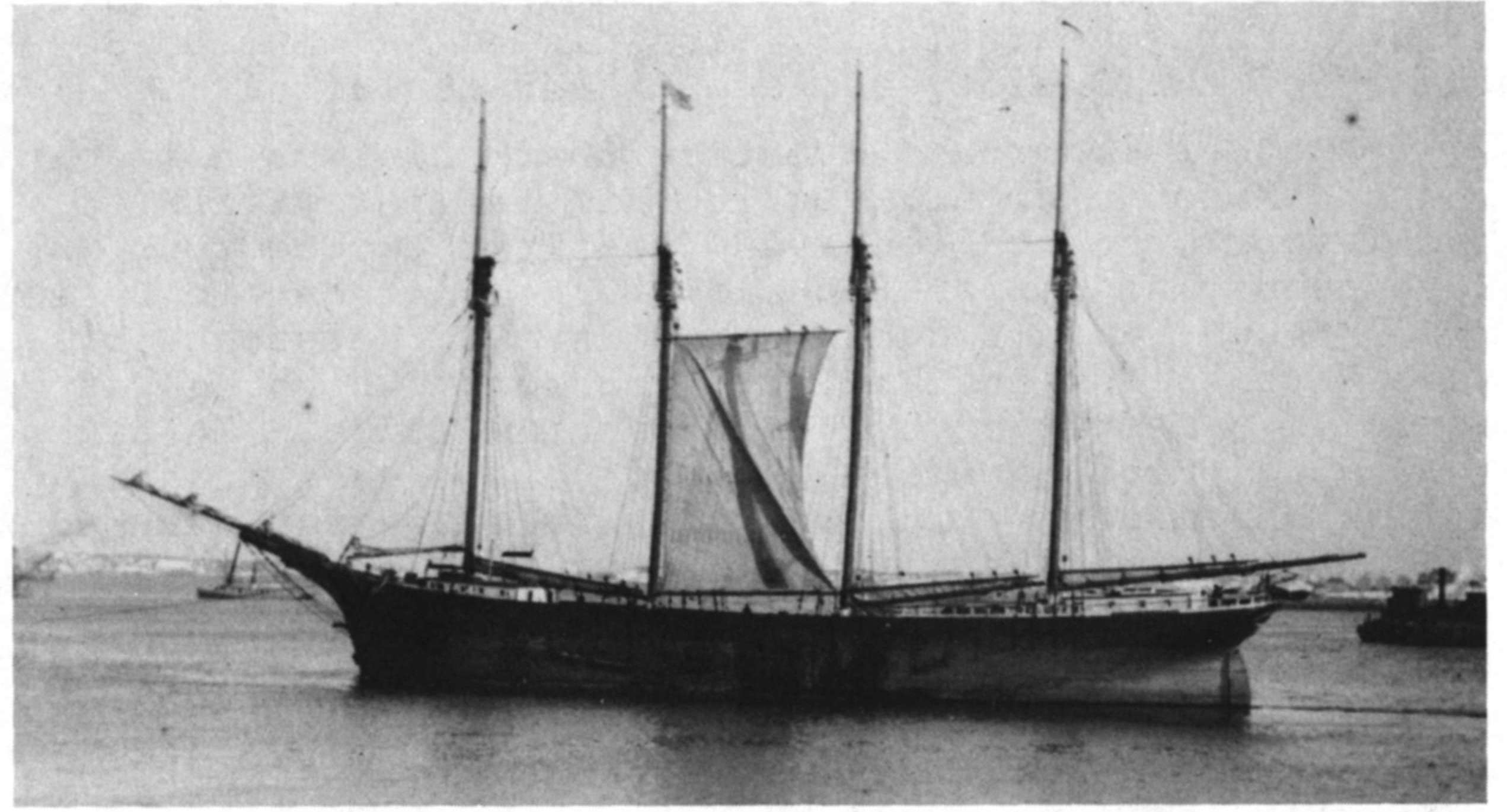
Schr. ALICIA B. CROSBY, 1113 tons. F.H.P. took command of this schooner in January 1905 and remained her Master until May 1912.
In March, 1906, Pete effected a rescue at sea that attracted considerable favorable publicity when the crew of the foundered schooner JOHN S. DEERING was landed safely at Philadelphia. The story started in February when the CROSBY was in Bridgeport, having discharged a lumber cargo there. The vessel was chartered to load coal at Philadelphia for San Juan, Puerto Rico, and Pete was ready to sail, awaiting only the arrival of a crew from New York. While he was in the towboat office, the captain of a newly-arrived three-master came in. The two skippers got acquainted and when the new arrival learned that Pete was waiting impatiently for a crew, he said, “You’re not going to go to sea tonight, are you?” Pete replied that, as the wind was north, he planned to leave as soon as he could and get around Montauk before the wind hauled ’round to the no’theast, and “I’ll have a good run to Philadelphia ... maybe.” The other remarked, “Maybe’s don’t grow on gooseberry bushes in February, and if you’ll wait until tomorrow you’ll [Pgs 22-23]have plenty of time to get around Montauk.” Pete told me that later he wished he had taken the advice because after getting around Montauk but not halfway to the Delaware Capes, the wind backed to northwest and blew a gale. He had to run before it, right out across the Gulf Stream. Finally the wind abated enough to let them set sail, and they headed back toward the coast. Shortly, before the sea had moderated much, they spotted a schooner in distress. Coming down to her they found the Bath three-master JOHN S. DEERING which was bound from Wilmington, North Carolina, for New York with lumber. She was wracked, waterlogged and dismasted with only the foremast standing. The eight-man crew had taken refuge in the coach house where they had been for seventy hours without food, water or heat. They were pretty well used up when they saw the CROSBY approaching.
Pete hove to to windward and, as he had no Mate, sent the Second Mate and four sailors in the boat, telling them to hang on to leeward of the wreck until he could come around to leeward of them to take them all aboard. Unfortunately, after getting the shipwrecked crew safely into the boat, the Second Mate had failed to hang on to the wreck as instructed. The boat drifted well to leeward before Pete was able to find them in the failing daylight and take them aboard the CROSBY over the stern. Capt. Manage of the DEERING gave the reporters quite an earful when he finally got to Philadelphia. He was full of praise for his rescuers.
In the spring of 1907, Pete let the owners know that he wanted to take a trip off in order to get married. He rather planned to take this step following arrival in Newport News from Portland, but those plans were thwarted when the northbound schooner BENJAMIN A. VAN BRUNT, running free, slammed into the CROSBY which was by the wind and sailing light. She was cut into between the fore and main rigging on the starboard side, down to the water’s edge and into the hatchcoaming. The VAN BRUNT lost all her headgear and suffered severe bow damage. She filled and, floating on her cargo of railroad ties, was towed in to the Delaware Breakwater. Pete hauled all his booms to port and, shifting everything readily movable to list the schooner, nailed a sail over the great wound in the vessel’s side so they were able to sail in to the Breakwater. There he made the patch a bit more substantial with some plank, and then proceeded to sail to Portland. From there, the CROSBY was towed to Bath, to the Percy & Small’s yard.
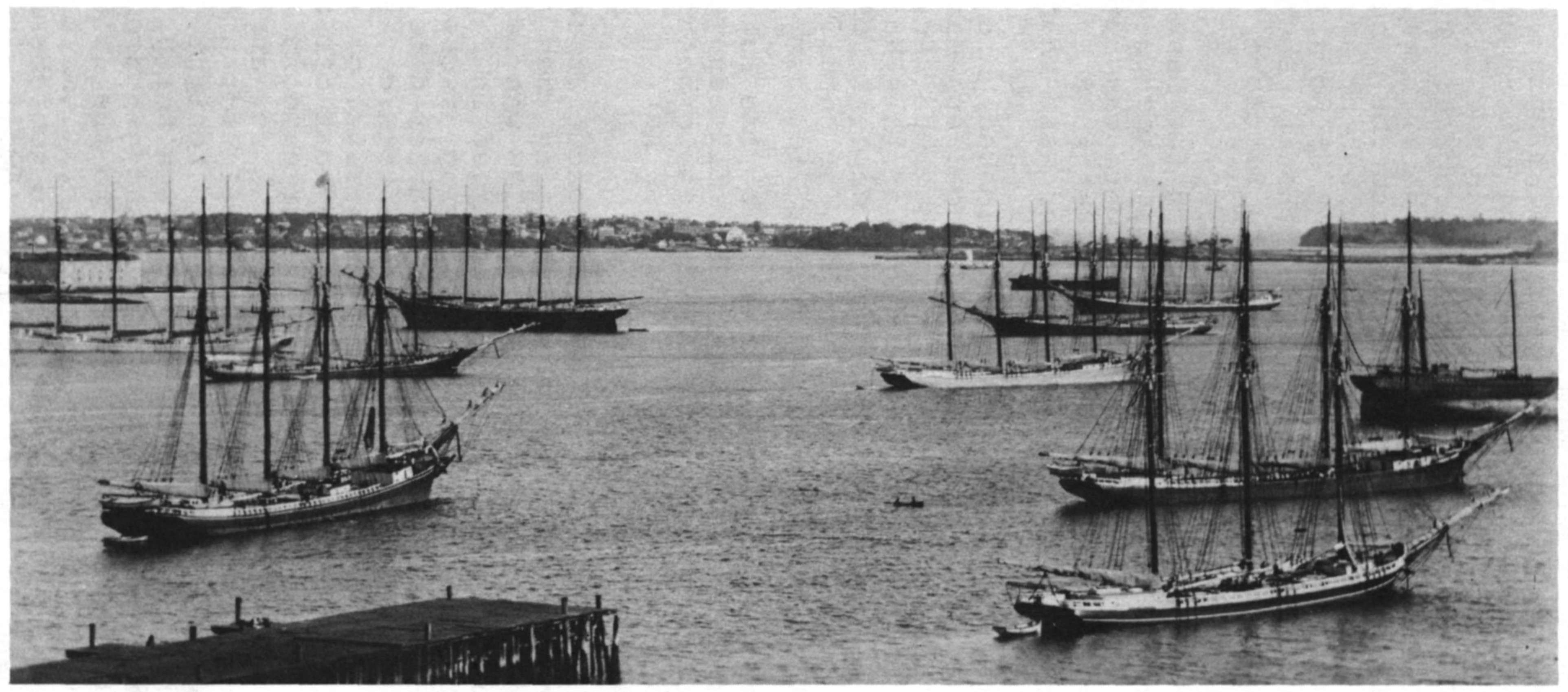
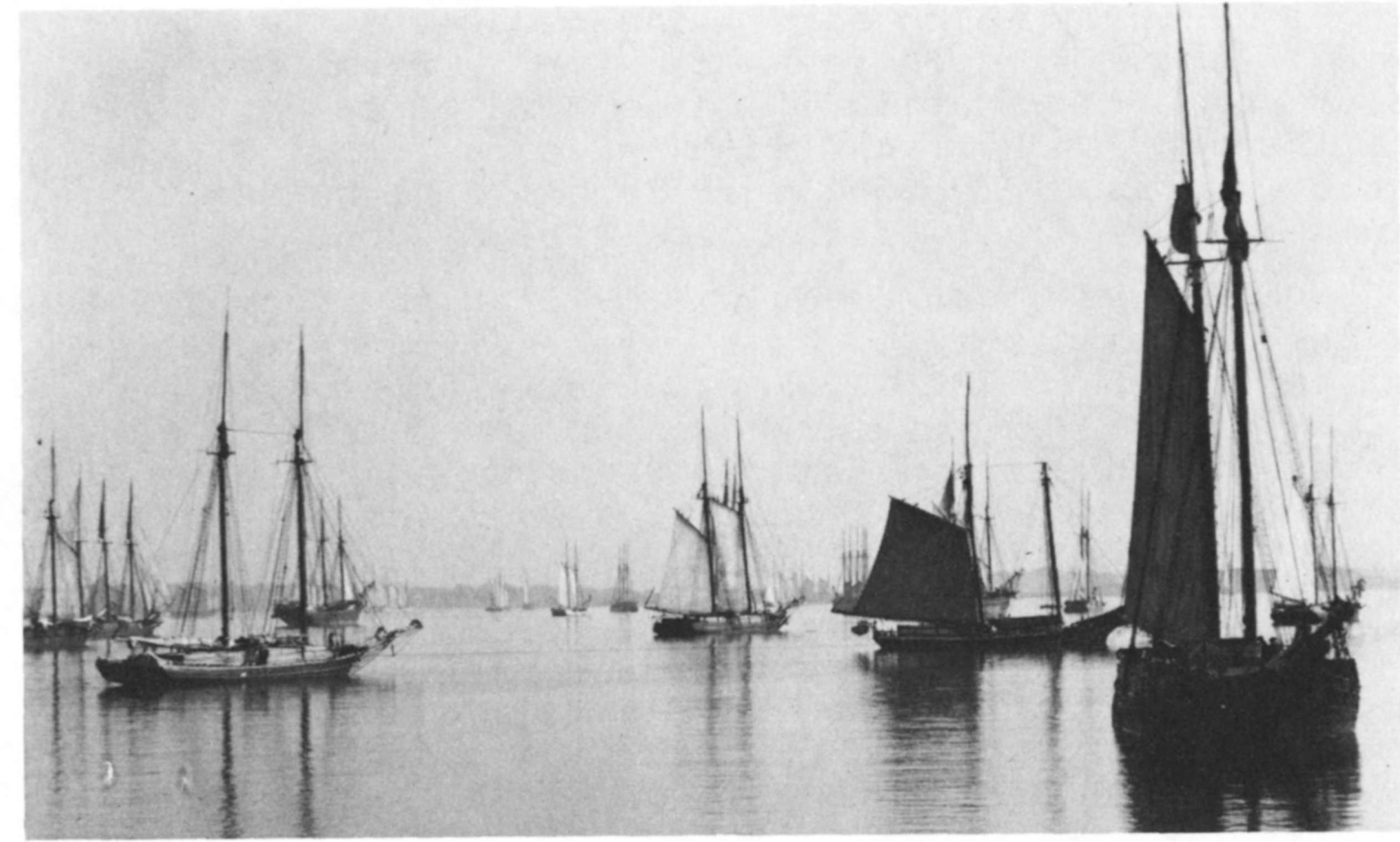
Portland Harbor about 1906. This remarkable photograph of coal-laden schooners includes two vessels commanded at different times by F.H.P. These are the ALICIA B. CROSBY, the dark-painted four-master in the right foreground and the white five-master DOROTHY PALMER in the middle distance at the extreme left.
[Pg 24]
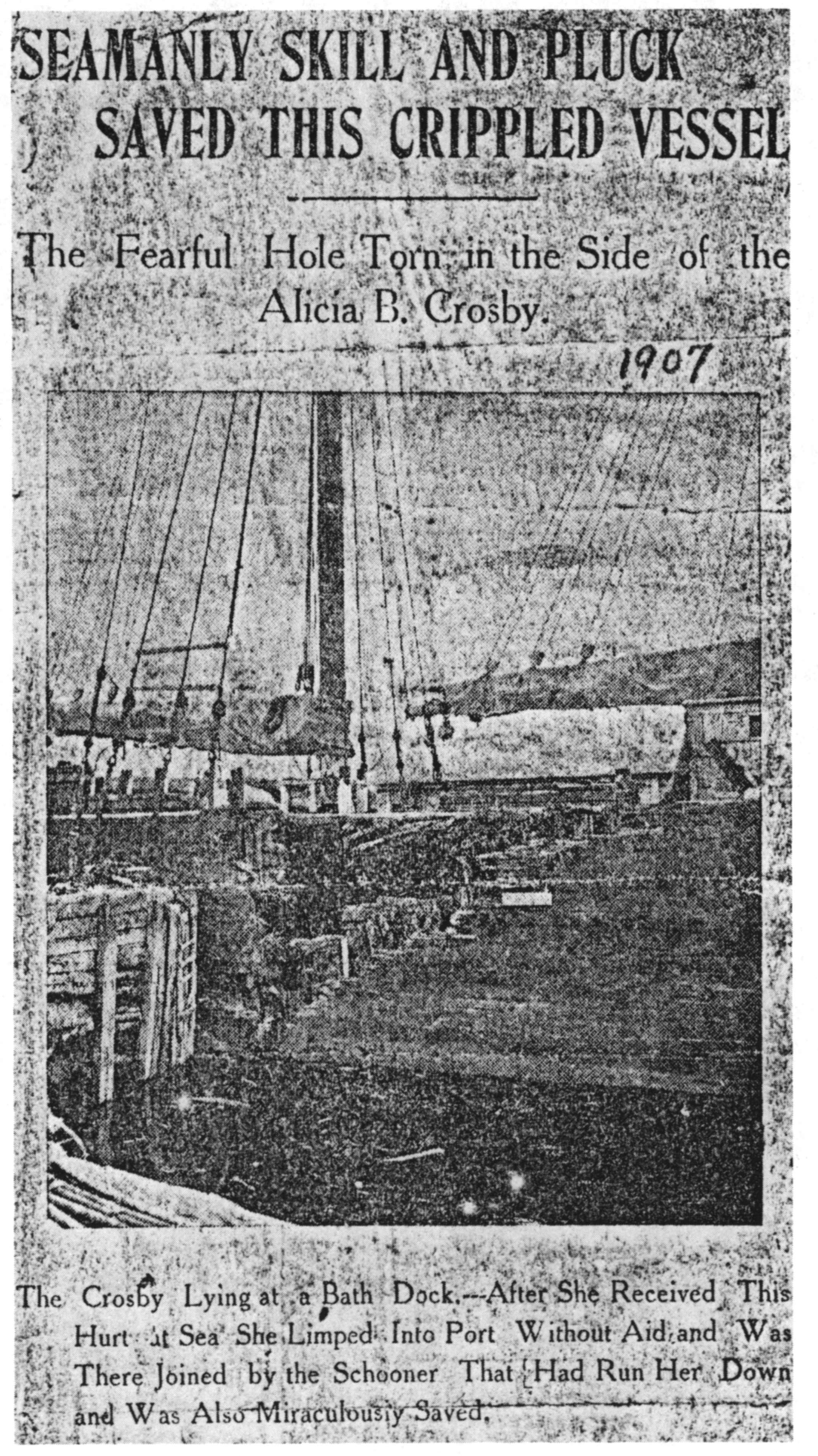
This Bath newspaper clipping reveals the “fearful hole” in the ALICIA B. CROSBY with which, covered only by a canvas patch, F.H.P. brought the vessel safely to Bath.
[Pg 25]
Soon after arrival, Capt. Sam Percy came down to look the situation over. He inspected the huge open hole in the CROSBY’s side after the canvas patch was removed, contemplated what he saw for a minute or two, shook his head and said, “Well, Peterson, I don’t know what to think about you. You’re either a right smart sailor or a damned fool.”
Pete had asked the agent if he wanted him to keep the crew together for witnesses to the collision but the agent replied that it wouldn’t be necessary as the VAN BRUNT was clearly at fault, had practically acknowledged it, and would probably settle before the repairs were completed. That’s not the way it worked out. The VAN BRUNT’s owners libelled the CROSBY, kept their crew together for over a year, drilled them well in their false testimony, and won the case. Belated efforts to find members of the CROSBY’s crew were futile. Pete was the only witness available to testify and the Judge may have believed that the CROSBY’s owners were unwilling for the crew to testify. It was an expensive lesson.
While the CROSBY was repairing, Pete went to Philadelphia to be married. The bride was a sweet-natured blue-eyed Scottish lass whose parents had brought her to Philadelphia when she was a child. Her name was Margaret Hynd. Peggy was to share Pete’s life for more than fifty years. She was a cheerful, good-humored, companionable lady when I knew her. It required but little imagination to realise that she must have been a mighty attractive young woman when Pete met her during one of his many trips to Philadelphia. A friend from down home, who ran regularly to Philadelphia in a coastal steamship, had become acquainted with Peggy’s step-father and he introduced Pete to the family. Pete was thirty-one and his bride twenty-six.
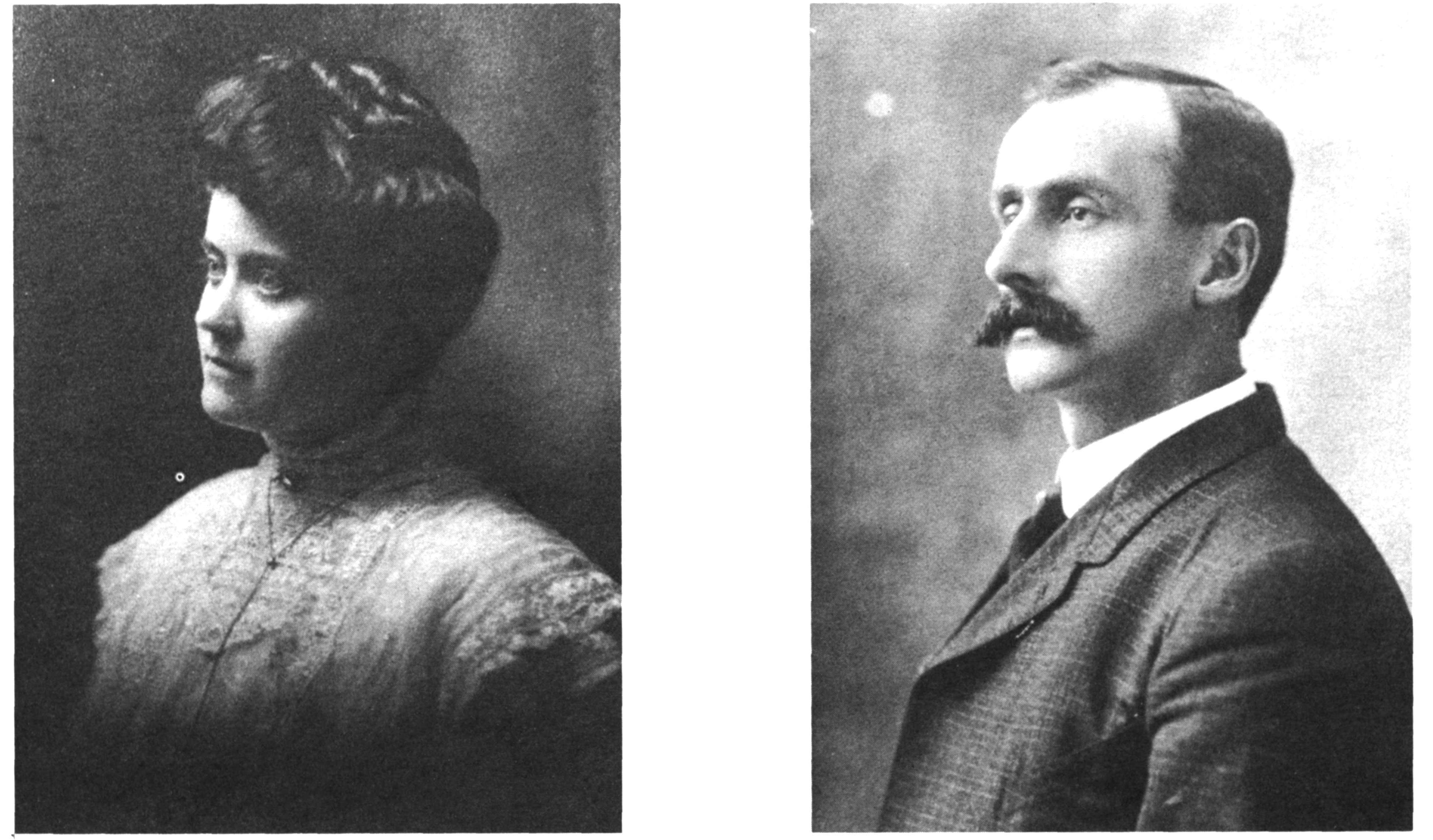
When the CROSBY sailed from Bath, Pete was accompanied by his bride. She continued to go to sea with him until early in 1909 by which time their first child was on the way. Son Frank James was born on the first of June, 1909, at his grandparents’ home in Philadelphia. It doesn’t appear that Pete was on hand for that launching as the CROSBY was in Brunswick, Georgia, on that date.
In January, 1909, Pete brought the CROSBY to Boston with lumber from Jacksonville. While there he was admitted to membership in the Boston Marine Society. The oldest organization of its kind in the United States, having been established in 1742, the Society was a veritable fraternity of shipmasters, linked together for fellowship, for the improvement of navigation, and the [Pgs 26-27]relief of distress among needy members and their families. Thirty years later, Pete was to be elected Secretary of the Society and administer its affairs.
Another important event at that time was his joining the Masonic order. During his earlier visits to Machiasport, he had received the first two degrees in Freemasonry at Warren Lodge No. 2 in East Machias. As a courtesy, Faith Lodge in Charlestown, Massachusetts, gave Pete the essential Third Degree by which he was admitted a member of the East Machias lodge. In taking this step, Pete became a brother to the vast majority of the shipmasters with whom he would be associated during the rest of his life.
When Pete arrived in Portland in December, 1909, with more lumber from Jacksonville, he was a sick man. He had pneumonia and had to go home. He was relieved by Capt. McIver of the JAMES W. ELWELL. Not until the following April was Pete able to resume command of his vessel.
Speaking to me of the ALICIA B. CROSBY, Pete said, “She’d run in anything that ever blew. I never had to heave to.” He also said that she was “hard, flat on her bilges, and broke a lot of gaffs.” Her best passage of any length was from Fire Island to Cape Henry averaging better than fourteen knots. On that occasion, she had been becalmed off Fire Island in company with the ELEANOR A. PERCY, waiting for a wind. When it came, the PERCY “ran away and must have averaged sixteen knots to the tug off Cape Henry because she was already loading when we arrived.”
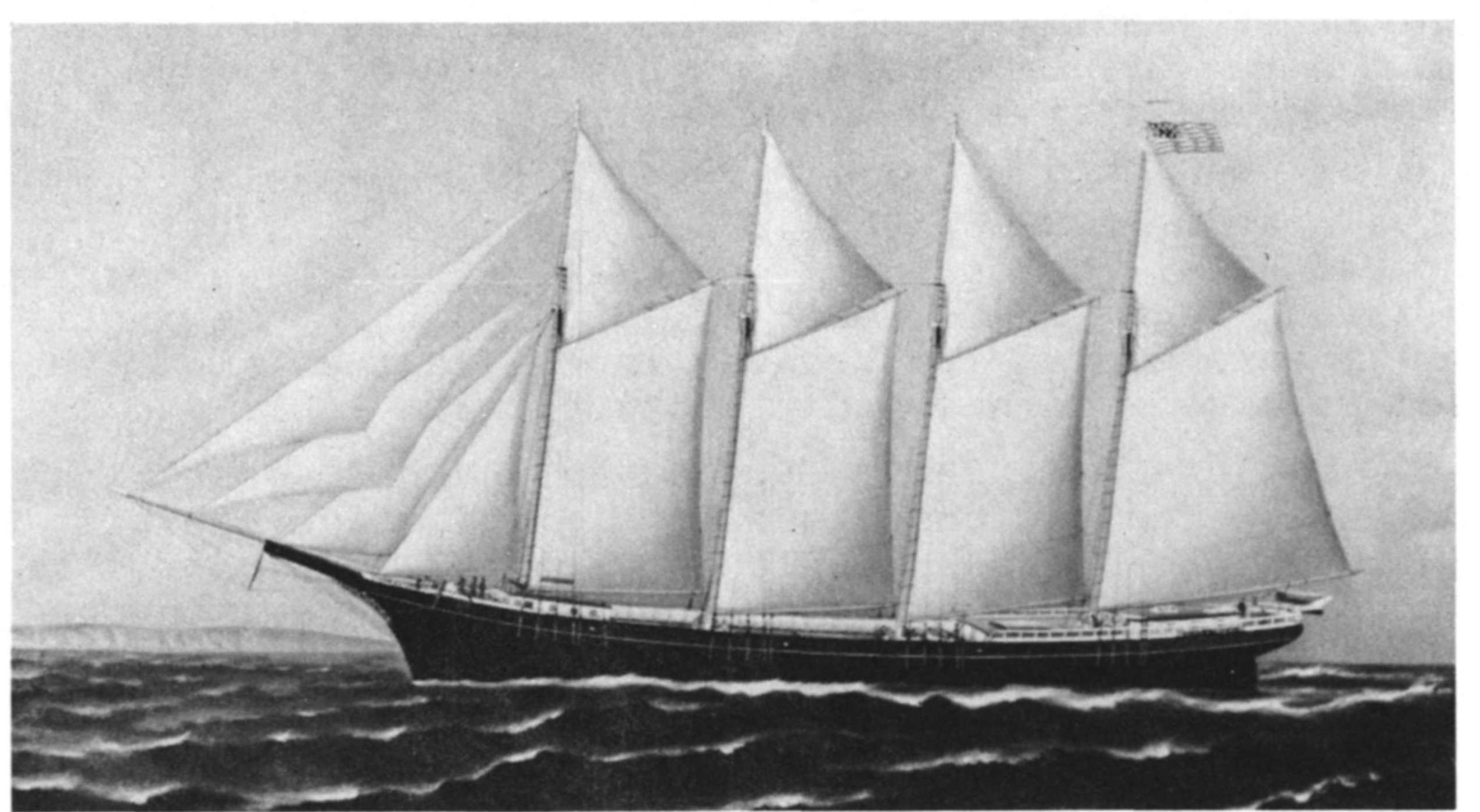
Schr. ALICIA B. CROSBY as seen by the Boston artist S.F.M. Badger. This painting was presented by family and friends in memory of F.H.P. to the Maine Maritime Museum at Bath, May 1981.
In May 1912 Winslow offered Pete command of the five-masted JAMES W. PAUL, JR., a vessel of 1800 tons gross. Their second son, John Hewitt, had been born to Pete and Peggy in November of 1910. With a growing family, Pete wanted the greater income that a larger vessel promised and he gladly took over the PAUL.
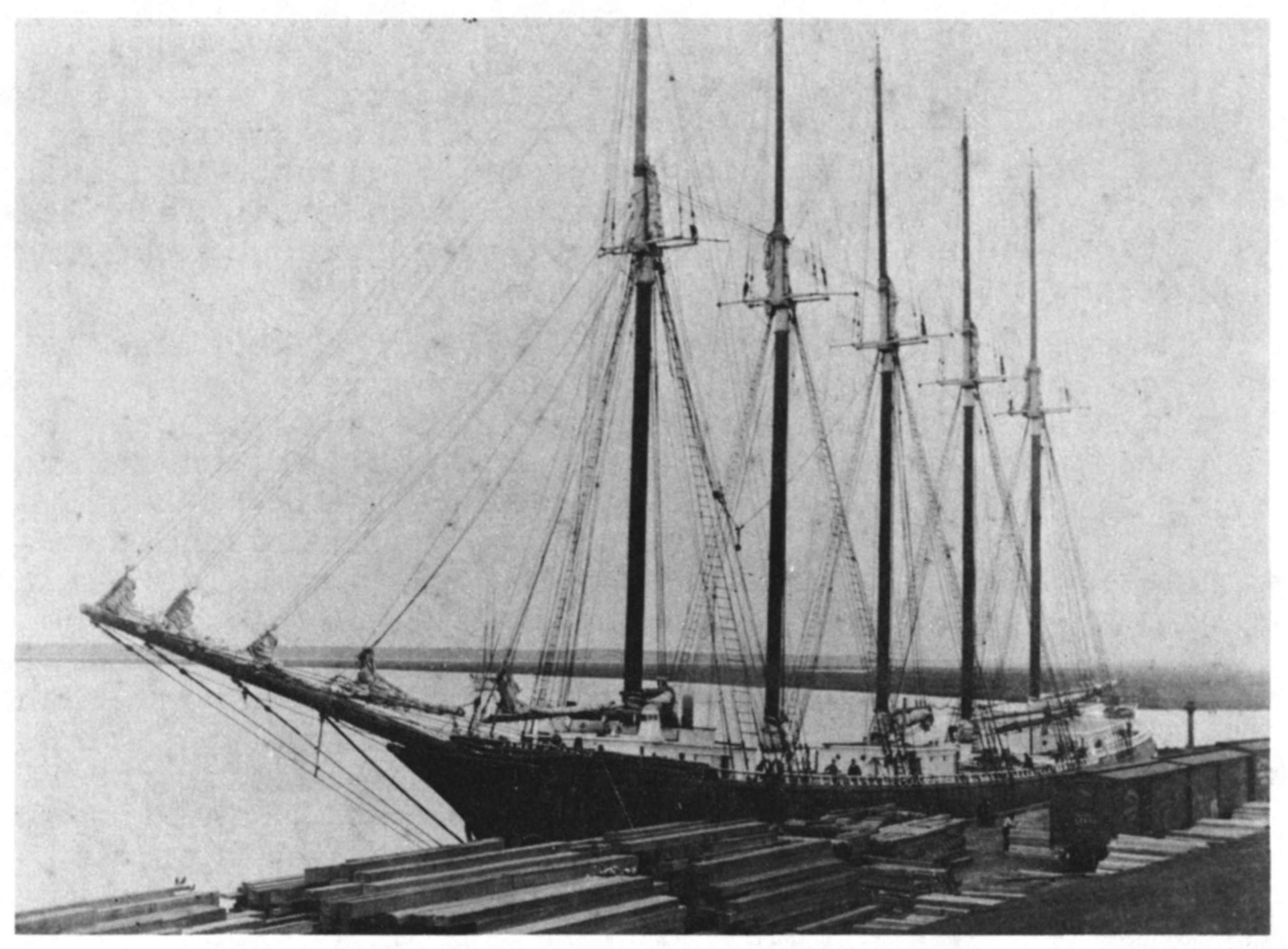
Schr. JAMES W. PAUL, JR., 1808 tons, loading railroad ties at Brunswick, Georgia. F.H.P. Was Master of the PAUL from 1912 until 1916 when the vessel was sold.
The JAMES W. PAUL, JR. was an unusual vessel in some respects and possessed some distinctive characteristics. She had been built on Verona Island, opposite Bucksport, in 1901 by McKay & Dix. For a keelson she had a big steel I-beam. She also had steel hanging knees. Occupying much less space than conventional wood members, these features were intended to provide greater cargo capacity. They undoubtedly had done so until, earlier in her career, her limber antics had broken the I-beam. Repairs had consisted of constructing a heavy timber keelson around the I-beam. Unlike [Pgs 28-29]other schooners, she carried her running lights in lighthouses on top of the forward house and she sported a spike bowsprit. She was, however, a good sailor and Pete was happy with her. He told me, looking back, “I had wonderful luck with the PAUL.”
Joining the vessel at Bath in June, 1912, he was in the coal trade continuously for two years, running between Newport News and Bangor or Portland with a couple of trips to Galveston and Port Arthur, Texas. On one occasion, the PAUL ran from Portland to Cape Henry in fifty-two hours under reefed jigger and forestaysail.
One might easily imagine that running back and forth between Newport News and Boston, or between Philadelphia and Portland, could become deadly boring and offer small challenge to a shipmaster. But, if you thought so, you would be wrong.
In his classic book on the great coal schooners,[4] Capt. Lewis Parker has drawn a graphic description of their real world:
The men and vessels which navigated the coastal waters northward from Cape Hatteras are deserving of no contempt because they seldom ventured far from land. Indeed, for this very reason they should be held in the highest regard. The jagged lee-shores, fog-hidden headlands, and sandy shoals along this coast exacted from the successful coasting master a high degree of skill, knowledge and vigilance, strengthened by intuition. In addition to these natural dangers one must add the omnipresent risk of collision with the constant congestion of vessels scurrying in and out of the dozen or so important ports along this seaboard. In comparison, the open sea is far safer.
The big coal schooners plied nearly the whole length of these waters from Hampton Roads north to the Penobscot, running the gauntlet of collision, summer fog, autumn hurricanes, and winter blizzards. Their course cut directly across the steamer lanes from Europe and the West Indies to Philadelphia, New York and Boston, three of the busiest ports in the world in those days.
The master of a large coastwise steamer trading to the southward of New York, in speaking of [Pg 30]the days when the schooners were plentiful, stated that rarely a year went by when one of the company’s steamers did not sink a schooner.
With all these dangers, Pete had many encounters in the course of his long career, losing a few but winning most by far.
During the seven years Pete was Master of the ALICIA B. CROSBY, he made fifty-seven trips with cargo and thirty-seven return trips light. Of the cargo-carrying voyages, forty-three were with coal. Thirty-five of the coal-carrying trips were to Boston, Portland or Bangor, while eight were to the southward or to Puerto Rico. There were eleven lumber cargoes north, and one trip with ice from Boothbay to Alexandria, one with sugar from San Juan, and one with empty barrels from Portland to Philadelphia.
Freights on coal coming north ranged from $.60 to $1.20, averaging about $.80, per ton. The CROSBY would carry 1850 to 1875 tons, thus producing a gross freight of about $1,500 per trip. In 1908, she made seven coal trips to Portland and one to Jacksonville, returning to Boston with lumber. Gross freights for the year totaled $19,545 on which the Master’s primage would have been $977. Wages at $50 per month added $600 to personal income. Dividends on the 1/64 Master’s interest added probably no more than $200. Put it all together and you come up with about $1,800. It is easy to see why the competition for command of larger cargo-carrying schooners was so keen. Bigger cargoes equalled more personal income.
Pete’s first year in the JAMES W. PAUL, JR. produced gross freights totalling $29,000, which was $10,000 more than the CROSBY produced in the same length of time. Coal freights in 1912-1913 were at $.90 per ton and the PAUL could carry 2,800 tons. Pete’s primage for the year was almost $1,500, and total personal income probably approximated $2,400. In terms of purchasing power, that translates into over $30,000 today.
Quoting again from Capt. Lewis Parker:
There were few commands more sought after by Yankee shipmasters than those in the great five- and six-masters. The Master of such a vessel was entrusted with a ship and cargo which together might represent an investment of $200,000. Such a trust compelled the constant exercise of caution and yet at the same time, the earning power of the schooners was determined by the number of cargoes [Pg 31]which they carried, a consideration which was productive of hard sail-carrying.... The successful Master had to strike a nice balance between prudence and daring, qualities which could be reconciled only by superb seamanship, constant vigilance and intuitive knowledge of every mile of coast in fair weather and foul such as is never exacted of the deepwater mariner.[5]
Between July and November, 1914, the PAUL was laid up with no business. Then she was chartered on coal to Puerto Rico. There Pete received orders to proceed to Progreso, Mexico, to load sisal for Mobile. On arrival at Progreso, Pete reported the vessel ready to receive cargo. As he had no charter party, he asked the consignee if he could see their copy. He was told that the only copy was at the head office in Merida, but if he wanted to go there to see it, they’d supply an interpreter for him. Early next morning, while waiting for the train to arrive, he noticed a steamer coming in and asked the interpreter what ship it was. He said that the HONDURAS was due and he supposed it was she. When the ship got as close as she dared come, she started firing shells at the railroad station. One shell hit the station roof, and red tiles flew in all directions. Pete and the interpreter did the same; they ran out in the country and hid in the bushes. Hundreds of others, many in their nightclothes, did likewise. They stayed there until dark when Pete went to the beach well below the town and hired an Indian with a canoe to paddle him back to the schooner. It was all part of the Carranza Revolution.
The PAUL had a six-month time charter on sisal and made several trips between Progreso and Mobile, occasionally bringing out as passengers a few Americans eager to leave that revolution-torn country. During that summer of 1915, Mrs. Peterson and the boys accompanied the Captain.
In October, lumber was loaded at Gulfport for Rio de Janeiro. On that voyage, shortly after crossing the Equator, the Mate informed the Captain one morning that the Cook could not be found. The ship was searched but all that was found were his slippers on the rail. It was noticed that the cover of the lazarette hatch on the poop was missing; likewise the cat. Apparently the man had jumped overboard taking his cat with him. Then it was remembered that the Cook had been acting queerly for a few days but nobody had attached much importance to it. [Pgs 32-33]They arrived at Rio after a fifty-three day passage. The American Consul sent a clerk to take an inventory of the Cook’s personal effects. It was then that they discovered that the man had two wives, one in Port o’ Spain, Trinidad, and another in Liverpool, England. “Enough,” said Pete with a smile, “to make any man jump overboard.”
From Rio they proceeded to Buenos Aires to load linseed for Baltimore. While Pete was at Buenos Aires, in February 1916, his mother died at Machiasport at the age of seventy-six.
Pete had proved himself always a dutiful son, regularly sending home to his mother part of his pay. Among Pete’s papers I found a record of such remittances dating back to 1898. During the ten years he was in the CROSBY and the PAUL, he had J. S. Winslow & Co. send his widowed mother $30 on the first of every month.
Shortly after leaving Buenos Aires, they were caught in a pampero which necessitated putting in at Barbados to check a bad leak that had developed. The PAUL was forty-seven days to Baltimore via Barbados. On arrival, Pete learned that the vessel had been sold and he was instructed to deliver her in New York. When that was done, he went home to Portland. Winslow had bought the PAUL for $14,000. They sold her on the inflated war-time market for $125,000.
While he was relaxing with his family, Pete heard that the Mengel Company of Louisville, Kentucky, was building a vessel at Percy & Small’s and wanted her Master to be there while she was under construction and then take her to West Africa for mahogany. Pete came to Bath, saw Capt. Percy and got the job. The four-master C. C. MENGEL, JR. was launched in August, 1916, the first vessel to be coppered on the stocks in more than twenty years. She was coppered eleven feet up with 1750 copper sheets and a half-ton of copper nails, proof against marine borers.
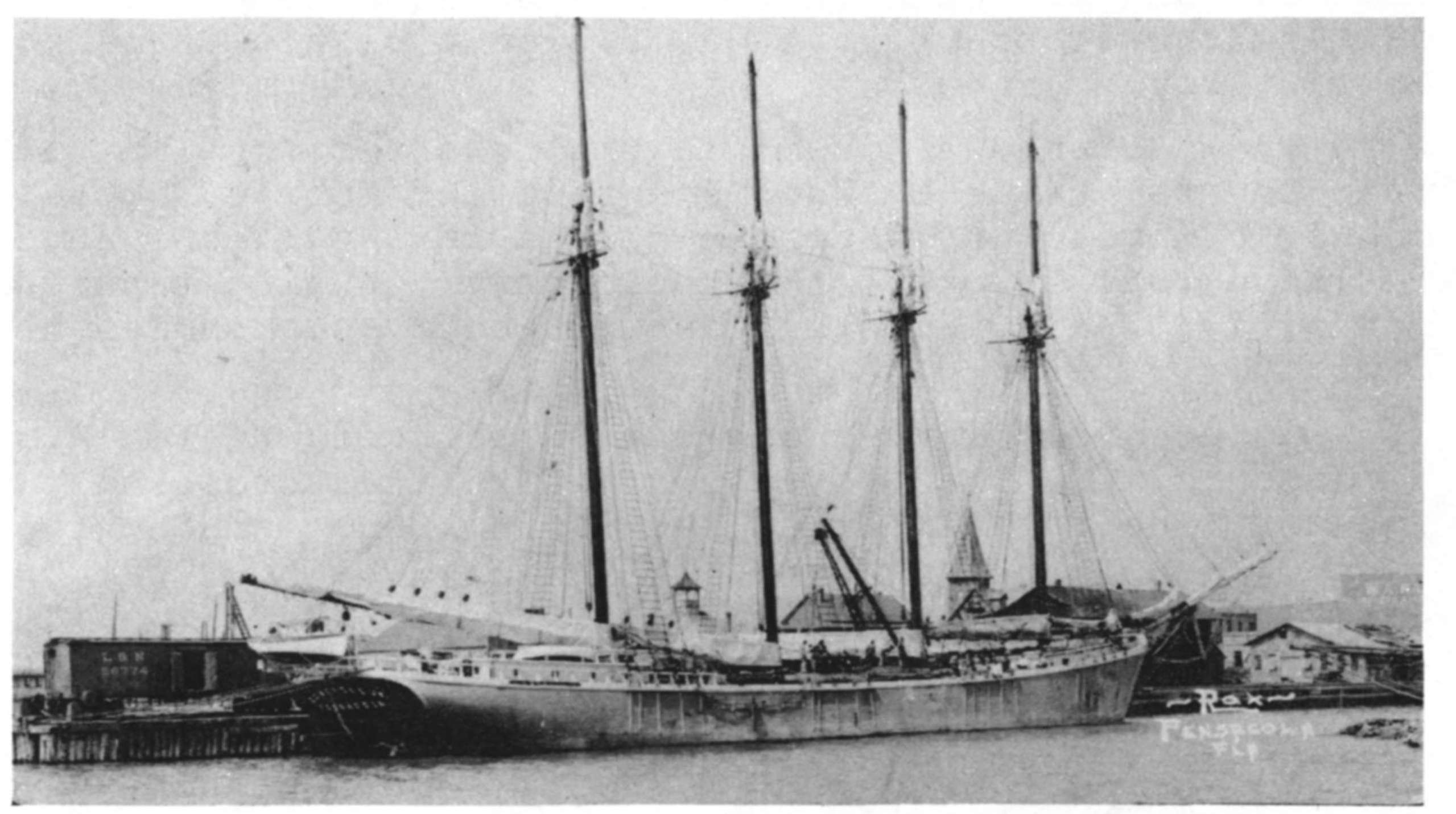
Schr. C.C. MENGEL, JR. on her arrival at Pensacola, Florida from West Africa with mahogany logs, March 1917.
Pete took her to New York and loaded a general cargo for West African ports. The iron bark SNOWDON loaded for the same ports, and the MENGEL took her berth when she left. Mengel’s agent told Pete when he was ready to sail that if he beat the SNOWDON to Sekondi he’d buy him the best hat to be had in New York. Pete told him that his money was safe because the bark had nearly a two weeks’ headstart. However, the MENGEL arrived and discharged at several different ports, and then beat back to Axim to load mahogany, before the SNOWDON arrived at Sekondi. Whether or not Pete got his hat must be left [Pg 34]to conjecture, but it seems doubtful in the light of subsequent events.
Loading mahogany logs in the open roadstead off the West African coast is a tough job, as the swell from the southeast trades causes a vessel to roll. Some of the logs were six feet in diameter and weighed as much as fourteen tons. Loading was done with the schooner’s own gear, a special boom being carried for the purpose. In loading the deckload, the Mate was struck in the chest by a swinging log and went to the hospital with broken ribs and a punctured lung. He missed the voyage home and the Second Mate was promoted in his place.
When they reached Pensacola from Africa in March, 1917, Pete submitted his resignation to the Mengel Company. They offered him the big steel four-masted bark DIRIGO, but when he learned that she was chartered for a French Atlantic port and then to load mahogany at Axim, he refused the offer. He explained, “I figured that it would take so long to load that ship, with her small hatches, that by the time she was loaded she’d be so foul she wouldn’t be able to get out of her own way.” As requested, however, he did take the MENGEL to New Orleans where she was to load grain for the Canary Islands. His decision regarding the DIRIGO proved to be a wise one. The vessel was sunk on May 31, 1917, by a German U-boat southwest of Eddystone, England.
After a short time at home, he went to New York in search of a command. A broker offered him the HARWOOD PALMER at $600 per month to take her to France. He turned it down. Shortly after that he was offered $800 a month to take the HARWOOD. This gave him pause. He asked, “What about the captain who is already in her?” He was told that that captain wouldn’t go to France. Pete decided to talk with him and went to see him. He told Pete that he could get him $1,000 a month. Pete replied, “Well, let’s go and get it!” So the two went to the office of the France & Canada Steamship Company where they met the president of the company. Pete agreed to take the HARWOOD PALMER for $1,000 a month. A contract was drawn which included a prepaid war-risk life insurance policy for $15,000. Pete said that before signing he’d like to clear things with his wife. She didn’t think much of the idea of his going to France but the next day he telegraphed that he would take the schooner. He got a reply saying that they had already found a Master for the HARWOOD but to come to New York anyway as they had bought the J. S. Winslow fleet and [Pg 35]also the WYOMING from Percy & Small.[6] The upshot of this was that Pete got the six-master EDWARD J. LAWRENCE. When she arrived in New York, he relieved Capt. “Billy” Kreger, and after drydocking and refitting, loaded 4,990 tons of six-inch steel projectiles for La Pallice, France.
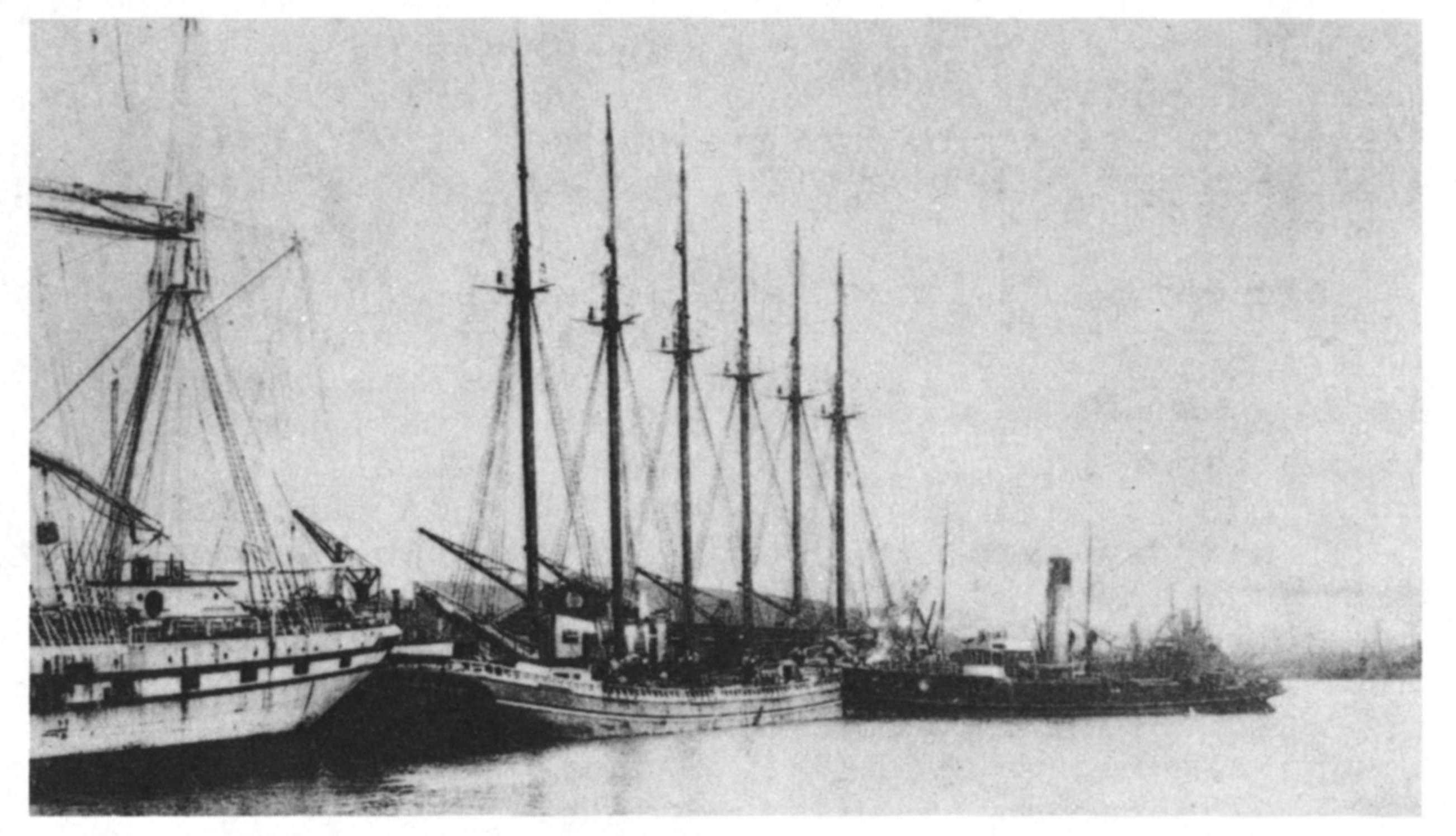
Schr. EDWARD J. LAWRENCE, 3350 tons, on arrival at La Pallice, France in August 1917.
In July, 1917, the LAWRENCE sailed in company with the schooner CARL F. CRESSY. A faster vessel, the LAWRENCE reached La Pallice three days before the CRESSY. Pete was twenty days to the Bay of Biscay, but having no charts of the area other than a general chart, he approached cautiously, made the light in the early evening, and anchored. Shortly, a French patrol boat spoke them and said that if they remained where they were a U-boat would get them before morning. When told by Pete that he had neither chart nor pilot, the guard boat skipper instructed him to get under way and follow. This they attempted to do but lost their guide in a rainstorm and the darkness. When a sounding revealed six fathoms, Pete anchored again. In the morning they found themselves swinging just clear of a rock ledge. Soon the guard boat returned and offered a tow. They proceeded in and anchored in the Roads. When Pete inquired the charge, he was told that there was no charge but that if he wanted to make a present to the boat crew it would be appreciated. The France & Canada representative who came over from St. Nazaire authorized a gift of $100 in francs which Pete passed to the guard boat captain. Somewhat to Pete’s surprise, he distributed it all to his crew, keeping nothing for himself. That evening the guard boat crew descended upon the LAWRENCE bearing cigars, wine and cheese, and an invitation to Captain Peterson to go ashore with them and see the town. Pete confessed that he consumed more than his share of vermouth that evening, but had a fine time.
German prisoners of war discharged the LAWRENCE under the watchful eyes of armed French guards posted at each hatch. She was empty in ten days and moved to an anchorage in the Roads again. Two weeks later the French government sent a gunboat to tow the LAWRENCE to sea. Another gun boat took the CARL F. CRESSY in tow at the same time. Two hundred miles due west they let go the hawsers and both schooners filled away on the starboard tack for the south’ard. The LAWRENCE was equipped with wireless and at ten o’clock that evening they received a [Pgs 36-37]warning from Brest that U-boats were reported about sixty miles ahead on the course they were sailing. The CRESSY had no wireless and didn’t learn of the danger. Pete tacked ship and headed northwest. Next morning the CRESSY was sunk by a U-boat, the crew being picked up later by the French bark QUEVILLY.
In spite of instructions to return by a southerly route, Pete held to a northerly course all the way to Cape Race. They had strong westerly gales and the vessel, being light, made heavy weather of it. One day the Second Mate roused the Captain from his desk to report that he thought the vessel was breaking up. He conducted Pete amidships and showed him that the scarphs in the stanchion rail were opening and closing four inches as the vessel worked in the seaway. Reassured by Pete, they continued their flexible way, arriving in Norfolk after a passage of thirty-five days.
Two weeks before reaching Norfolk, Capt. Peterson suffered an attack of rheumatism that for a time almost completely incapacitated him. On arrival he asked the boarding doctor to take a telegram ashore and thus notify the owners that he was sick and wanted to be relieved. Two days later, the France and Canada port captain arrived with a doctor who confirmed Pete’s condition and said that he wouldn’t be able to work for two months. On the strength of this declaration, Pete went home to Merchantsville, New Jersey, where his family was living at the time. In due course, he settled up with the France & Canada Company, though they wanted him to stay in their employ.
After fully recovering from his bout with rheumatism, Pete went over to Philadelphia where he dropped in at the office of Haldt & Cummins, ship agents and brokers. When he learned that Pete was “at liberty”, Mr. Haldt asked him if he’d do them a favor. He said that Mr. Cummins was in Bermuda where he had bought for $40,000 the Italian steel bark FILIPPO DE NEGRI, had arranged to put her under U.S. registry, and wanted a skipper for her. They proposed to tow her to Philadelphia and fit her for sea. Mr. Haldt said, “You won’t have to do anything but lie in your berth and read. You won’t even have to navigate. And we’ll pay you well.”
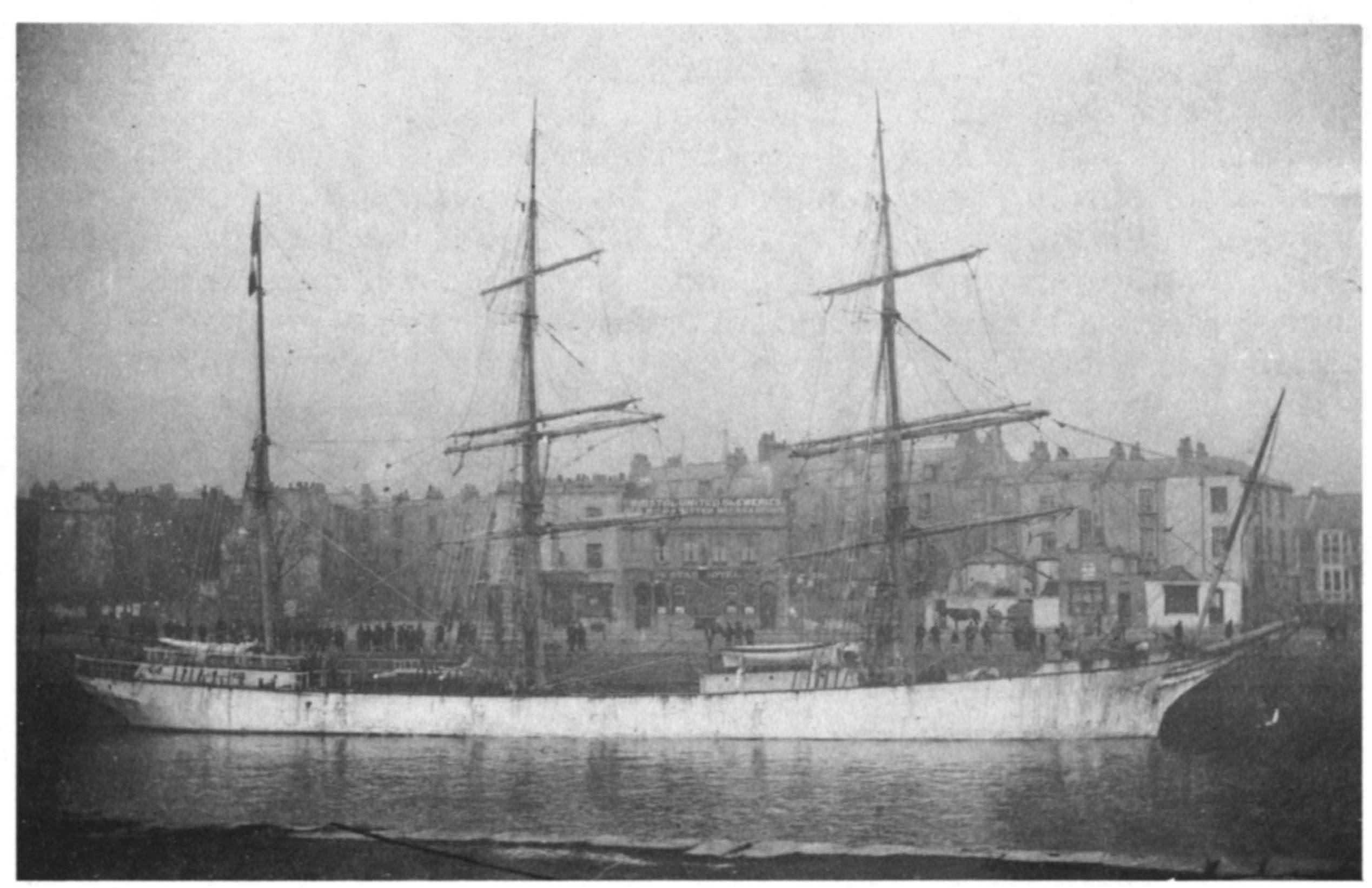
Italian bark FILIPPO DENEGRI, 857 tons, at Bristol, England some years before she arrived at Bermuda in distress and was hulked. F.H.P. had a frightful experience as Master of this vessel in 1917.
Off he went to Bermuda where Mr. Cummins met him. The bark was at St. George’s where she had lain for eight years after arriving in distress. During that time she had been used as a storage hulk. A local shipmaster had been engaged by Mr. Cummins to prepare the vessel for the tow to Philadelphia. He had hired a diver to clear away the barnacles which had grown to a [Pg 38]length of two inches all over the bottom. The diver claimed to have accomplished that job in three days for which he was paid $75. Captain Peterson later wrote, “I don’t believe that forty men could have properly cleaned that bottom in one day.”
They took aboard about 240 tons of scrap iron that somebody wanted transported to the States gratis, but as this was all the ballast they could get, all the yards were sent down and stowed on deck with the topmasts and topgallant masts. Pete shipped eight Bermudians as crew and laid in a month’s supply of food and water.
Later in December, the 500-ton steamer YENRUT (ex-DOROTHY) after discharging a cargo of gunpowder in Cuba, arrived to take the hulk in tow. They finally got under way on December 28, 1917. Before sailing, Pete reached an understanding with the steamer’s captain that in case he had to let go the hawser he would stand by to take off Pete and his crew.
The bark was so foul, and the steamer of such low power, that they could not make six knots in good weather. Before they got halfway to Hatteras, they took a strong gale from the northwest and the steamer could not keep her tow head to the sea. Endangered by falling into the trough, the skipper of the steamer simply let go the hawser and took off. Perhaps the hawser parted, but Pete never thought so. At any rate, the steamer did not stand by as agreed. With no canvas there was nothing for Pete and his crew to do but drift at the mercy of the wind and sea. One man was washed overboard while trying to set a light and the hulk rolled so fiercely that even with all tophamper on deck she rolled her mainmast right out and it went over the side. Next day it was still blowing a gale. A Gloucester fisherman under reefed foresail ran down by them and hove to. Her skipper said that he’d take them off when it moderated but the vessels parted company during the night and in the morning the fisherman couldn’t be seen. He did report the derelict at Bermuda and in due course a cutter was dispatched to their aid. Under a steady northwest wind, the hulk had drifted so far to the southeast of the Islands that the cutter never found them. For eighteen days Pete and his crew drifted about on that derelict bark searching the horizon in vain for help. They saw several steamers and flew signals of distress, but the ships all sheered off and wouldn’t approach through fear of U-boats and decoys.
[Pg 39]
At daylight on January 17, the lookout reported a sail in sight. As there was very little wind, Pete called all hands, loaded their possessions and stores into the lifeboat and made for the sail. It proved to be the homeward bound Spanish brig PEPITA of Barcelona. Unable to make the Spaniard understand what they wanted, they rowed up under his lee, grabbed hold of his fore-sheet, threw their dunnage on deck, and followed it over the rail. When they were finally able to get through to the Spanish skipper, he took their boat aboard and made them welcome.
There were now fourteen men aboard the little brig, twice its normal complement, so everyone went on short rations. She was overcrowded, cold, and uncomfortable, but the Spaniards did all they could and shared what they had. The Spanish skipper said that he would put them aboard the first ship they met and, in any event, Pete could leave in his boat at Gibraltar. But they didn’t meet any ships and they passed Gibraltar during the night, which was no time to attempt to row ashore at that armed and trigger-happy place.
The wind headed the brig after she passed Malaga so the skipper put about, landing his passengers there about four o’clock on the afternoon of February 16, just a month after they had clambered aboard.
Pete described his arrival in Malaga as follows: “I was cleaned up ready to go ashore the minute the anchor was down and I hailed a bumboat. The skipper told me that the American Consul’s office would be closed at that hour. I replied, ‘But the hotels will be open, won’t they?’” Then the skipper asked Pete if he had any money and, when told that all he had was British and French money, the skipper went below and came back with fifteen dollars, Spanish, to give it to him. I went to the hotel just at suppertime and went right to the dining room. When the waiter came for my order, I simply pointed to the menu and said, ‘Todo’, or ‘all of it.’ I don’t know if he brought it all or not, but it was the best meal I have ever eaten. Then I went to the room clerk and asked for a room. He tried to tell me that the hotel was full but that he would give me a cot in the hall for the night and that next day I could have a room, but that was too much Spanish for me to absorb. At that point a lady who had been listening came over and explained in English what the clerk had been trying to tell me.
“The next morning I took my crew and visited the American Consul. He sent his clerk to the steamship [Pg 40]office to get steerage tickets for all of us on the Spanish steamship MONTEVIDEO sailing from Barcelona to New York with a stop at Malaga. I told the Consul that he need not get a steerage ticket for me and though I may have arrived in Malaga lousy, I did not propose to arrive home that way. When he asked what I would do I told him that I’d cable home for money. He then said that if I’d have the money sent to him he would advance it to me so I could go on the MONTEVIDEO. But before I sent the cable we got word that the sailing of the MONTEVIDEO had been cancelled.
“While waiting at Malaga for a ship, a Newfoundland fisherman arrived with a cargo of dried fish. He had sustained some heavy weather damage and called for a survey. The Consul named me as one of the surveyors. The skipper of the fisherman mentioned to me that in Gibraltar, where he had stopped for orders, he had met a Captain Willard of the American schooner JOHN B. BIEMILLER. I knew Captain Willard well and sent him a telegram inquiring if there was any prospect of getting a ship home from Gibraltar. Captain Willard’s reply said nothing about a ship but said that he would let me have any money I needed. I showed the telegram to the Consul who asked if I wanted to go to Gibraltar. When I suggested that we might as well be there as in Malaga, he arranged for me and my crew to travel by rail and ferry to Gibraltar. He also wired the American Consul there, who with Captain Willard met us at the dock. My friend handed me $300 and the Consul had made a hotel reservation for me and boarding house accommodations for the crew.
“I was in Gibraltar for a week when, one Sunday morning, I met Captain Shanks of the S.S. ROBERT M. THOMPSON. He asked me what I was doing there and when I told him that I was trying to get a ship home, he said, ‘Come with me. I’m on my way to the Consul right now.’ Although he didn’t have space for my crew, I signed on as Mess Boy. We sailed next day in a convoy of ten-knot ships. On the following day my crew were put aboard an Italian passenger liner, which made much better time than our convoy.”
Pete got back to the United States on March 21. The crew had arrived in New York a week earlier, and Mr. Cummins had journeyed from Philadelphia to pay them off and send them back to Bermuda. They had been hired “by the run” at the rate of $15 each. Some run it had turned out to be!
[Pg 41]
When Pete reached New York, he was offered command of the bark CALLAO, a 1000-ton vessel, thirty-three years old, that had just been put under the American flag. He told the broker that he’d have to go home first. The broker said, “If you’ll take her, you can stay home for a week.” Pete later told me, “When I told my wife about the offer, she said, ‘If you ever mention the word “bark” to me again, I’ll leave you!’.”
Pete continued, “I was home several days before I went to see Mr. Cummins. He treated me fine, paid me from the day I left home until I got home again, and paid the highest wages the Shipping Board was paying to Masters. I didn’t see the skipper of that steamer that was towing us until a couple of years later. I was having dinner in New York with three other shipmasters when this fellow came along, put his hand on my shoulder and said, ‘Well, I never expected to see you again.’ I said, ‘I never wanted to see you again and I don’t want to see you now.’ He turned and went out of the restaurant.”
After a couple of weeks at home, Pete went to New York again, looking for a ship. He learned that W. S. Job & Company was having a five-master built at Percy & Small’s yard in Bath, so he went to see Mr. Job. The next morning he was on his way to Bath. He was in Bath for a month before the ST. JOHN’S, N.F. was launched. Thereupon he took her to New York where she was to load general cargo for Rio. He had his family with him on the run to New York. Son John remembers that many people who came to see the handsome new vessel at her Brooklyn pier guessed aloud that the ‘N.F.’ in her name must mean ‘Naval Fleet’. He recalls that they sailed past Cape Cod at the very time a German U-boat sank some barges and shelled Orleans.[7] Before the schooner was loaded, Pete had some sort of disagreement with Job’s port captain and left the vessel. Whatever the problem was, it must have been personal with the port captain because Pete wrote, “Mr. Job was one of the finest men I ever met.”
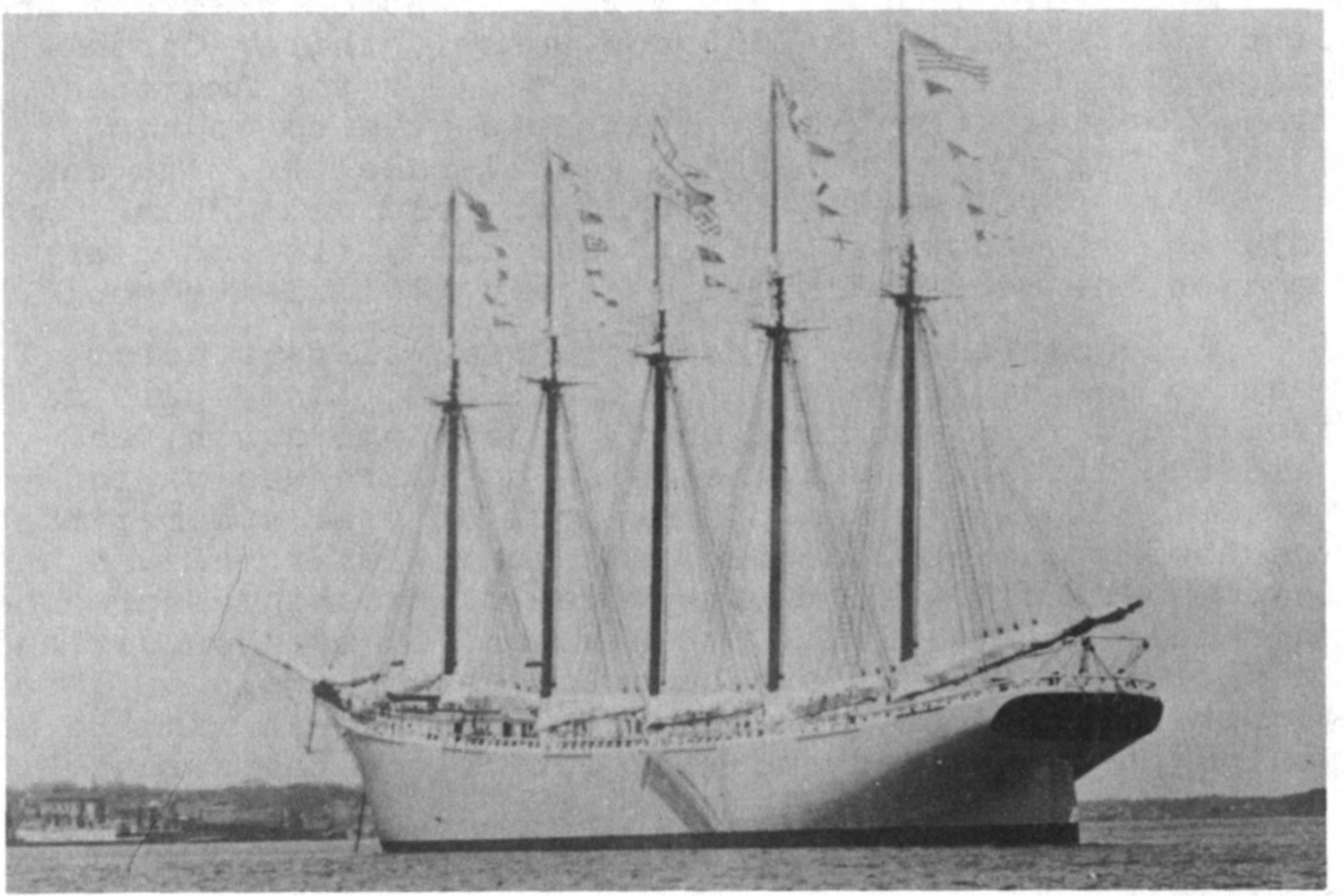
Pete next went to work for the Government inspecting lifesaving equipment on Army transports. He had in his charge a squad of a dozen inspectors and reported to an Army major. He didn’t stay with this long because the pay wasn’t enough to permit him to live in New York and support his family in West Collingswood, New Jersey. So when the France & Canada Co. wanted a Master for the [Pgs 43-43]CORA F. CRESSY, Pete applied and got the job. The CRESSY had arrived from the Argentine with a cargo of linseed. She had been through a bad blow and was badly strained and damaged. After she was discharged, she went to Tietjen & Lang in Hoboken to repair.
As it worked out, Pete didn’t stay in the CRESSY after supervising her repairs. They raised her drooping stern and stiffened her with a 16 × 16 continuous timber fastened through the tweendecks waterways and installed a lot of heavy fastening. At the time the CRESSY’s repairs were completed, the owners notified all their Masters that after a certain date their wages would be cut. This precipitated a general exodus, a number of the captains signing up for Lieutenant Commander’s commissions in the Naval Reserve. Pete was about to follow suit when he was offered command of the four-master ELEANOR F. BARTRAM, which had been built in 1903. Pete said, “She was the finest vessel I was ever in.”
After a coal trip to Puerto Rico, and carrying ship timber from Gulfport to Norwalk, Connecticut, the BARTRAM was chartered on coal to Pernambuco, Brazil. At that time, though the Armistice had just been signed, the war-time rules required shipmasters going foreign to report to the Navy for sailing instructions. So, after clearing at the Custom House, Pete proceeded to the Navy office where a Reserve officer started dictating instructions to a stenographer. The officer looked vaguely familiar, and then it dawned on Pete who he was. “Were you ever Mate in the ALICIA B. CROSBY?” Pete asked. The officer looked up startled and replied, “Yes.... Are you Capt. Frank Peterson?” Then he said to the stenographer, “Never mind that. He knows how to go.”
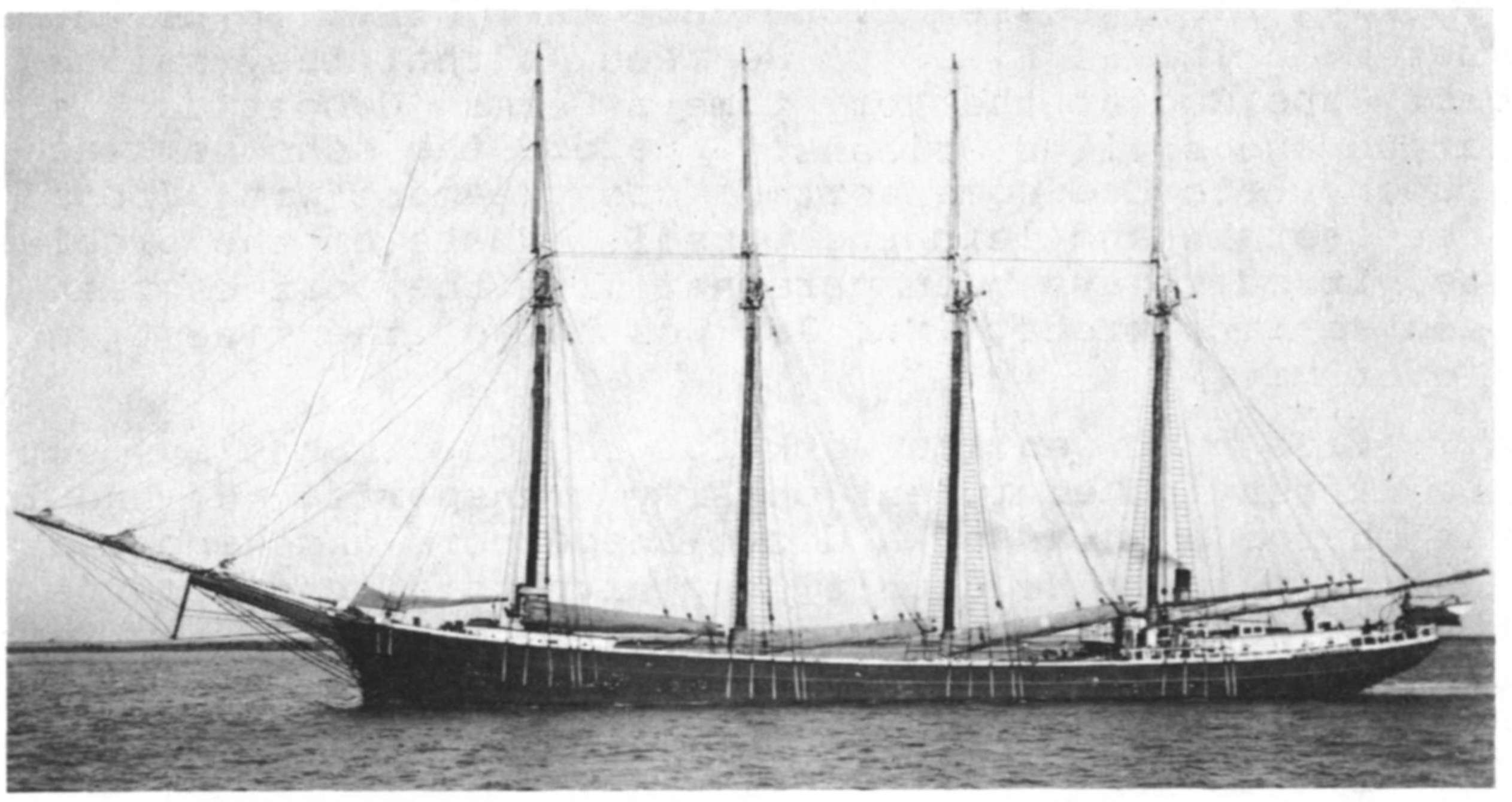
Schr. ELEANOR F. BARTRAM, 1114 tons, of which F.H.P. was Master from September 1918 until the end of 1920. “Finest schooner I was ever in.”
After a fair passage to Pernambuco, he received orders to load logwood at Jamaica. They towed out of Pernambuco and filled away on the starboard tack. But the wind headed them and as they were getting close to Olinda Reef they attempted to tack ship. Bad luck! She missed stays. Trying to wear her around, the BARTRAM struck the Reef and stayed there, pounding heavily. The following day, tugs pulled her off and took her back to Pernambuco where they libelled the ship for $40,000. Pete cabled Emery that he thought the claim was excessive. They told him to make the best settlement he could and cable them for what funds he needed. Pete hired a diver to examine the bottom. The diver reported (falsely as it turned out) no serious damage ... just some oakum out which he could fix. Pete finally got the salvors to settle for $30,000, and to pay all port charges and tow him to sea.
Not long after they sailed for Jamaica, the schooner began to leak badly. Pete decided that in her condition the vessel could not load any cargo, so he proceeded directly to New York. When she was hauled out on the railway at Perth Amboy, it was found that her keel was gone flush with the garboards and the bottom planking on one side was badly damaged right to the turn of the bilge. Pete speculated that the lying diver at Pernambuco must have thought that he would strengthen the salvage claim by making it appear that they had saved a sound vessel.
When the repairs were completed, the BARTRAM chartered on coal to Genoa, Italy, at $20 per ton prepaid. On their arrival there, after a sixty-three day passage, a ship broker came aboard seeking business. As the freight had been prepaid and Pete had no letter of credit, he told the broker that he’d be glad to give him the ship’s business but didn’t know what he’d use for money. The broker asked, “Who are your owners?” When he learned that John S. Emery & Co. owned the vessel the broker said, “You can have all the money you want. When we settle up, I’ll write a letter to Emery Co. stating what I have done and how much they owe me. You sign it, and that will be all that is needed.”
The BARTRAM was forty-two days beating back to Norfolk against persistent headwinds. The vessel was light and “tender”, and listed badly on both tacks. When the crew came to be paid off, Pete was surprised to see the Cook asking to be paid off too. Asked why he wanted to leave, he replied, “Cap’n, I’m so damned sick and tired of tryin’ to cook on the side of a stove, I jes’ want to get off this vessel.”
The schooner was next chartered on five coal cargoes to Bermuda. She was never more than five days going out, and on one occasion made the run in seventy-two hours. Pete stayed home one trip to take his family to Seaside Park for a vacation at the beach. When he rejoined the BARTRAM at Norfolk, the schooner was lying at anchor. Her appearance surprised him. She was so deep in the water that he suspected something seriously wrong. On going aboard, he asked the Mate if she had water in her. He replied that she did not leak. Pete asked why she was so deep in the water and was told that there was a lot of coal left in her by the stevedores.
When the vessel docked to load cargo, Pete had them estimate the amount of coal that was already in her and they figured it at seventy tons. Pete asked the shippers [Pgs 46-47]to add it to his Bill of Lading so that he could collect freight on it, but they would only record the amount they had put aboard. On arrival at Bermuda, Pete told the consignee about the seventy tons that had been left aboard. He said that if they wanted it, they’d have to pay the freight on it. They couldn’t agree to pay freight twice on their own coal, so when Pete estimated that there was about seventy tons left in the hold he told the stevedore to knock off and put the hatch covers on. When he went to collect his freight money, the consignee was surprised to learn that the schooner was all discharged as the stevedore had estimated that it would take all day. Pete told him that it would take all day if they discharged that last seventy tons. They paid the freight and the stevedore discharged the last of the coal.
After the Bermuda charter was completed in the fall of 1920, Pete was lured away from the BARTRAM by the offer of the command of a large yacht. Unfortunately, the intended buyers were unable to complete the deal, so the whole thing fell through.
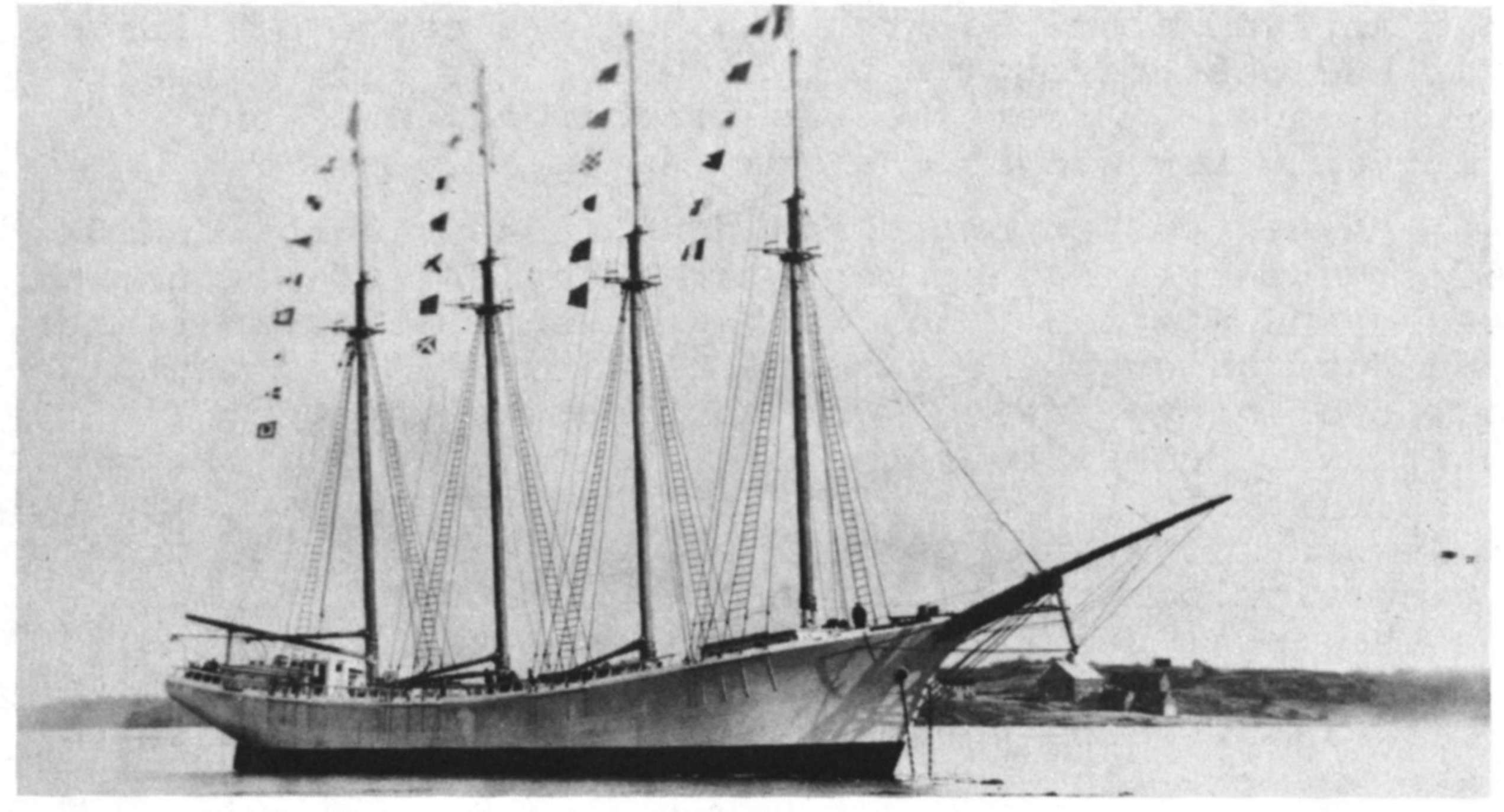
The handsome schooner JOHN R. FOX, 741 tons. F.H.P. was Master of this vessel for three months in early 1921.
The following February, Pete was engaged by the New York firm of Cohen & Zeman to take command of the pretty little raised-deck four-master JOHN R. FOX. She had been built by Bowker at Phippsburg in 1918. He took her to Norfolk where coal was loaded for Vera Cruz. Returning light to Tampa in July, Pete was ordered to shift over into the four-master CECILIA COHEN which was already loading with phosphate rock and nearly ready to sail for Philadelphia. In passing through the Florida Straits, the vessel stranded on Conch Reef. Pete reported to me the circumstances of that stranding:
“We were beating up through the Straits. After we made Alligator Reef light, I went below leaving the Mate in charge. The wind headed her and the Mate let her go onto Pickel’s Reef. I tried to wear her off, but we swung wide onto Conch Reef and stayed. A tug pulled us off and towed us into Key West leaking four inches per hour. There were no facilities to haul out, and a diver reported only that he found the false keel split through. Informed of the problem, the owners insisted that we proceed. When I remonstrated with them, they said that if I wouldn’t bring her east, they’d find somebody who would. So we took aboard all the gasoline we could get, to run the engine which she had to power the winch and the pumps, and started out. I soon found that it was impossible to tack her, probably because the keel had been twisted in the stranding. The leak increased in heavy weather encountered on August 6, and the pumps had to be kept running continuously. Sixty miles east of Hatteras [Pgs 48-49]we ran out of gas, and on August 7, 1921, we abandoned her with twelve feet of water in the hold. Just before being taken off by the freighter WEST KEENE, we set her afire so she would not be a menace to navigation. She must have sunk very shortly.”
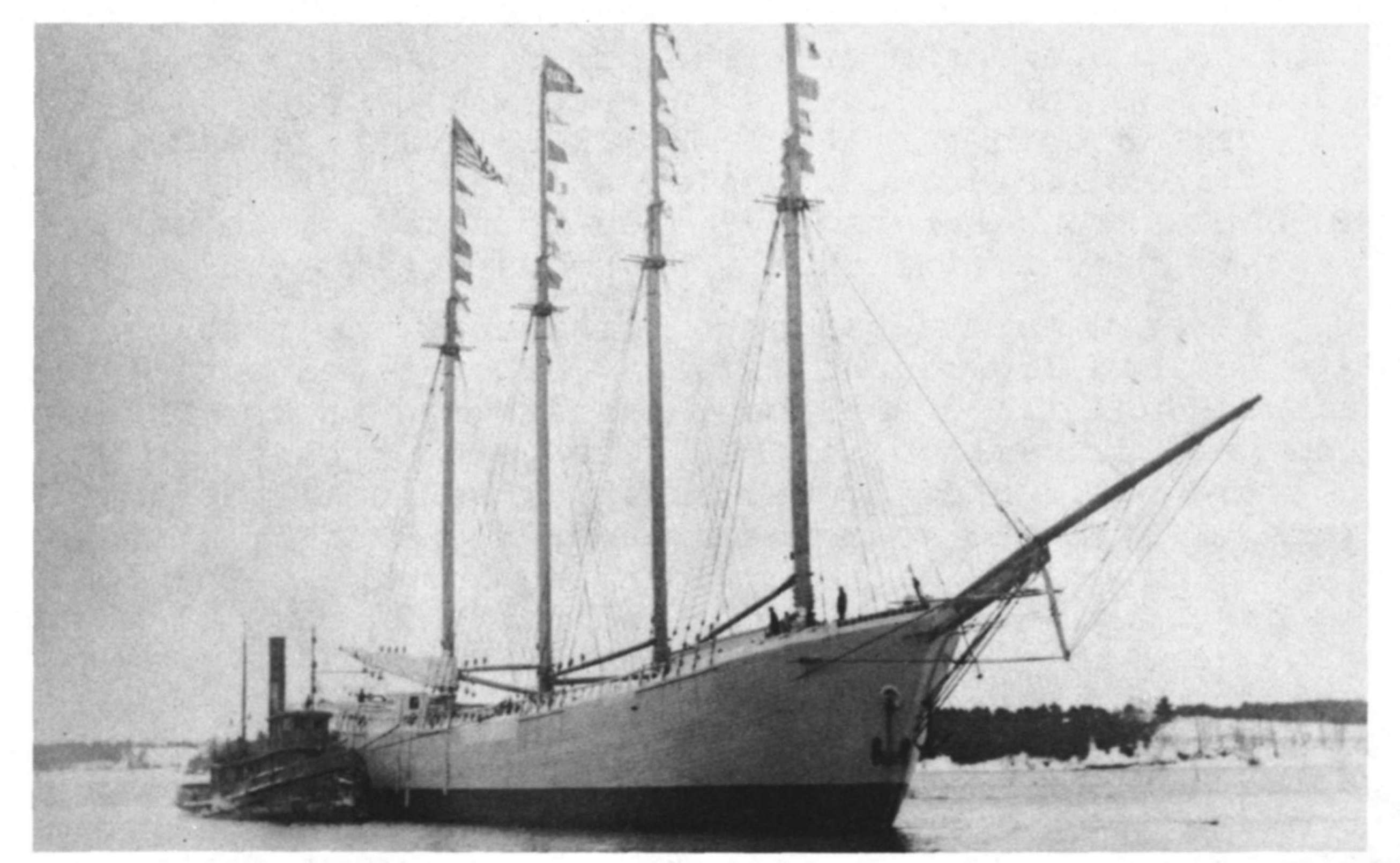
The ill-fated CECILIA COHEN, 1102 tons, as she looked on launching day at Bath in 1920. F.H.P. was Master for just one month when she foundered off Cape Henry in August 1922.
Later that year Pete learned that Capt. Alfred Frost of Portland had formed a company and had purchased several big schooners from the France & Canada Steamship Company which he planned to operate in the coal trade. Pete went to Portland to see if there was any chance of getting one. Capt. Frost told him that the only one not already assigned was the DOROTHY PALMER, and she was then lying in the James River in Virginia, full of water. He said that they had been obliged to buy her in order to get the other vessels. When Pete said he’d like to buy the Master’s interest in the PALMER, Capt. Frost asked him if he was “crazy”. Pete replied that he didn’t think so and, being thereby reassured, Capt. Frost proceeded to sell the other shares while Pete went to Virginia to get the vessel, float her, and repair her. They paid $16,000 for the schooner and spent another $6,500 putting her in shape for sea. Pete then made about eleven trips in her with coal to Portland, Boston, and New York. During the summer, his wife and two boys accompanied him. In November he sold his interest to Capt. Willis Hutchins of Saco. The next February Capt. Hutchins had the misfortune to lose the vessel on the Stone Horse Shoal in a snowstorm.
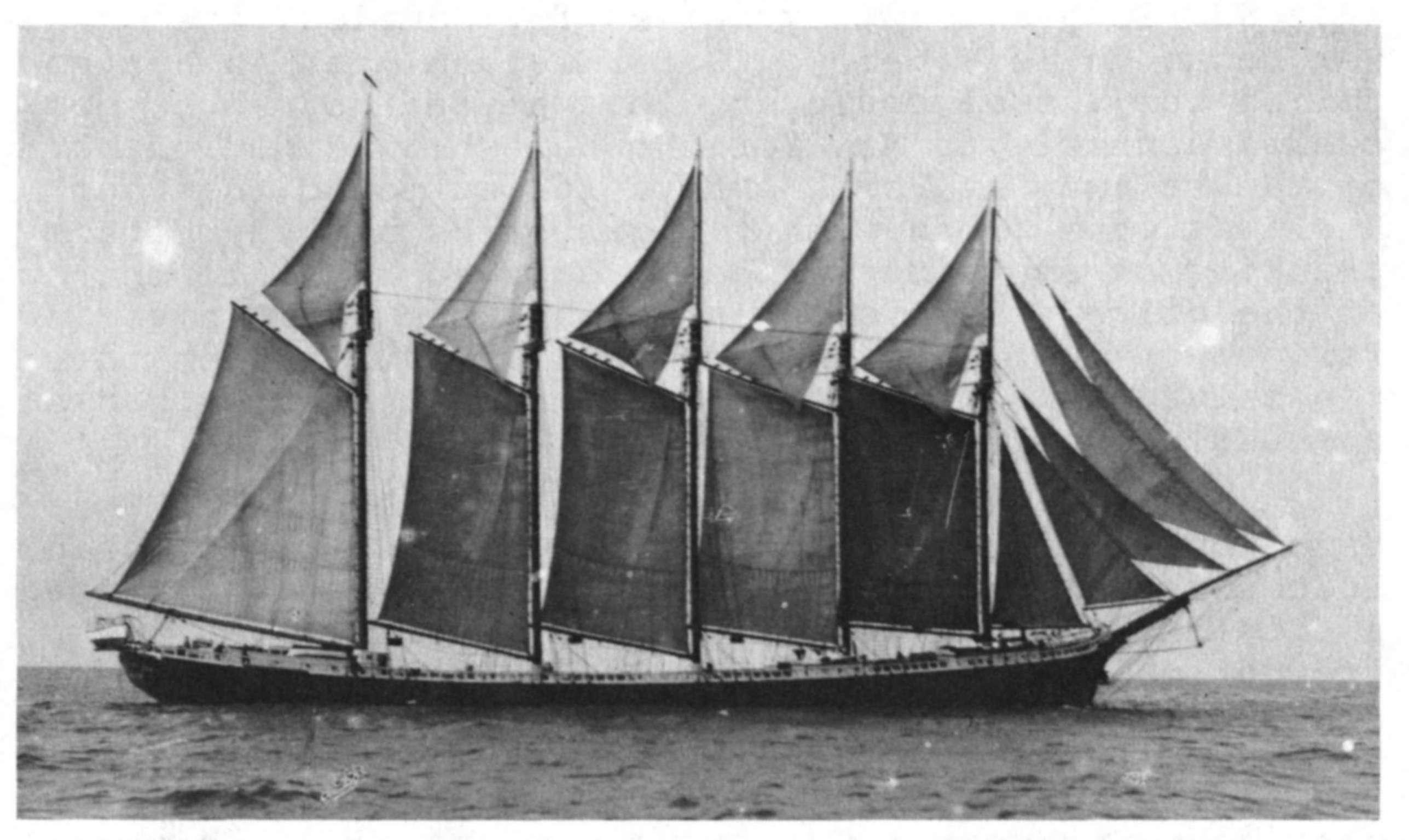
Schr. DOROTHY PALMER, 2872 tons. F.H.P. made eleven coal trips in this schooner in 1922.
In March 1923, Pete was in New York looking for a ship when he encountered Capt. Hutchins on the street. Hutchins said that he was about to go to Pensacola to take command of the Cities Service tanker HAGOOD. He suggested that Pete come along as Mate. To learn the ropes of tanker operation, Pete went as Mate with his friend for five months, running between Tampico, Mexico, and Philadelphia. Then he went Second Mate for one trip to Boston in the Hog Island freighter ARTEGAS which was under the command of one of his former Mates in the ALICIA B. CROSBY.
In August 1923, Pete was offered the command of the 2000-ton motorship JAMES TIMPSON engaged in the Central American mahogany trade. The TIMPSON was a wooden ship equipped with two 500-horsepower Winton diesel engines, the largest engines of their kind then available. The engines had one serious failing: in the absence of reverse gears, they were difficult and uncertain to put in reverse rotation. On their return from Cuba and Belize with a mixed cargo of cedar and mahogany, they were ordered to Steinway. The Sandy Hook pilot said that he’d [Pgs 50-51]take them as far as the Statue of Liberty and Pete could then get a Hell Gate pilot. Pete sent word that he wanted a Hell Gate pilot and a tug. The pilot showed up without a tug and, when Pete inquired why, the pilot replied that none was needed. “This is a twin-screw ship and you can do anything with her.” As they approached the dock, Pete suggested quietly that it might be well to slow down as she didn’t always reverse when you wanted her to. The pilot said he knew what he was doing, and kept on at the same speed. When he finally rang for “full astern”, they waited and waited until it was too late to drop anchor ... and they went right through the dock. Pete told me, “I asked him then if he knew what he was doing, but he made no reply.” That was enough of the JAMES TIMPSON for both Pete and the Chief Engineer, and they resigned. It was just as well because the following year the TIMPSON was lost in a West Indies hurricane after her engines broke down and her mahogany deck load got adrift.
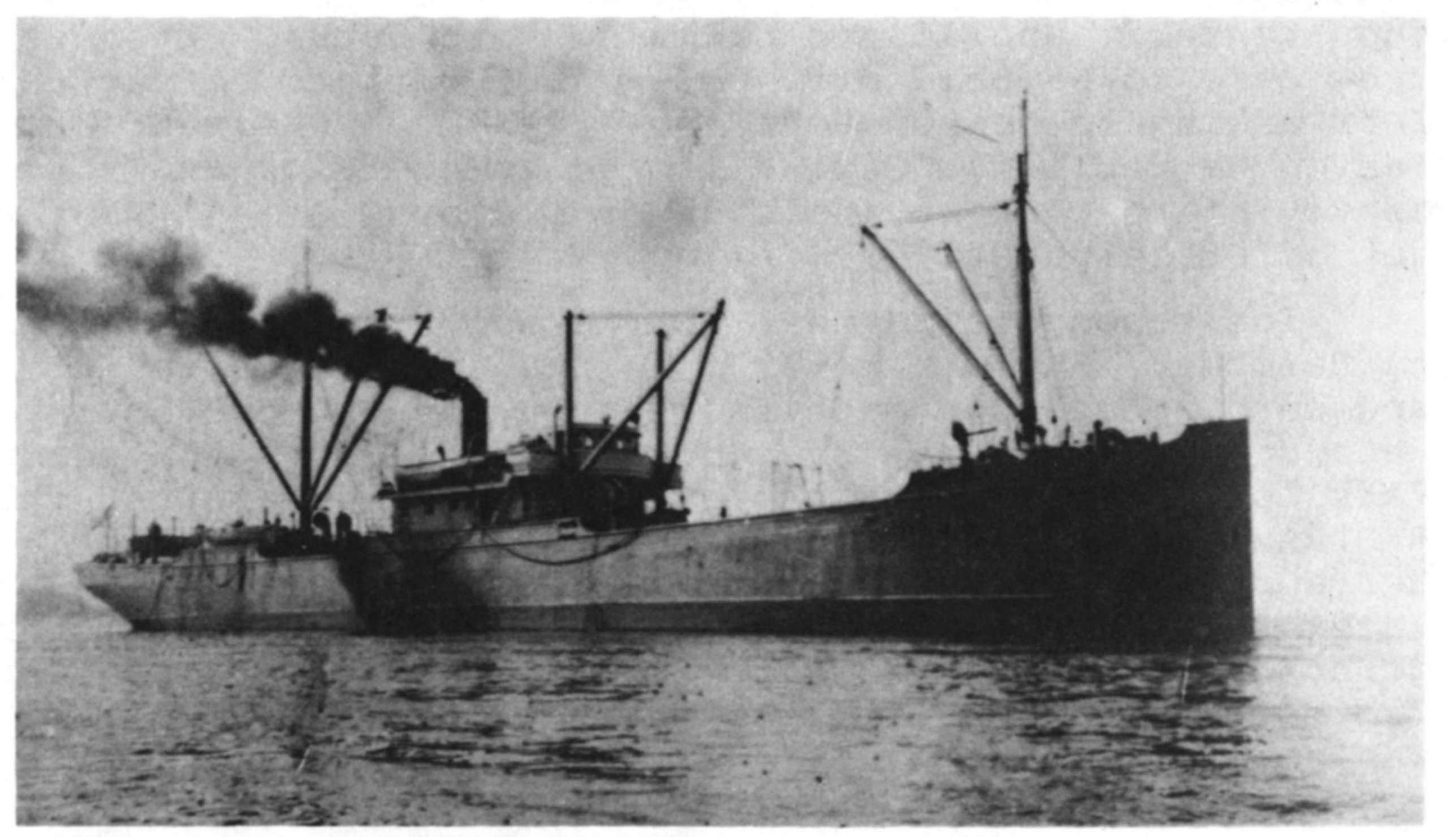
The wooden motorship JAMES TIMPSON, F.H.P.’s first command after abandoning sailing vessels for a time. Appointed Master of the TIMPSON in August 1923, he resigned in May 1924. He returned to schooners for three years before going back “into steam.”
During much of 1924, Pete was engaged in a joint enterprise with one William C. Magee building a dwelling at 304 Cattell Avenue in West Collingswood, New Jersey. Just what the arrangement was is unclear from the records, but son John says that his father put up the capital and Magee supplied the building experience. Pete apparently undertook the responsibility of handling all the financial records and disbursements for the project. He drew hourly wages for his services, and there are a few entries during the summer which indicate that sons Frank and John occasionally worked a few hours during their school vacation. The family lived in Collingswood while the boys were in high school. Later, in the early ’30s, when Captain and Mrs. Peterson wanted to sell the house they found no buyer for a long time because of the economic depression. Eventually the house was sold without profit.
Pete spent September, 1924, in Norfolk repairing the four-master SNETIND only to have her libelled when the job was done. He left her to take command of the schooner MARY L. BAXTER in New York. He was in her until the end of the year, making one trip with coal to Bangor and then to Boothbay for repairs.
In January, 1925, he took the four-master ELIZABETH BANDI on one round-trip from New York to Georgetown and back with lumber. Pete described the BANDI (which is now the retired German training bark SEUTE DEERN at Bremerhaven) as “a nice little schooner that would sail like a son-of-a-gun.” He left her in March to take the big West Coast five-master BRIGHT to Norfolk and back to Boston with coal.
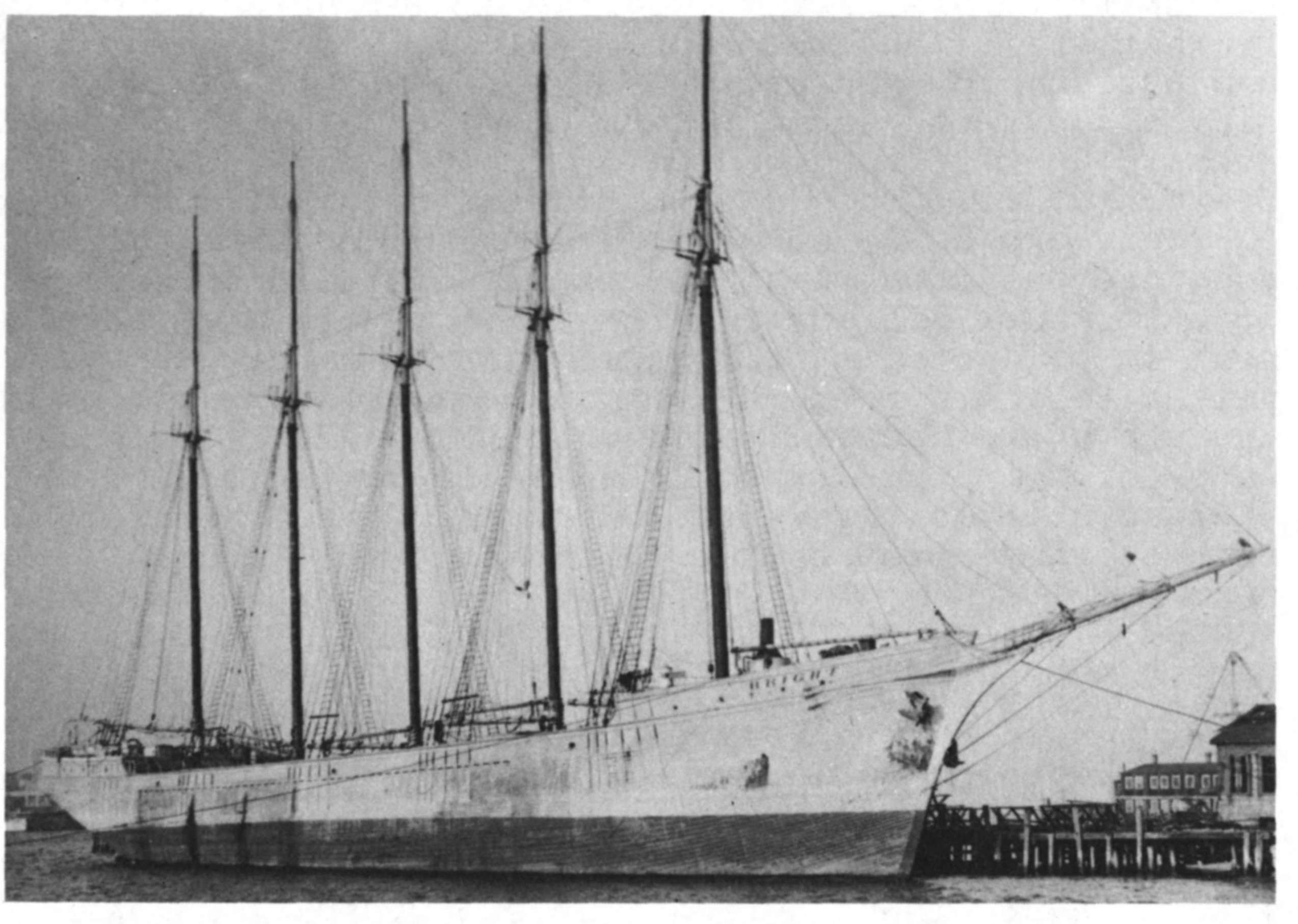
Schr. BRIGHT, 2176 tons, F.H.P. commanded this big West Coast built vessel for one coal trip in the Spring of 1925.
Pete took command of his last sailing vessel when, in June 1925, he bought the four-masted schooner ANNIE C. ROSS. After the vessel was scraped and painted at Perth Amboy, he was joined by his wife and two sons, now sixteen and fourteen, and sailed for Georgetown, South Carolina. The elder son, Frank, was signed on as Bo’s’n/Second Mate. They brought lumber back to New Bedford and Bridgeport. This was the last time that the Peterson family sailed together, although son John spent a summer vacation from college, four years later, as an AB (able seaman) in the tanker DILLWYN which his father then commanded.
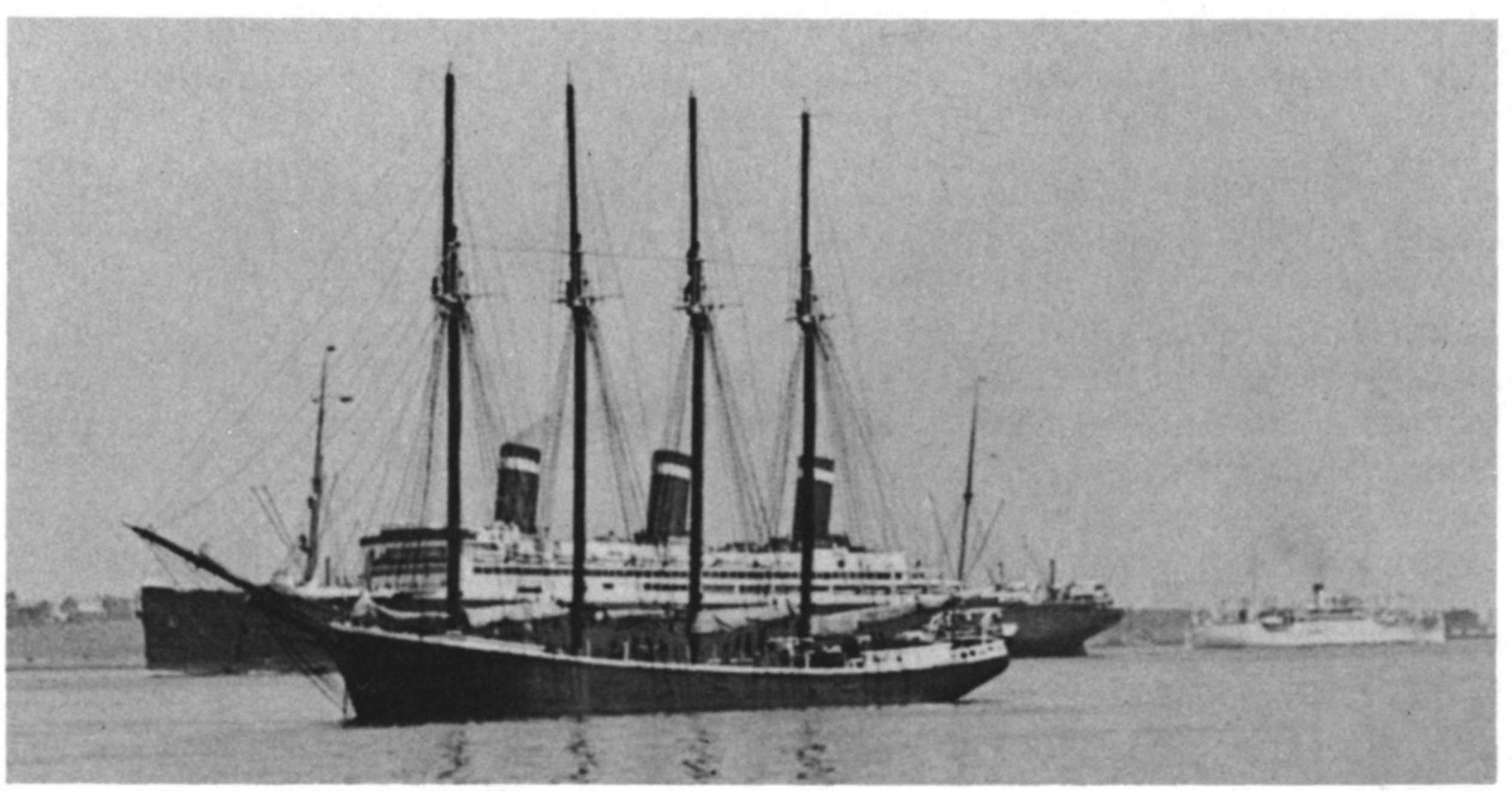
F.H.P. bought the schooner ANNIE C. ROSS in June 1925 and sold her in November 1926. The ROSS was one of the last surviving four-masters. Active through the 1930s she wound up as a stationary training ship for Sea Scouts on Long Island and eventually “dissolved”. She is seen here with the S.S. LEVIATHAN.
Those of us whose shore-based lives have been characterized by a work schedule that has permitted us to live at home with our wives and families, to come home daily after work and share the dinner hour, to watch our children grow week by week, month by month, to share in their encouragement, guidance and discipline, to help meet the inevitable crises of every family, to console our mate when consolation is needed ... we, the fortunate ones, must realize and reflect on the fact that these vital elements of domestic happiness are sacrificed to a great degree by the families of men who follow the sea, as well as by the men themselves. Away from home for long periods, the father sacrifices many of the joys of parenthood, and the years pass without the growing closeness between father and child that is nurtured by a father’s always being there when needed. The burden of being both father and mother, a virtually impossible task, falls to the lonely wife who remains at home. There must be great love and forebearance for a marriage to survive such prolonged tests, and Frank and Margaret Peterson had such a marriage.
Saying goodbye once again to his family, Pete loaded the ROSS at New York with a general cargo for Miami, then in the throes of its building boom. As a deckload, four big Mack trucks were set on board by a Merrit-Chapman lighter and derrick. Pete inquired of the shipper how they proposed to discharge them at Miami. When told that a derrick would be arranged for, Pete offered to discharge them himself for $75. His offer was quickly accepted without question. In Miami, Pete simply used his main and mizzen throat halliards to lift the trucks over the side ... making a quick $75 for himself.
While on a passage from Miami to Pensacola, light, he got ashore on Santa Rosa Island lured there, you might say, by a light shown from the stranded schooner ROBERT L. BEAN which had gone ashore on the Island only shortly before. Pete mistook the BEAN’s light for that [Pgs 54-55]on the sea-buoy. Tugs got them both off, and after repairing some minor damage at Pensacola, the ROSS lay idle from March until June. Two more lumber cargoes, one from Mobile to Arecibo, Puerto Rico, and the other from Georgetown to New York and Norwich, Connecticut, wound up Pete’s sailing career. He sold the ROSS to Capt. Zuljevic at Norwich late in 1926.
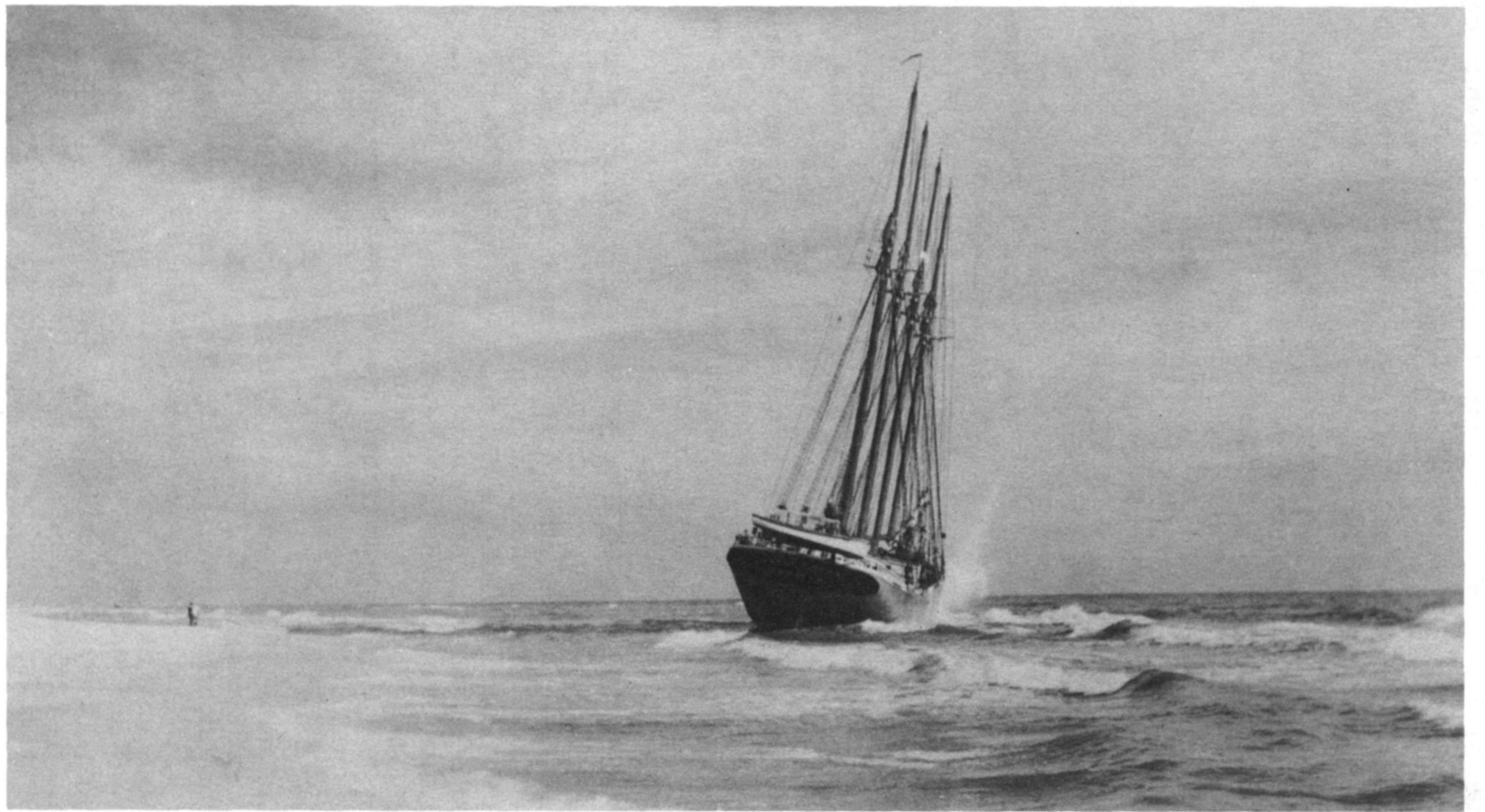
The ANNIE C. ROSS, 791 tons, ashore on Santa Rosa Island near Pensacola, Florida, March 1926. The stranded schooner ROBERT L. BEAN may be seen faintly at the extreme left of this picture.
For the next three years, Pete commanded tankers of the C. D. Mallory Company of New York, running between Gulf ports and New York or Baltimore, with at least one run to Montreal and another to Halifax. Between May, 1927, and May 1930, he made approximately forty round-trips with petroleum cargoes in six different 7000-ton tankers. These vessels were the S.S. IMLAY, MALACCA, MATINICOCK, DURANGO, ARDMORE, and DILLWYN.
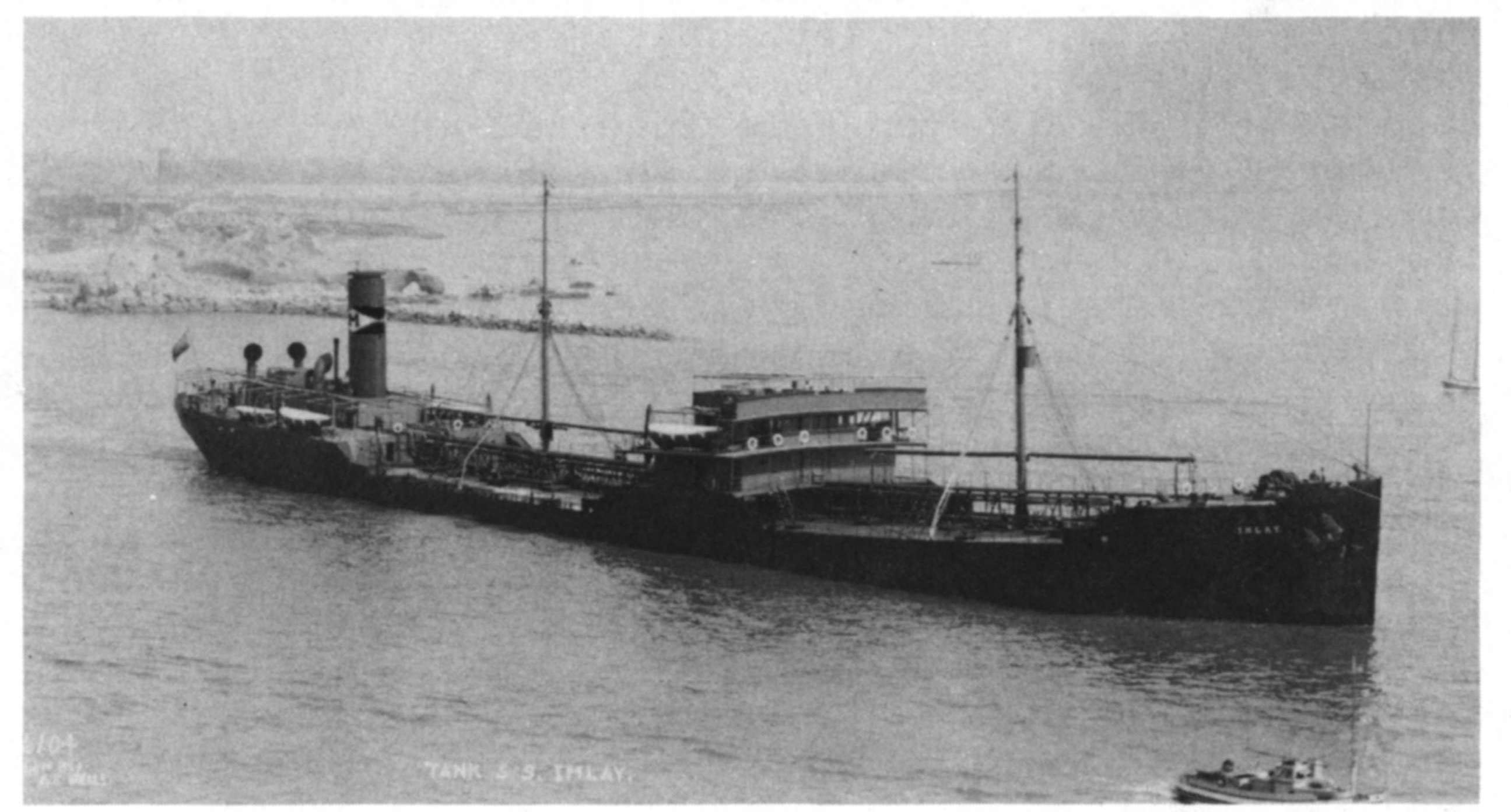
The tanker IMLAY, first of six 7000-ton tankships that F.H.P. commanded for the Mallory Co. between 1927 and 1930.
Pete was usually an even-tempered person but he would not be imposed upon by anybody; and as a mariner of “the old school” he would brook no insolence from a crew member. When aroused, he had a formidable temper and was quite capable of taking care of himself in a fight, as a couple of instances may illustrate.
During the 1896 voyage from Philadelphia to Boston when he was Mate of the schooner HUMAROCK, one of the sailors gave him some insolent back-talk, or may indeed have threatened or struck him; I no longer remember the detail. In any case, Pete and the sailor “went at it hammer and tongs.” Pete beat him up so thoroughly that, to avoid possible police inquiry on arrival in Boston, Capt. Veazie thought it prudent for Pete to leave the vessel as she passed through a drawbridge before docking. This he did, pay in hand, and caught the next steamer for Rockland and home.
Twenty-seven years later, when he was Mate of the tanker HAGOOD, another revealing episode occurred. During the discharging of the cargo of petroleum at Philadelphia, Pete was supervising operations when something so angered a crewman who was operating valves that he said to Pete, “If you weren’t an old man, I’d hit you.” Pete promptly struck the first blow, whether in response to the threat or the reference to his age we can’t now be sure. Capt. Hutchins, who had observed the altercation from the upper deck outside his quarters, was on the scene immediately and told the crewman something like, “I saw you strike the Mate. You get your gear and get off this ship now, or I’ll turn you over to the police.” And that was the end of it.
In 1930, Pete was offered the post of Secretary to the Board of Pilot Commissioners at Boston. He and Mrs. Peterson moved to Medford, Massachusetts, purchasing a new home there the following year. In May, 1931, following the death of Pilot Commissioner Robert Johnstone, Governor Joseph B. Ely appointed Pete to succeed Capt. Johnstone on the Board.
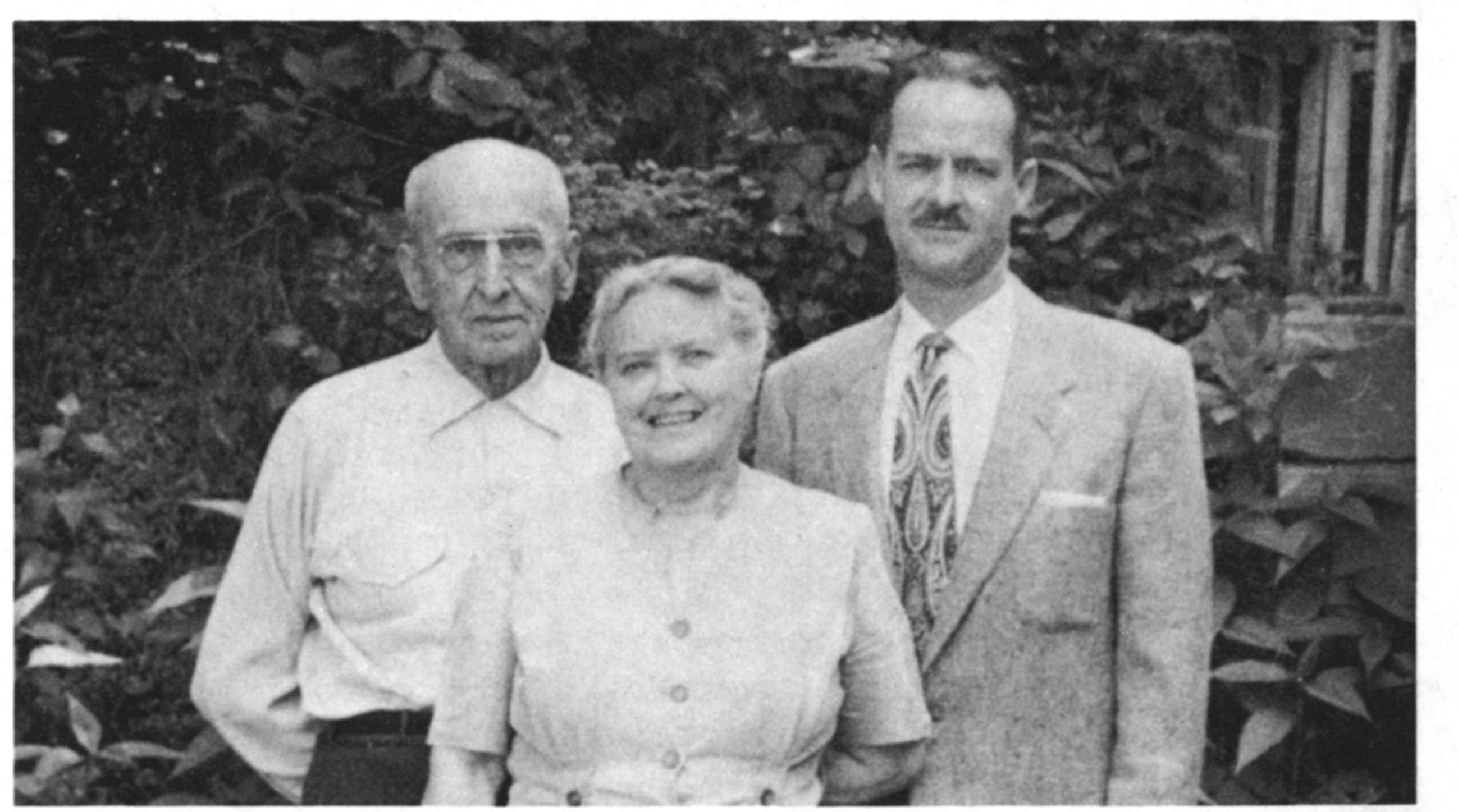
Capt. and Mrs. Peterson with son John at the time of their golden wedding anniversary, June 1957.
Pete’s skill and reputation as a coast pilot, navigator, and ship handler were such that by 1932 he was being engaged repeatedly to go second in command to Capt. Joseph I. Kemp, widely known former towboat master, on builder’s and acceptance trials of new ships of every description. Capt. Kemp, who was then Secretary of the Boston Marine Society, was a consummate ship handler and unsurpassed in the management of a fleet of towboats to control large vessels in confined waters. But Capt. Kemp’s license was restricted to bays and inland waters on vessels of limited tonnage. Consequently, it was Pete’s license on which the vessels were navigated legally. It was he who provided the coast piloting skills on the trips to Rockland for the speed trials over the measured mile, and for the many other performance tests to which the vessels were subjected.
Every vessel built at Fore River by Bethlehem, as well as many turned out by the New York Shipbuilding Co. and the Newport News Shipbuilding & Drydock Co., and probably some destroyers launched by the Bath Iron Works, came under his hand. The roster of such vessels is astonishing in its number and variety. It includes such passenger vessels as the liners AMERICA, PRESIDENT HOOVER, MARIPOSA, and MONTEREY; warships of nearly every type, and even the Corps of Engineers’ ocean-going dredge GENERAL GOETHALS. Among the Navy ships were the cruisers INDIANAPOLIS, BOISE, NASHVILLE, PORTLAND, TUSCALOOSA, QUINCY, and VINCENNES; many destroyers, including FARRAGUT, MAHAN, PHELPS, MOFFETT, CUMMINGS, CRAVEN, BALCH, GRIDLEY, and DUNLAP; also the aircraft carriers RANGER, ENTERPRISE, and YORKTOWN. He also had one or two submarines built at Groton, Connecticut, by the Electric Boat Company.
These opportunities to practice his profession kept Pete’s spirits high, his skills keen, and enhanced his income. He continued to go on the trial trips for Bethlehem throughout the War.
Pete continued on the Board of Pilot Commissioners until November, 1942, when he was elected Secretary of the Boston Marine Society following the sudden death of Capt. Kemp. The Secretary and the Treasurer are the two salaried positions maintained by the Society, the former [Pgs 58-59]being full-time. The office of the Society had been for many years in the Grain Exchange Building at 177 Milk Street. In February, 1935, they had moved, together with the Pilot Commissioners and the Port Wardens, to 88 Broad Street. It was there that I spent many happy noon hours.
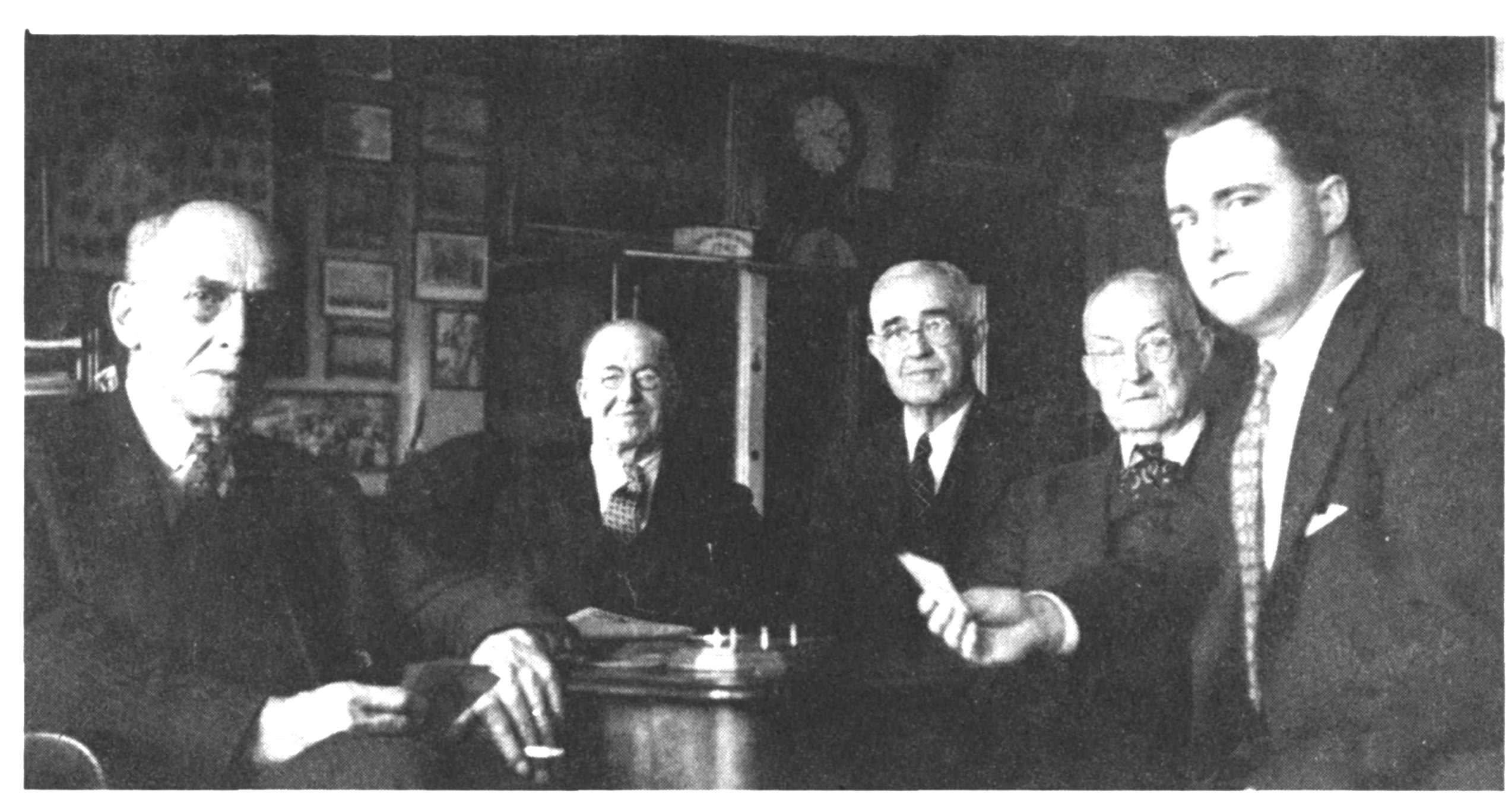
A noontime cribbage session at the Boston Marine Society about 1943. Left to right: F.H.P., Capts. Eugene McKown, Lorenzo Crowell, and Orville S. Pinkham, and the author.
The little group of semi-retired shipmasters who constituted the afterguard on the trial trips were a highly compatible body of men who enjoyed each other’s fellowship at other times as well. One of them owned a camp at Billerica, Massachusetts, and a half-dozen of these friends would gather there after work on Thursday afternoons and evenings during the pleasant months for a few hours of pitching horseshoes, supper and a card game. Each fall in deer hunting season, Pete would join two or three friends for several days in the Maine woods, either in the Rangeley area or in Washington County, and several years he came home with venison for the larder. The first venison I ever tasted was at his dinner table.
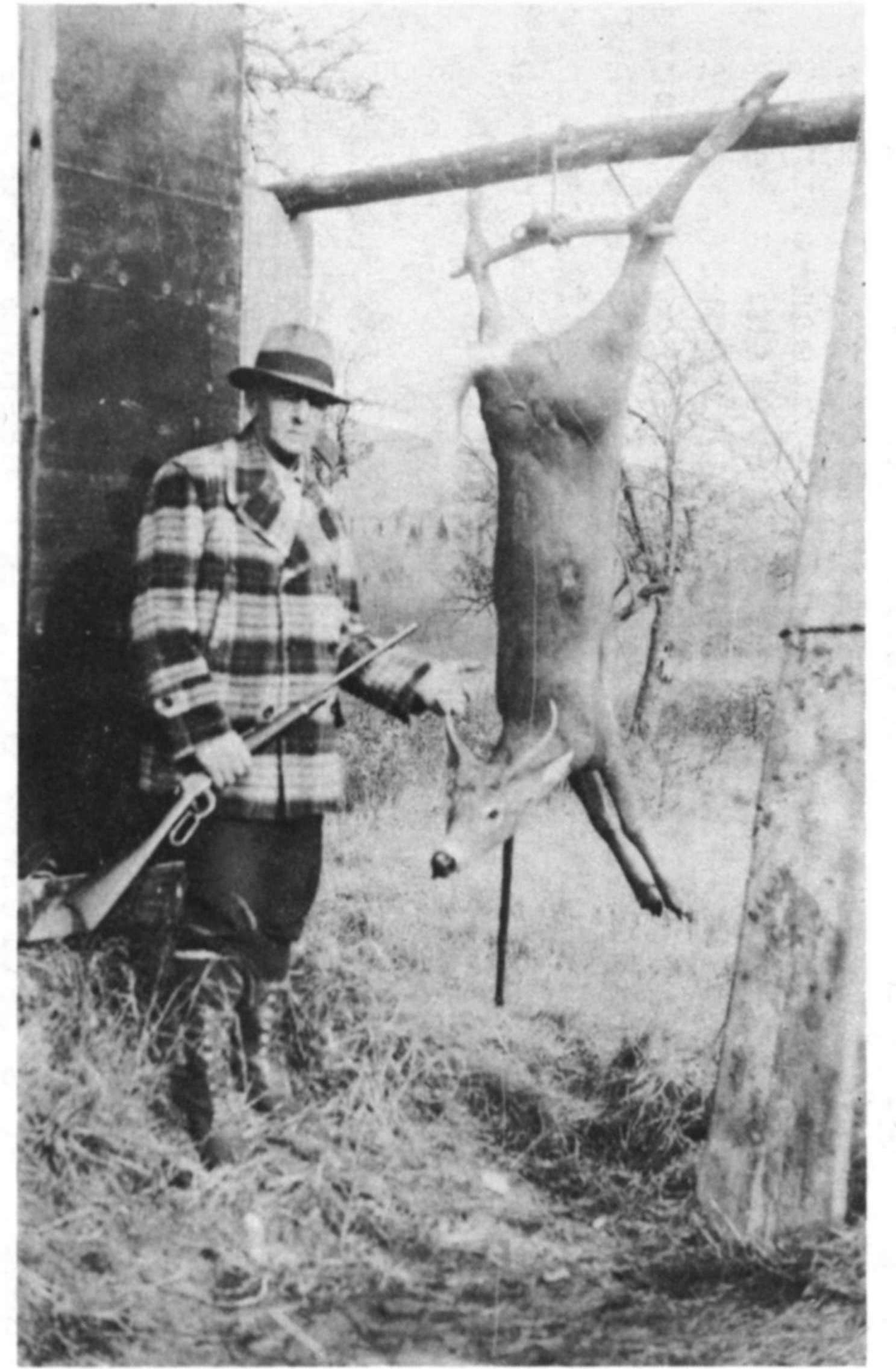
A successful hunt at Rangeley Lake, Maine, October 1934.
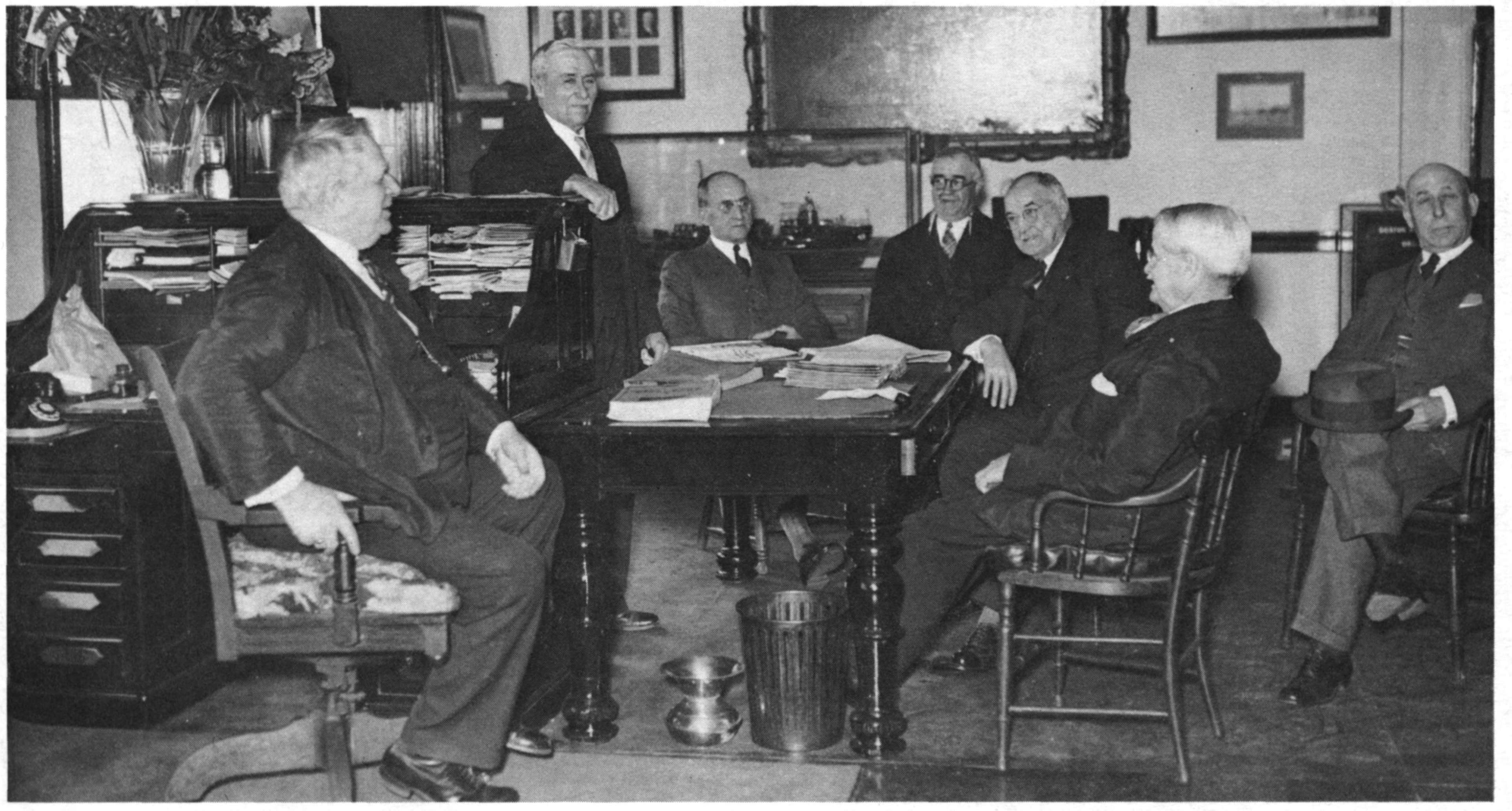
A gathering of shipmasters at the Boston Marine Society, February 1935. Left to right: Capts. Joseph I. Kemp, William E. Rutledge, Frank H. Peterson, Lorenzo Crowell, Orville S. Pinkham, Aquilla P. Bartow, and Otis W. Clarke.
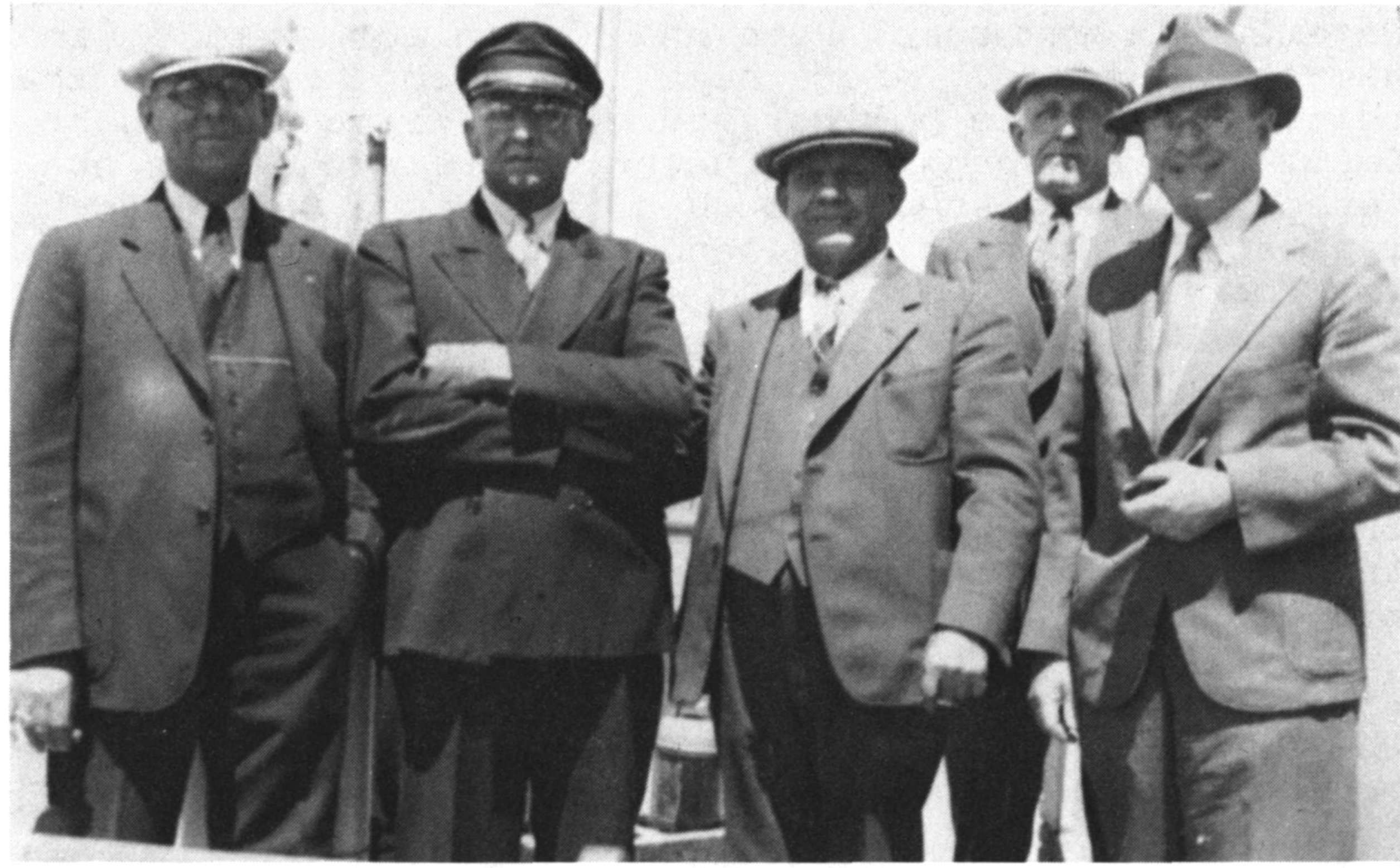
Part of the trial trip afterguard with Bethlehem Shipbuilding Co. executives. The three central figures are F.H.P., Capt. Birney Hallowell and Capt. Charles Snow. It was Capt. Hallowell who owned the camp at Billerica where F.H.P. spent many happy Thursday afternoons with friends.
In December, 1956, having passed his eightieth birthday, Captain Peterson resigned as Secretary of the Boston Marine Society, and retired. In June, 1957, he and Mrs. Peterson celebrated their golden wedding anniversary. A little slower, a little more stooped, a bit more frail in health, he retained the good humor and genial spirit that had won him a host of friends. Then, on November 8, 1958, his valiant heart suddenly stopped. Mrs. Peterson survived him by only two years. Today they lie in Puritan Lawn Cemetery at Peabody, Massachusetts.
When his father, Capt. James Peterson, died in 1910, it was recorded in the Machias newspaper that “he said he did not care to have anyone say anything at his funeral suggestive of any virtues he might possess as his faults were so many.” Yet, like his father, to those who knew Frank Hewitt Peterson his virtues were many and his faults few indeed. He pulled his full weight on his oar throughout his long life, and he has left a proud heritage to his six grandchildren and their children.
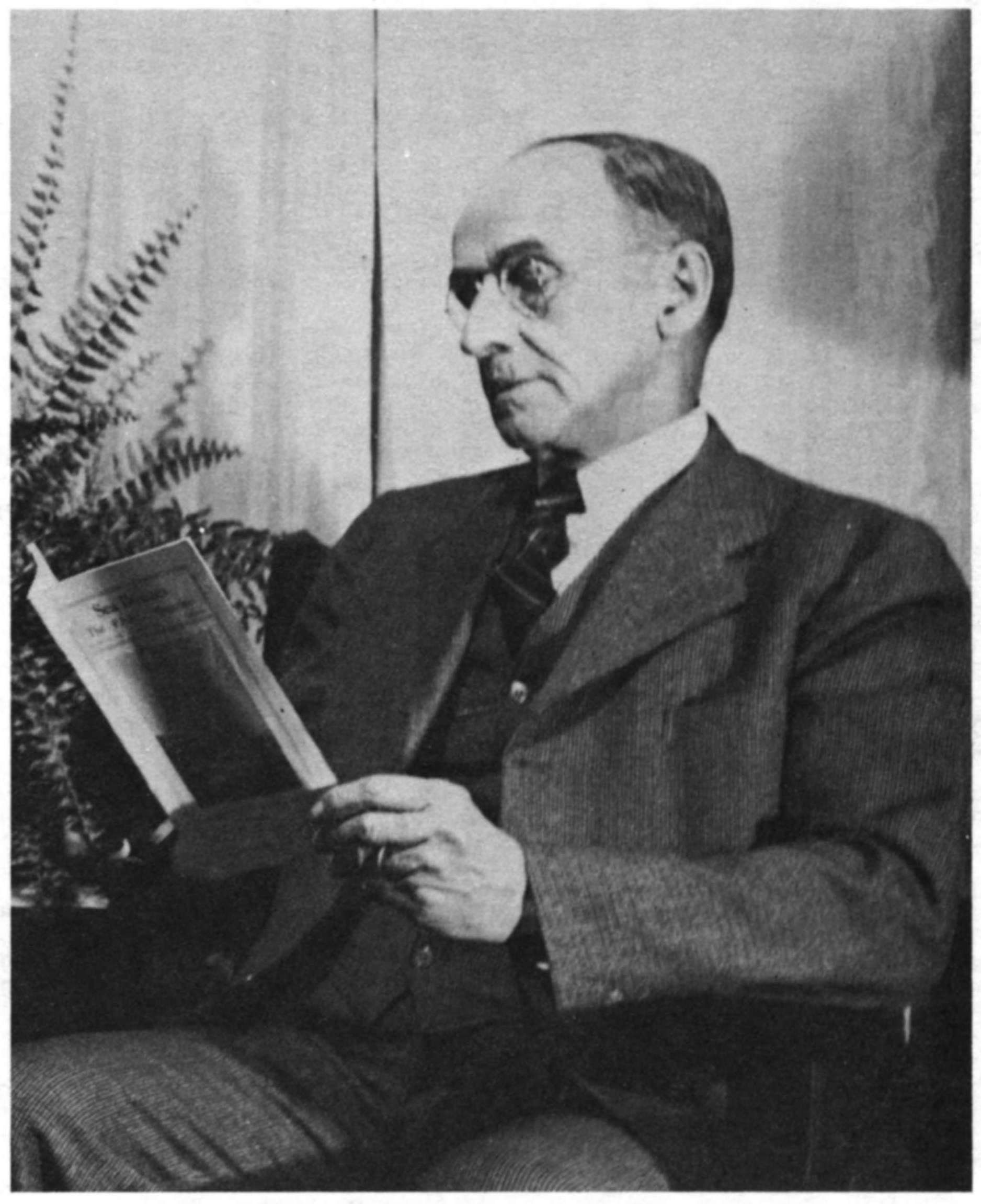
F.H.P. at home, 1935. Photo taken by the author during one of countless evenings of conversation, reminiscence, and oral history.
Vessels and Voyages of Frank H. Peterson
| Date | Vessel | Rig | Tons | Rate | Voyages & Remarks |
| 1892 | |||||
| July | Regina | 2-mst | 114 | Boy | Machiasport-Boston-Machiasport |
| schr. | |||||
| Aug. | Pavilion | 2-mst | 98 | OS | Nothing is known of this vessel |
| schr. | other than that F.H.P. included | ||||
| it in his diary as one vessel in | |||||
| which he had sailed. | |||||
| Oct. | Annie Lee | 2-mst | 119 | OS | Machiasport-Norwalk-New York- |
| schr. | Machiasport | ||||
| 1893 | |||||
| Mar.- | Alma | 2-mst | 173 | AB | Machiasport-New York-Salem- |
| June | schr. | Machiasport-New York-Boston- | |||
| Machiasport-New York-Machiasport | |||||
| June- | Florence E. | 2-mst | 82 | AB | Machiasport-Boston-Providence- |
| Sept. | Tower | schr. | New Bedford-Stonington-New Bedford | ||
| Sept.- | Neptune | 2-mst | 109 | AB | Boston-Alma, N.B.-Machiasport |
| Oct. | schr. | ||||
| Oct.- | Hortensia | 2-mst | 178 | Mate | Machiasport-New York-Machiasport |
| Nov. | schr. | ||||
| Nov.- | Beta | 2-mst | 152 | AB | Machiasport-Boston (Went ashore |
| Dec. | schr. | at Portland Head; repaired at | |||
| Portland. Frozen in at Boston.) | |||||
| 1894 | |||||
| Mar.- | Ellen M. | 1/2-brg. | 395 | AB | Machiasport-Cardenas, Cuba- |
| Aug. | Mitchell | Mobile-New York | |||
| Oct. | Junietta | 2-mst | 86 | Mate | Machiasport-Eastport-Machiasport |
| schr. | |||||
| Nov.- | Annie Lee | 2-mst | 119 | Mate | Machiasport-Boston-Machiasport |
| Dec. | schr. | ||||
| 1895 | |||||
| Feb.- | W. R. Chester | 2-mst | 126 | AB | Machiasport-Monte Christi, D.R.- |
| Apr. | schr. | New York | |||
| Apr. | G. M. Brainard | 2-mst | 242 | AB | New York-Kittery-Rockland |
| schr. | |||||
| May- | Addie Fuller | 2-mst | 217 | Mate | Machiasport-St. John, N.B.-New |
| July | schr. | York-Salem-Machiasport | |||
| July- | Mary Bartlett | 1/2-brg. | 358 | AB | Machiasport-Shulee, N.S.- |
| Sept. | Machiasport | ||||
| Sept.- | Lapland | bark | 649 | 2nd | New York-Demerara, B.G.-Port |
| to | Mate | o’ Spain, Trinidad-Philadelphia- | |||
| Oct.’96 | Rosario, Argentina-Santos, | ||||
| Brazil-Port o’ Spain-Philadelphia | |||||
| 1896 | |||||
| Oct. | Humarock | 3-mst | 455 | Mate | Philadelphia-Boston (Went home |
| schr. | for the winter.) | ||||
| 1897 | |||||
| Mar.- | Charles A. | 4-mst | 1576 | Mate | Portland-Philadelphia-Portland- |
| Nov. | Campbell | schr. | Philadelphia-Portland-Baltimore- | ||
| Bangor | |||||
| Nov.- | Addie Fuller | 2-mst | 217 | Mate | Bangor-New York-Norfolk- |
| Dec. | schr. | Boston-Machiasport | |||
| Dec.- | W. R. Chester | 2-mst | 126 | Mate | Machiasport-New York-Machiasport |
| Feb.’98 | schr. | ||||
| 1898 | |||||
| Mar.- | Abbie G. Cole | 3-mst | 273 | Mate | New York-Jacksonville-New York- |
| May | schr. | Newburyport-Machiasport | |||
| May- | Lapland | bark | 649 | Mate | Boston-Sierra Leone & Konakry, |
| Sept. | W.A.-Barbados. (Vessel lost.) | ||||
| Dec.- | Susie M. | 4-mst | 920 | Mate | Bath-Baltimore-Matanzas, Cuba- |
| June’99 | Plummer | schr. | Brunswick, GA.-Philadelphia- | ||
| Portland-Norfolk-Sabine Pass, | |||||
| TX.-New Orleans-Boston | |||||
| 1899 | |||||
| Oct. | Abbie G. Cole | 3-mst | 273 | Mate | Machiasport-St. John, N.B. |
| schr. | |||||
| Nov.- | Addie | 3-mst | 658 | Mate | Philadelphia-Galveston- |
| June’00 | Charleson | schr. | Carrabelle, FL.-New York-Newport | ||
| News-Bermuda-Frenandina, FL.- | |||||
| Baltimore-Bath | |||||
| 1900 | |||||
| June- | James B. | 3-mst | 722 | Mate | Providence-Brunswick, GA.- |
| Aug. | Jordan | schr. | Sydney, C.B.-Rockland | ||
| Sept.- | Susie M. | 4-mst | 920 | Mate | Portland-Baltimore-Havana- |
| Jan.’01 | Plummer | schr. | Pascagoula, MS.-New York | ||
| 1901 | |||||
| Mar.- | Jacob S. | 4-mst | 910 | Mate | New York-Philadelphia-Portland- |
| May’04 | Winslow | schr. | Buenos Aires-New York- | ||
| Philadelphia-Portland-Wiscasset- | |||||
| 1902 | Portland-Demerara-Port o’ Spain- | ||||
| 1903 | Philadelphia-Portland-Havana- | ||||
| 1904 | Philadelphia-Portland | ||||
| (The exact number of trips to | |||||
| Demerara in the J.S. Winslow is | |||||
| not known.) | |||||
| 1904 | |||||
| May- | Major Pickands | 4-mst | 984 | Capt. | Norfolk-Portland-Norfolk-Boston |
| July | schr. | (Stranded No Mans Land Is.) | |||
| Oct.- | D. Howard | 3-mst | 547 | Capt. | Portland-Norfolk-Mayport, Fl.- |
| Dec. | Spear | schr. | Jacksonville-New Bedford | ||
| 1905 | |||||
| Jan. | Alicia B. | 4-mst | 1113 | Capt. | Baltimore: 1,756 T. coal @ $1.20 |
| Feb. | Crosby | schr. | Pensacola | ||
| Mar. | New York | ||||
| Apr. | Newport News: 1,877 T. coal @ $.75 | ||||
| Boston | |||||
| Newport News: 1,857 T. coal @ $.75 | |||||
| May | Portland | ||||
| Philadelphia | |||||
| Portland | |||||
| June | Newport News: 1,876 T. coal | ||||
| Bangor | |||||
| July | Philadelphia: 1,636 T. coal @ $.45 | ||||
| Aug. | Portland | ||||
| Iceboro: 1,459 T. ice @ $.50 | |||||
| Sept. | Philadelphia: Freight less | ||||
| trimming @ 7¢/T. $1,194.24 | |||||
| Portland | |||||
| Oct. | Philadelphia: 1,817 T.coal @ $1.75 | ||||
| Nov. | Cienfuegos, Cuba | ||||
| Dec. | Port Arthur, TX: 370,833 ft. | ||||
| lumber @ $7.25 /M. | |||||
| 1906 | |||||
| Jan. | Alicia B. | Fall River | |||
| Feb. | Crosby | Bridgeport | |||
| March | Philadelphia: 1,807 T.coal @ $1.75 | ||||
| April | San Juan, P.R.: Frt. on sugar | ||||
| $4,001. | |||||
| May | Philadelphia: 1,845 T.coal @ $1.25 | ||||
| July- | Galveston-Port Arthur: 852,426 | ||||
| Aug. | ft. lumber. Frt. & demurrage | ||||
| $7,593.27 | |||||
| Sept. | Baltimore: 1,869 T.coal @ $.75 | ||||
| Oct.- | Cape Porpoise, ME. | ||||
| Nov. | Bath | ||||
| Philadelphia: 1,803 T.coal @ $1.65 | |||||
| Dec. | New Orleans | ||||
| 1907 | |||||
| Jan. | Alicia B. | Brunswick, GA. Apparently put in | |||
| Crosby | for repairs to rudder as ledger | ||||
| notes filing of protest, survey, | |||||
| and $640. for new rudder and | |||||
| casting. No freight noted. | |||||
| March | Philadelphia: 1,752 T.coal @ $2.75 | ||||
| Portland | |||||
| April | Philadelphia (In collision with | ||||
| schr. Benjamin A. VanBrunt.) | |||||
| Portland | |||||
| May | Bath (Repairing collision damage.) | ||||
| June | Portland | ||||
| July | Newport News: 1,856 T.coal @ $1.05 | ||||
| Bangor | |||||
| Aug. | Newport News: 1,855 T.coal @ $1.05 | ||||
| Bangor | |||||
| Sept. | Philadelphia: 1,853 T.coal @ $1.05 | ||||
| Oct. | Bangor | ||||
| Nov. | Philadelphia: 1,843 T.coal @ $1.05 | ||||
| Dec. | Bangor-Portland | ||||
| 1908 | |||||
| Jan. | Alicia B. | Philadelphia: 1,803 T.coal @ $.94 | |||
| Feb. | Crosby | Portland | |||
| Philadelphia: 1,878 T.coal @ $.77 | |||||
| March | Portland | ||||
| Philadelphia: 1,809 T.coal @ $.77 | |||||
| April | Portland | ||||
| May | Philadelphia: 1,791 T.coal @ $.75 | ||||
| Portland | |||||
| June | Philadelphia: 1,820 T.coal @ $.75 | ||||
| Portland: 7,573 empty barrels @ | |||||
| $.10 | |||||
| July | Philadelphia: 1,817 T.coal @ $.65 | ||||
| Aug. | Portland: 1,444 T.ice @ $.45 | ||||
| Philadelphia (Frt. not stated.) | |||||
| Sept. | Portland | ||||
| Oct. | Philadelphia: 1,806 T.coal @ $.90 | ||||
| Dec. | Jacksonville | ||||
| 1909 | |||||
| Jan.- | Alicia B. | Boston | |||
| Feb. | Crosby | Boothbay: 1,739 T.ice @ $.75 | |||
| March | Alexandria, VA. | ||||
| April | Jacksonville: 808,515 ft. lumber | ||||
| @ $.60 /M. | |||||
| May | Boston | ||||
| July | Brunswick, GA.: 951,000 ft. | ||||
| lumber @ $4.57 (average) | |||||
| Aug. | Philadelphia: 1,835 T.coal @ $.80 | ||||
| Bangor | |||||
| Sept. | Newport News: 1,816 T.coal @ $.80 | ||||
| Oct. | Bangor | ||||
| Nov. | Jacksonville: 566,000 ft. lumber | ||||
| (Freight not stated.) | |||||
| Dec. | Portland (Ill on arrival with | ||||
| pneumonia, and went home.) | |||||
| 1910 | |||||
| April | Alicia B. | Portland (Came on board Apr. 13.) | |||
| May | Crosby | Jacksonville: 639,000 ft. lumber @ | |||
| $5.75 /M. & 4,573 ties @ $.19 | |||||
| June | Philadelphia: 1,752 T.coal @ $.86 | ||||
| July | Portland | ||||
| Philadelphia: 1,832 T.coal @ $.80 | |||||
| Portland: 1,717 T.ice @ $.60 | |||||
| Aug. | Baltimore: 1,837 T.coal @ $.50 | ||||
| Sept. | Portland | ||||
| Oct. | Newport News: 1,828 T.coal @ $.85 | ||||
| Bangor | |||||
| Nov. | Newport News: 1,834 T.coal @ $1.00 | ||||
| Bangor | |||||
| Philadelphia: 1,812 T.coal @ $.86 | |||||
| Dec. | Portland | ||||
| Philadelphia: 1,800 T.coal @ $.86 | |||||
| 1911 | |||||
| Jan. | Alicia B. | Portland | |||
| Crosby | Norfolk: 1,806-1/2 T.coal @ $.60 | ||||
| Feb. | Providence | ||||
| March | Philadelphia: 1,808 T.coal @ $.86 | ||||
| Portland | |||||
| April | Philadelphia: 1,825 T.coal @ $.86 | ||||
| Portland | |||||
| May | Philadelphia: (Freight not | ||||
| stated.) | |||||
| Portland | |||||
| June | Philadelphia: 1,801 T.coal @ $1.30 | ||||
| July | Galveston | ||||
| Aug. | Sabine Pass: 851,956 ft. lumber | ||||
| @ $6.00 /M. | |||||
| Sept. | Philadelphia: 1,803 T.coal @ $.76 | ||||
| Oct. | Portland | ||||
| Philadelphia: 1,777 T.coal @ $1.50 | |||||
| Nov. | Galveston | ||||
| Dec. | Mobile: 923,877 ft. lumber | ||||
| @ $6.75 /M. | |||||
| 1912 | |||||
| Feb. | Alicia B. | San Juan, P.R. | |||
| March | Crosby | Brunswick, GA.: 790,000 ft. lumber | |||
| @ $5.25 /M. | |||||
| April | Philadelphia (Freight not stated.) | ||||
| May | Portland & Bath | ||||
| James W. | 5-mst | 1808 | Capt. | Joined vessel at Bath | |
| June | Paul, Jr. | schr. | Newport News: 2,858 T.coal @ $.90 | ||
| Bangor | |||||
| July | Newport News: 2,860 T.coal @ $.90 | ||||
| Bangor | |||||
| Aug. | Newport News: 2,798 T.coal @ $.90 | ||||
| Bangor | |||||
| Sept. | Newport News: 2,798 T.coal @ $.90 | ||||
| Bangor | |||||
| Newport News: 2,789 T.coal @ $.90 | |||||
| Oct. | Bangor | ||||
| Philadelphia: 2,783 T.coal @ $.90 | |||||
| Nov. | Portland | ||||
| Dec. | Philadelphia: 2,665 T.coal @ $1.50 | ||||
| Galveston | |||||
| 1913 | |||||
| Feb. | James W. | Port Arthur, TX: (Frt. not | |||
| Paul, Jr. | stated.) | ||||
| March | Philadelphia: 2,765 T.coal @ $.85 | ||||
| Portland | |||||
| April | Jacksonville: 24,563 ties @ | ||||
| $.23-1/2 | |||||
| May | New York | ||||
| June | Newport News: 2,835 T.coal @ $.95 | ||||
| Bangor | |||||
| July | Newport News: 2,748 T.coal @ $.95 | ||||
| Bangor | |||||
| Norfolk: 2,816 T. coal @ $.70 | |||||
| Aug. | Portland | ||||
| Newport News: 2,819 T.coal @ $.95 | |||||
| Sept. | Bangor | ||||
| Newport News: 2,800 T.coal @ $.90 | |||||
| Oct. | Bangor | ||||
| Newport News: 2,762 T.coal @ $.90 | |||||
| Nov. | Bangor | ||||
| Newport News: 2,747 T.coal @ $.75 | |||||
| Portland | |||||
| Dec. | Newport News: 2,724 T.coal @ $.75 | ||||
| Portland | |||||
| 1914 | |||||
| Jan. | James W. | Newport News: 2,715 T.coal @ $.75 | |||
| Paul, Jr. | Portland | ||||
| Feb. | Newport News: 2,737 T.coal @ $.75 | ||||
| Portland | |||||
| March | Newport News: 2,760 T.coal @ $.75 | ||||
| Portland | |||||
| April | Hoboken (Haul out, clean & paint.) | ||||
| Newport News: 2,767 T.coal @ $.90 | |||||
| Bangor | |||||
| May | Newport News: 2,804 T.coal @ $.90 | ||||
| Bangor | |||||
| June | Newport News: 2,785 T.coal @ $.85 | ||||
| Bangor | |||||
| July | Newport News: 2,776 T.coal @ $.65 | ||||
| Portland | |||||
| Aug. | Norfolk: 2,779-1/2 T.coal @ $.65 | ||||
| Sept. | Portland | ||||
| Norfolk: 2,806 T.coal @ $.65 | |||||
| Oct. | Portland | ||||
| Bath | |||||
| Newport News: 2,785 T.coal @ $.75 | |||||
| Nov. | Portland | ||||
| Hoboken (Apparently for repairs.) | |||||
| Newport News: 2,785 T.coal @ $.75 | |||||
| Portland | |||||
| Dec. | Baltimore: 2,450 T.coal @ $1.70 | ||||
| 1915 | |||||
| Jan. | James W. | San Juan, P.R. | |||
| Feb. | Paul, Jr. | Progreso, Mexico: Sisal, Frt. | |||
| $4000. | |||||
| March | Mobile: general cargo | ||||
| Progreso, Mex.: Sisal, Frt. $4000. | |||||
| (Also 2 passengers @ $20.) | |||||
| Mobile: general cargo | |||||
| Progreso, Mex.: Sisal, Frt. $4000. | |||||
| April | Mobile: general cargo | ||||
| Progreso, Mex.: Sisal, Frt. $4000. | |||||
| May | Mobile: general cargo | ||||
| Progreso, Mex.: Sisal, Frt. $4000. | |||||
| Mobile: general cargo | |||||
| Progreso, Mex.: Sisal, Frt. $4000. | |||||
| June | Mobile: general cargo | ||||
| Progreso, Mex.: Sisal, Frt. $4000. | |||||
| July- | Mobile | ||||
| Aug. | |||||
| Sept. | Gulfport, MS.: Lumber,. Frt. | ||||
| $28,458. | |||||
| Dec. | Rio de Janeiro, Brazil | ||||
| 1916 | |||||
| Jan. | James W. | Buenos Aires, Argentina: 2,147 T. | |||
| Paul, Jr. | linseed @ $12. | ||||
| April | Barbados, B.W.I. (Put in to | ||||
| repair leak.) | |||||
| May | Baltimore | ||||
| New York. (Vessel sold.) | |||||
| Aug. | C. C. Mengel, | 4-mst | 8 4 | Capt. | Launched at Bath |
| Jr. | schr. | New York: general cargo | |||
| Sekondi and several other West | |||||
| African ports, finally | |||||
| loading mahogany at Axim. | |||||
| 1917 | |||||
| March | C. C. Mengel, | Pensacola | |||
| Jr. | New Orleans (Left vessel, went | ||||
| home.) | |||||
| July | Edward J. | 6-mst | 3350 | Capt. | New York: 4,990 T. 6-in. steel |
| Lawrence | schr. | projectiles. | |||
| Aug. | La Pallice, France (Passage: 20 | ||||
| dys.) | |||||
| Sept. | Norfolk (Passage: 35 days, light.) | ||||
| Dec. | Filippo | unrig | 857 | Capt. | Bermuda to Philadelphia in tow. |
| DeNegri | bark | Abandoned in gale by towing S.S. | |||
| Presumed lost. Taken off by Sp. | |||||
| brig “Pepita”. Ar. Malaga 2/16/18. | |||||
| 1918 | |||||
| April- | St.John’s, | 5-mst | 2046 | Capt. | Joined vessel during construction |
| July | N.F. | schr. | at Bath. Launched in July. | ||
| Sailed to New York. Left vessel. | |||||
| Sept. | Cora F. Cressy | 5-mst | 2499 | Capt. | Supervised extensive repairs at |
| schr. | Hoboken, only. Left on notice | ||||
| of impending wage cut. | |||||
| Eleanor F. | 4-mst | 1114 | Capt. | New York | |
| Bartram | schr. | @ | Newport News: 1,592 T.coal @ | ||
| $400. | $10.50 /T. | ||||
| /mo. | Fajardo, P.R. | ||||
| Oct. | Gulfport: ship timber | ||||
| Norwalk, Conn. | |||||
| New York | |||||
| Norfolk: coal | |||||
| 1919 | Pernambuco, Brazil. (Stranded | ||||
| Eleanor F. | on Olinda Reef.) | ||||
| Bartram | Perth Amboy (For repairs.) | ||||
| Newport News: coal @ $20./T. | |||||
| Genoa, Italy (Passage 63 days.) | |||||
| Gibraltar | |||||
| Norfolk (Passage: 42 days, light.) | |||||
| 1920 | Bermuda | ||||
| Eleanor F. | Norfolk: 1,628 T.coal @ $6.75 | ||||
| Bartram | St. George’s, Bermuda | ||||
| Aug. | Norfolk: coal @ $6.50 /T. | ||||
| Sept. | Bermuda | ||||
| Oct. | Norfolk: coal | ||||
| Bermuda | |||||
| Norfolk (Left vessel.) | |||||
| 1921 | |||||
| March | John R. Fox | 4-mst | 741 | Capt. | Joined vessel Mar. 9 at New York. |
| schr. | Norfolk: approx. 1100 T. coal | ||||
| Vera Cruz, Mexico | |||||
| June | Tampa (Ar. 6/20/21.) | ||||
| July | Cecilia Cohen | 4-mst | 1102 | Capt. | Tampa: Phosphate rock for |
| schr. | Philadelphia. (Sailed 7/7/21. | ||||
| Stranded Conch Reef, FL.) | |||||
| Key West for examination. Ordered | |||||
| to proceed. Leak worsened in | |||||
| heavy weather. Foundered 60 | |||||
| Aug. | miles E. of Hatteras 8/7/21. | ||||
| Taken off by S.S. West Keene. | |||||
| Landed at New York. | |||||
| Nov. | Dorothy Palmer | 5-mst | 2872 | Capt. | Joined vessel at Claremont, VA |
| schr. | probably about Nov. 1921. | ||||
| Repaired at Norfolk. | |||||
| 1922 | |||||
| Feb. | Dorothy Palmer | Newport News: coal | |||
| March | Portland | ||||
| Newport News: coal | |||||
| April | Boston | ||||
| Newport News: coal | |||||
| May | Portland | ||||
| Newport News: coal | |||||
| June | New York | ||||
| Newport News: coal | |||||
| July | Portland | ||||
| Newport News: coal | |||||
| Aug. | Portland | ||||
| Newport News: coal | |||||
| Sept. | Boston | ||||
| Newport News: coal | |||||
| Oct. | Portland | ||||
| Newport News: coal | |||||
| Nov. | Portland. (Sold interest to Capt. | ||||
| Willis Hutchins.) | |||||
| 1923 | |||||
| March | Hagood | S.S. | 6972 | Mate | Joined at Pensacola with Capt. |
| (tanker) | Hutchins. Ran between Tampico, | ||||
| Mex. & Philadelphia, making one | |||||
| trip every 18 days. Left vessel | |||||
| on first of Aug. at Philadelphia. | |||||
| Aug. | Artigas | S.S. | 5620 | 2nd | A “Hog Island” freighter commanded |
| Mate | by a Capt. Clark who had been Mate | ||||
| in A.B. Crosby. | |||||
| Philadelphia to Boston: one trip. | |||||
| Aug. | James Timpson | M.S. | 2016 | Capt. | Wooden hulled motorship. Joined |
| vessel at New York. | |||||
| Balize, Honduras: mahogany | |||||
| New York (Steinway) | |||||
| Made two full voyages including | |||||
| one by way of Cuba. | |||||
| 1924 | |||||
| May | James Timpson | Left vessel at N.Y. in May 1924. | |||
| Home until Fall. | |||||
| Sept. | Snetind | 4-mst | 1470 | Capt. | Joined vessel at Norfolk to |
| schr. | supervise repairs. Upon | ||||
| completion, vessel was libelled. | |||||
| Left vessel. | |||||
| Oct. | Mary L. Baxter | 4-mst | 1036 | Capt. | New York |
| schr. | Norfolk: coal | ||||
| Bangor | |||||
| Boothbay for repairs | |||||
| Dec. | Portsmouth, N.H. (Left vessel | ||||
| Dec. 23.) | |||||
| 1925 | |||||
| Jan. | Elizabeth | 4-mst | 767 | Capt. | New York |
| Bandi | schr. | Georgetown, S.C.: lumber | |||
| March | New York | ||||
| Bright | 5-mst | 2176 | Capt. | Portland | |
| schr. | Norfolk: coal | ||||
| May | Boston (Left vessel.) | ||||
| June | Annie C. Ross | 4-mst | 791 | Capt. | Joined at Perth Amboy, N.J. |
| schr. | Georgetown, S.C.: Lumber | ||||
| New Bedford & Bridgeport | |||||
| New York: General cargo | |||||
| Miami | |||||
| Mobile: Lumber | |||||
| Miami | |||||
| 1926 | |||||
| March | Annie C. Ross | Pensacola (Stranded Santa Rosa | |||
| Is. Repaired at Pensacola. | |||||
| Idle until June.) | |||||
| June | Mobile: Lumber | ||||
| Arecibo, P.R. | |||||
| Georgetown, S.C.: Lumber | |||||
| New York & Norwich, Conn. (Sold | |||||
| Nov. | vessel to Capt. Zuljevic.) | ||||
| 1927 | |||||
| May | Imlay (tanker) | S.S. | 7005 | Capt. | New York-Jacksonville-Tampico- |
| Baltimore-Baton Rouge-New York- | |||||
| Montreal-Baytown-Boston-Baytown- | |||||
| Halifax-Tampico-Baltimore- | |||||
| Tampico-New York-Tampico- | |||||
| 1928 | New York-Texas City- | ||||
| Jan. | Imlay (tanker) | Baltimore-Mobile-New York | |||
| Feb. | Ardmore | S.S. | 7129 | Capt. | New York-Baytown-New York |
| (tanker) | |||||
| March | New York | ||||
| May | Malacca | S.S. | 7051 | Capt. | New York-Corpus Christi- |
| (tanker) | Texas City-Baltimore | ||||
| June | Matinicock | S.S. | 6769 | Capt. | Baltimore-Tampico-New York |
| (tanker) | |||||
| Durango | S.S. | 7125 | Capt. | Baltimore-Baytown-Baltimore | |
| Aug. | (tanker) | Tampico-New York | |||
| Ardmore | S.S. | 7129 | Capt. | New York-Tampico-New York | |
| (tanker) | |||||
| Sept. | Dillwyn | S.S. | 6913 | Capt. | New York-Montreal-Baytown- |
| Nov. | (tanker) | Baltimore-Baytown-New York | |||
| Dec. | Tampico-Providence-Tampico | ||||
| 1929 | |||||
| Jan. | Dillwyn | Providence-Tampico-Providence | |||
| Feb. | (tanker) | New York-Corpus Christi-New York | |||
| March | Baytown-Baltimore-Corpus Christi | ||||
| April | New York-Tampico-Baton Rouge | ||||
| May | Smith’s Bluff-New York- | ||||
| June | Houston-Baytown- | ||||
| July | New York-Baytown-Baltimore | ||||
| Aug. | Baytown-New York-Corpus Christi- | ||||
| Sept. | Boston-Corpus Christi- | ||||
| Oct. | New York-Tampico-Boston- | ||||
| Nov. | Corpus Christi-Boston- | ||||
| Dec. | Corpus Christi-New York- | ||||
| 1930 | |||||
| Jan. | Dillwyn | Baytown-Charleston-Baytown | |||
| Feb. | (tanker) | New York-Baytown-San Juan, | |||
| P.R.-Ponce, P.R. | |||||
| March | Baton Rouge-New York- | ||||
| April | Houston-Good Hope-Corpus | ||||
| Christi-Boston- | |||||
| May | Tampico-New York | ||||
| Retired from regular sea duty to | |||||
| accept appointment as Secretary | |||||
| to the Board of Pilot | |||||
| Commissioners at Boston. | |||||
[Pg 82]
Extract from Report of the U.S. Life-Saving Service—1904
“June 21, 1904—Gay Head, Mass. Station—Am. sc. “Major Pickands” leaking badly and rudder gone, and was allowed to strand on the beach 1/2 mile SW of station by the U.S. tug “Peoria” which had made an unsuccessful attempt to tow her into port. The keeper mustered a temporary crew (inactive season) went to the schooner in surfboat, and assisted her crew to transfer their effects to the “Peoria”, then at request of master returned to shore and forwarded dispatches for tugs, which released the vessel on the 24th instant, and towed her into harbor.”
Table of Casualties—Season of 1903-4
District No. 2—Embracing Coast of Massachusetts
Date 1904 6/21
Place 1/2-mi. SW of
Name of Station Gay Head
Name of vessel & where owned Major Pickands Portland, Me.
Master Peterson
Tonnage 984
Where from & where bound Norfolk, Va to Boston
Cargo coal
Estimated value of vessel $40,000.
Estimated value of cargo $3,500.
Total value $43,500.
Estimated amt. saved $39,000.
Estimated amt. lost $4,500.
Persons aboard 8
Persons saved 8
[Pg 83]
It will be noted that F.H.P. joined the 2-masted schooner W. R. CHESTER in February 1895 for a voyage from Machiasport to Monte Christi in what is now called the Dominican Republic. He rejoined the W. R. CHESTER in December 1897 as Mate. Considerable light is thrown on his West Indian voyage by the following account of a similar voyage in the same vessel, made at approximately the same time by a perceptive English seaman. This story was published in the December 1930 issue of “Sea Breezes” magazine, a monthly published by the Pacific Steam Navigation Company of Liverpool. Regrettably, although I had the magazine in my library, I did not realize that this story about the W. R. CHESTER had been published, and consequently never brought it to the attention of F.H.P. despite countless opportunities to do so. It is included here because of what it tells us of a West Indian voyage and the life aboard a small Machiasport schooner.
The reader cannot fail to observe that the author, both by his behavior at Monte Christi and by his subsequent calling, was no ordinary seaman. Sailors are not usually credited with spending much time in Church while visiting a foreign port!
C.S.M.
[Pg 84]
By Rev. Ernest Richards, B.D, author of “The Cruise of the Rattler” “In a Deepwater Ship,” etc.
[All rights reserved.]
Truth is stranger than fiction, and sometimes a sailor’s yarns are stranger than them both, but there is nothing in this incident of my seafaring experience which is untrue to simple fact.
I joined the two-masted fore-and-aft schooner W. R. Chester, of Maine, in New York, and though not a devotee of St. Patrick it happened to be St. Patrick’s Day when we sailed for the Port of Monte Christi, in the Spanish West Indies, literally on the north coast of St. Domingo, the island on which Columbus himself was buried. The mate and skipper were genuine “Down Easters,” who are supposed to have no use for a Britisher. The other seaman was a coloured man from Dixey.
The day we left was very cold; during the night more than six inches of snow had covered the decks, and the bright March morning was cold and piercing to a degree—surely a chilly introduction to St. Patrick.
Long before daylight we had swept the decks, and after a good meal of fish, buckwheat cakes and the inevitable doughnuts, we got under weigh, or to be more literally correct, we let go our moorings, hauled in our warps, and passed out of the dock in tow of an East River tug, bearing on her high pilot house the usual gilded spread-eagle, radiating in the brilliant morning sun. The golden lines of the eagle afforded a marked contrast to the white snow, which fairly shimmered in the sun’s rays and dazzled one’s eyes as one caught it at a certain angle of vision.
In the same dock as ourselves was the famous American four-masted, full-rigged ship Shenandoah, possibly the largest wooden square-rigged vessel ever launched. Our cross-trees did not reach above the dead eyes of her lower rigging, and one beheld, as one looked up, one of the finest examples of the shipbuilder’s art. Her lines were more than graceful, and her masts, yards and rigging were a deftly-wrought combination of angles. Before I could loose the gaskets I had to sweep the snow off the sails, and occasionally the hitches or turns of the gaskets had swollen so much that it was necessary to thump them before I could get them adrift. Brushing off the snow and hammering gasket turns warmed my hands, and as the blood flowed to the finger tips they ached so much that if I could have laid hold of the man at that moment who wrote poetry about the sea I should have been quite prepared to have shot him. Well indeed do I remember St. Patrick’s Day.
Below Sandy Hook we dropped our pilot, and then our voyage of seventeen hundred miles to the coral-fringed shores of the Spanish West Indies began in reality—seventeen hundred miles in a schooner of little more than a hundred tons register, with a deck load half-way up the rigging [Pg 85]lanyards. At noon I relieved the mate at the wheel whilst he went to get his dinner; then the skipper relieved me and I went aloft to bend a fore gaff topsail.
One, used to the slow evolutions of a big ship, does not take kindly to the quick evolutions of a schooner. Clinging to the truck reeving the halliards, or perched on the gaff end reeving the sheet as it bucks and jumps like a broncho, fills one with many thoughts and feelings, which, without the use of hyperbole, could hardly be described as poetry. In the language of the show bills, it must be seen to be appreciated. As one will readily imagine I was not sorry when the sail was bent and set and I was enabled to return to the deck: I felt a bit squeamish.
The people who have formed their conception of sailors from certain pictures should sign articles in a small vessel to have them dispelled. Picturesque seamen, with nothing to do but pose as artists’ models, may exist no doubt, but they are not common, at least, not in small vessels. Honest work dispels most illusions and cures some diseases.
There is a very expressive American phrase about being “dog tired,” which reminds me of that first watch on deck. I certainly was dog tired. How ever I kept the schooner to her course I don’t know; occasionally the kick of the rudder caused the wheel spokes to hit me under the chin, and I awoke from a momentary doze to see the course a point east or west of the lubber’s mark on the binnacle. Sometimes on the deck load forrard, when keeping my look-out, I seemed to see several stars running together. Just about eight bells I took a hand at the pump, and when she sucked dry the other watch came to relieve us. The mate and myself divided the wheel and look-out between us during the watch.
Our passage down, of eighteen days, was the usual mixture of trade winds, variables and tropical squalls. The squalls were sometimes tremendous, and so frequent in the tropics that I formed the habit of turning in all standing, like a trooper’s horse, ready for a call. During a squall the lightning was most vivid, the peals of thunder which followed would shake the ship from truck to keel. Yet we had no bad weather until the passage home.
It is not my purpose to describe a heavy North Easter off Cape Hatteras in a small vessel, sitting on the cabin deck eating soup in the giddy intervals when the schooner is momentarily poised on the bosom of a long swell, and then suddenly changing the angle of the soup-bowl as the craft fairly leaps down the mountain of water into the valley, all this time jammed hard and fast against the bulkhead and cabin locker. But this is all in a day’s work for Jack, so one passes on to resume the contrast between one vessel and another. Incidentally I may state that the gale referred to occurred on the passage home.
At the outset it must be distinctly emphasized that steamship passengers know nothing of the life at sea in a sailing vessel. Life in a deepwater sailing ship is different from a schooner; a tramp steamer is still further removed, and a passenger liner is the furthest removed of them all.
[Pg 86]
The languid passenger, reading in a deck chair, sipping his forenoon Bovril, may think he is less than comfortable, but if he were out on the flying jibboom of a vessel in a snow squall, struggling to subdue the mad chaotic gyrations of the flying jib, he might think he had struck purgatory, except for the temperature.
After big ships, what strikes one about the atmosphere of a small one is its loneliness. Five men shut up in a ship; discipline somewhat relaxed, but not exactly easy-going familiarity; plenty of work in the watch on deck, but little to do when below. All these tend to make the passage healthy, though somewhat dull.
The mate and I had one watch, the skipper and the coloured ordinary seaman the other; the cook, a Nova Scotia man, a genuine blue-nose, gave us a hand to make sail, and tack ship; beyond that his evolutions were confined to the culinary department.
The cook was not exactly a French chef, but he was a good cook, and as we were scarcely epicureans he came in for little criticism. Though only eighteen days out the cook vowed he’d never come another off-shore voyage; cod schooners were his business, and to the fishing, he vowed, he would return.
With such a small crew we did not suffer, during our watch on deck, from ennui. But below, it was very tiresome to have no one with whom to converse, except at meal times. Alone, to lie in your bunk and read a six-months’-old magazine; alone, to gaze at the cabin ceiling and stare at the crude pencil marks which some illiterate predecessor has scrawled down to score off the days of the passage, or to indicate his wages due; alone, to wonder what the people are doing at home; alone, to make mental comparisons between the busy stable highways of the town and the solitary undulating highways of the ocean.
Once, during the passage, I was rudely awakened from my reveries and thrown out of my bunk; the W. R. Chester had struck a coral reef. But I did not know exactly what it was until I had helped to wear the schooner partly round to drive her off; fortunately nothing serious happened.
Our skipper was a passable navigator, but his watch and a clock did duty for a chronometer, an old quadrant of Nelson’s time did duty for a sextant, and of such instruments as azimuth finders he was possibly quite ignorant: at least, I do not remember to have seen them.
During the dog watches, both he and the mate spent their time in yarning about people “down home,” and as they had married sisters I learnt the history of many members of their family as I stood at the wheel.
The mate was a character in his way: a true fore and aft seaman with little knowledge of square rig. In the West Indies we loaded logwood, and the mate, having a brand new suit of store clothes, the colour of which he despised, took it into his head to dye them. When the dyeing process was complete he hung them on a line to dry. But the purple-coloured liquid [Pg 87]which he had obtained by boiling bits of logwood in the galley saucepan refused to dry evenly, and the mate’s suit presented an appearance very similar to an imitation marble mantelpiece; the streaks were delightfully irregular, as was the mate’s temper. After attempting to wash the dye out of the suit it dried the colour of heliotrope; a second attempt at washing caused the suit to shrink. As the mate was not a strict Sabbatarian, he never changed into his Sunday suit the whole voyage, so I never knew exactly how it fitted him.
In Monte Christi we stayed about four weeks with little time for the shore, except when filling water casks and on Sundays. What Monte Christi may be now the writer does not know, but in those days it was a quaint spot. There was no railroad, and one solitary tramcar running from the jetty to the town, drawn by a mule. The car was driven, conducted and managed by one man.
Running a bit through the surf to the one jetty of the port was an art, and except for the general sense of relief and freedom which one feels on going ashore anywhere there was little in the way of sight-seeing to reward one for the risk of landing. But to the observant and thoughtful there were always some compensations.
Cock-fighting one of the chief sports.
In the first place, with the exception of our ship’s crew, there was only one full-blooded white man in the whole town, a German, who acted as American Consul. The natives were chiefly Latin Indians, descendants of a mixture of Spanish and Indian, with a slight proportion of negro blood. Except an occasional steamer the whole of the communication between Monte Christi and the neighbouring ports was carried on at the time by small island schooners. The prevailing language was Spanish; the type of mind was Spanish; the religion Roman Catholic; and one of the chief sports, I had almost said industry, was cock-fighting. There was one jail, from which one could escape by digging a passage under the wall; incidentally I might add that I did not learn the latter fact experimentally. There was one building which, far from picturesque, had a peculiar charm for me. Walking along the water front one Sunday morning on my way to church I gazed incidentally at an enamelled sign nailed on to a corrugated sheet-iron warehouse. It bore the legend, “Peek, Frean & Co., England,” and on looking closer I saw a stencil mark on two or three of the sheets which read, “Wolverhampton Corrugated Iron Co.” This was practically my native town, or nearly so, and I was literally thrilled with a sensation of peculiar joy as I gazed with rapt yet animated attention at the businesslike stencil mark, which appealed to me in that out-of-the-world place like a veritable romance. No one but those who have experienced the peculiar pleasure of being so concretely reminded of home can appreciate the almost magic-like change from the dull depressing effect which a sheet-iron building usually has upon one in a tropical port, to the stimulating, enthralling interest, not untouched by emotion, which comes to one on reading a simple inscription of one’s native town.
[Pg 88]
Among the population of Monte Christi were many English-speaking negroes and coloured persons. There were some Jamaicans and men from the Bahamas, but the majority were from Turk’s Island, and we could generally tell these latter by their speech. In the larger islands, like Jamaica, the coloured people speak more of a negro dialect on account of the diversity of social rank, which is more emphasized in large communities than in small. On the other hand, the Turk’s Island natives, though not gifted with perfect enunciation, approximate to a more general level of good speaking; this on account of the smallness of the colony, freer intercourse with the earlier white colonists, and a more generally democratic life.
These Turk’s Island natives were the workers of the port. It is not necessary to study political economy to prove that if the natives of a port will not work, labour must be imported, and so these coloured men, born and reared under the more stimulating influences of the British flag, came to make up for the deficiency of the native industrial stamina.
It was on my way to the little Methodist church, kept up by these fellow British subjects, that I saw the sign on the building.
At the church I was shown into a pew and handed a Wesleyan Hymn Book bearing the usual inscription of the Methodist Book Room, Castle Road, London. The minister or preacher was the sailmaker and pilot of the port, and though it was his boast that he had piloted many king’s ships into the port of Monte Christi, he had also the humble boast that he had piloted many souls to glory, or in other words, brought many to Christ, which, after all, is the chief business of the minister or preacher. He read one of Spurgeon’s sermons and made some suitable remarks of his own. The first part of the service was conducted with decorum and the singing was good, and it does not need extraordinary piety to enjoy the worship of Almighty God in the name of Jesus Christ in a humble Methodist church after being shut up in a ship for several weeks, notwithstanding that I was the only white man in the congregation. Indeed the service was very inspiring to one who had enough of sentiment to subdue carping criticism. Here, near the blue waters of the trade wind-swept bay, was a little company of coloured people gathered in their own church, worshipping God in all sincerity so near to one of Columbus’s early settlements, and on a coast once almost strewn with the blood of gallant seamen, the carnage of pirates, and the orgies of buccaneers.
Among many characters in the port, including a son of the leader of the Cuban rebellion, then active, was our little dwarf stevedore; a man of good countenance, strong body, but, like Zacheus, short in stature. His business was to stow logwood. He had once heard a Liverpool sailor sing songs from a cheap copy of sentimental ballads, and the one promise which he extracted from me was to send him a copy of a song book. “Many moons have waxed and waned” since then, but I regret that I have not kept my promise; like the Spanish natives, I fell foul of an eternal manana, which has never dawned; now I have forgotten the stevedore’s name, and perhaps his “soul has gone aloft.” To the pilot preacher, a [Pg 89]veritable sky pilot indeed, I also made a promise to send a parcel of periodicals, but alas! I fear the old man has passed into his last harbour, his sheet anchor down, and my promise unfulfilled.
After about a month in Monte Christi, we sailed for New York. We went north, through the Crooked Islands passage, past Inagua, Crooked Island, Watling Island, Castle Island, and San Salvador, names which all suggest history and romance, and with the exception of the usual tropical squalls and one real hard blow, a genuine North Easter already alluded to, we sailed along the blue waters of the Gulf Stream into New York without further adventure, except such as are incidental to every sailing ship passage.
[1] This brother was subsequently lost at sea while Mate of the ship ARYAN.
[2] This letter is copied from an undated clipping from a Machias newspaper, owned by Mr. F. L. Cates of Machias, the Leslie mentioned in the letter.
[3] “To the River—An Offshore Schooner Trade”, W. J. Lewis Parker, Capt. USCG (ret) The American Neptune, Vol. XXXV, No. 1, 1975.
[4] The Great Coal Schooners of New England—1870-1909, W. J. Lewis Parker, Lieut., USCG, (The Marine Historical Association, Inc., 1948)
[5] op. cit.
[6] The HARWOOD PALMER was torpedoed by a U-boat, May 23, 1917, five miles southwest of La Blancha Island, France. No lives lost.
[7] On July 21, 1918, the U-156 sank the sea-going tug PERTH AMBOY and her tow of four barges off Orleans and then lobbed a few shells ashore.
New original cover art included with this eBook is granted to the public domain.
Illustrations have been moved to appropriate locations in the text.
Footnotes have been moved to the end of the text.
Tables have been modified to best convey author intent.